The short version
- An incident at a major military training base in Alberta caused a large fire and resulted in deaths and numerous injuries, leading to a mass-casualty response.
- Local hospitals were overwhelmed by the volume of patients, prompting emergency designations and the transport of injured individuals to facilities over 100 kilometers away.
- Authorities have ruled out terrorism as an initial cause but continue to investigate the specific origins of the fire and casualties amid strong winds that complicated firefighting efforts.
A severe incident at Canadian Forces Base Wainwright in Alberta has resulted in confirmed fatalities and a significant number of injuries, triggering a major fire that spread beyond the military compound. The event, which occurred on Saturday afternoon, has overwhelmed local emergency infrastructure and prompted a coordinated response from provincial and federal authorities. Defense Minister David McGuinty described the situation as active and delicate, noting that the scale of the tragedy was unprecedented in his tenure and difficult to recall in recent memory.
The immediate aftermath saw a surge of casualties transported to medical facilities across the region. Healthcare providers reported that local hospitals near the base became completely overwhelmed by the influx of patients requiring urgent care. Dr. Warren Thirsk, an emergency physician at the Royal Alexandra Hospital in Edmonton, characterized the event as a disaster comparable to those occurring only once every fifteen to twenty-five years. He noted that the volume of patients exceeded the capacity of local resources, necessitating a broader regional response.
In response to the crisis, Acute Care Alberta activated Code Orange, an emergency designation reserved for situations involving multiple severely injured patients requiring coordinated medical attention. This alert signaled that emergency medical resources were stretched thin, with very few ambulances available in the Edmonton area. Authorities urged residents to avoid non-essential visits to the University of Alberta Hospital emergency department to preserve capacity for critical cases. The small hospital in Wainwright, a town of approximately 7,000 residents, was not designed for mass-casualty incidents but local medical personnel worked diligently alongside military medics.
Firefighters faced challenging conditions as they attempted to contain the blaze. Strong winds with gusts reaching up to 100 kilometers per hour whipped flames beyond the base boundaries and into surrounding rural areas. The windstorm also caused collateral damage, toppling trees and sending debris flying through streets. Despite these difficulties, officials from the Municipal District of Wainwright reported by late Saturday evening that the fire was being held and that critical infrastructure had been protected. No evacuation orders were issued for local residents.
Investigations into the cause of the incident are ongoing, with the Royal Canadian Mounted Police involved in the inquiry. Officers were called to the scene shortly after 4 p.m. following reports of a fire in a training area at the base. While the Canadian military stated on Sunday that there were no indications the event was terrorism-related, the exact cause remains under assessment. Defense Minister McGuinty emphasized that authorities were still working to determine what happened and expected to provide further details in the coming hours and days.
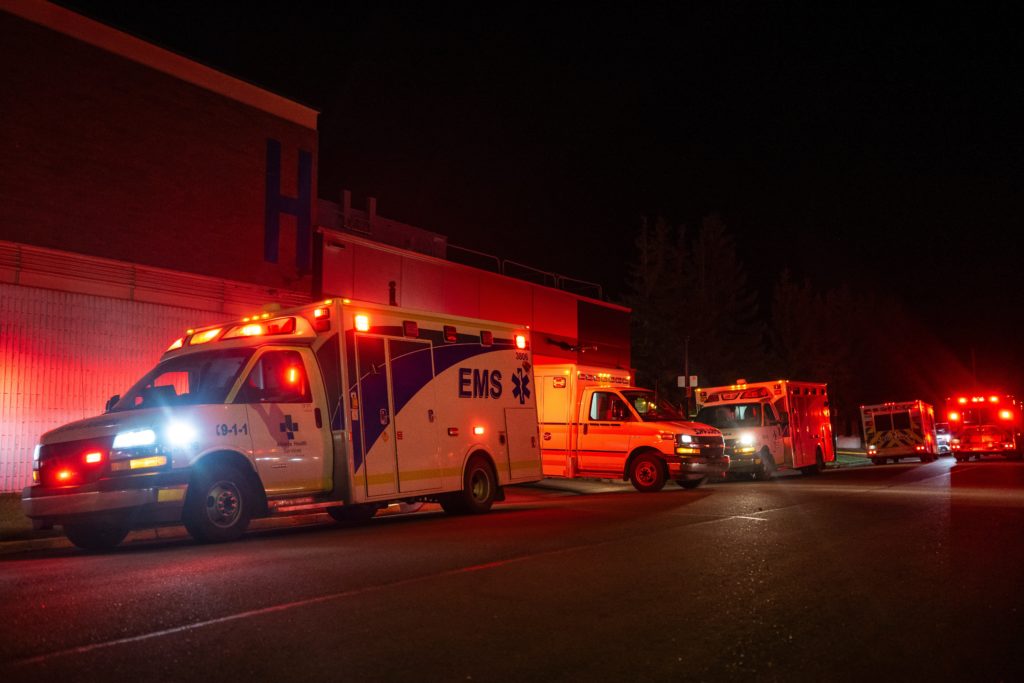
The Canadian Armed Forces have withheld specific casualty figures until relatives of those affected have been notified. The military stated that the full extent of the impact remains under assessment, reflecting the complexity of the situation. Helicopters and planes were deployed to transport patients from Wainwright to other facilities for treatment, highlighting the severity of the injuries sustained. At least ten ambulances were observed parked in and around the Wainwright health center late Saturday as paramedics and soldiers rushed to manage the crisis.
Political leaders across Canada have expressed support for those affected by the tragedy. Prime Minister Mark Carney offered thoughts for the brave women and men involved, while Alberta Premier Danielle Smith described the fire as significant and tragic, noting its impact on many military personnel. Saskatchewan Premier Scott Moe announced that his province was sending assistance to Alberta, though he did not specify the nature of the resources being deployed. Conservative opposition leader Pierre Poilievre also reached out to offer support after speaking with Carney and the defense minister.
Canadian Forces Base Wainwright is one of the country's busiest military training centers, housing the Canadian Manoeuvre Training Centre and the 3rd Canadian Division Training Centre. These facilities conduct realistic battlefield exercises and provide essential military training for combat operations. The incident has raised questions about safety protocols and emergency preparedness at such high-activity sites. As investigations continue, the focus remains on supporting the victims and their families while determining the sequence of events that led to this devastating outcome.
The broader implications of the incident are still unfolding as authorities coordinate between federal, provincial, and local levels. The strain on healthcare systems in Alberta serves as a stark reminder of the challenges faced during mass-casualty events. With no clear timeline for when full details will be released, the public awaits further updates from investigators. The military's cooperation with law enforcement underscores the seriousness of the inquiry into this rare and tragic occurrence.
Sources behind this briefing
Go to the original reporting
- PBS NewsHour↗Major fire breaks out in Alberta after deadly incident at Canadian military base