The short version
- President Trump claims Starshield service is fully operational again, while a senior European official and President Zelenskyy state that restrictions remain in place.
- A public dispute has emerged between the White House, SpaceX CEO Elon Musk, and Ukrainian officials regarding who authorized the slowdown of military satellite communications.
- Russian missile strikes continue to hit Ukrainian regions, including Kyiv, even as US envoy Steve Witkoff engages in diplomatic efforts with Moscow.
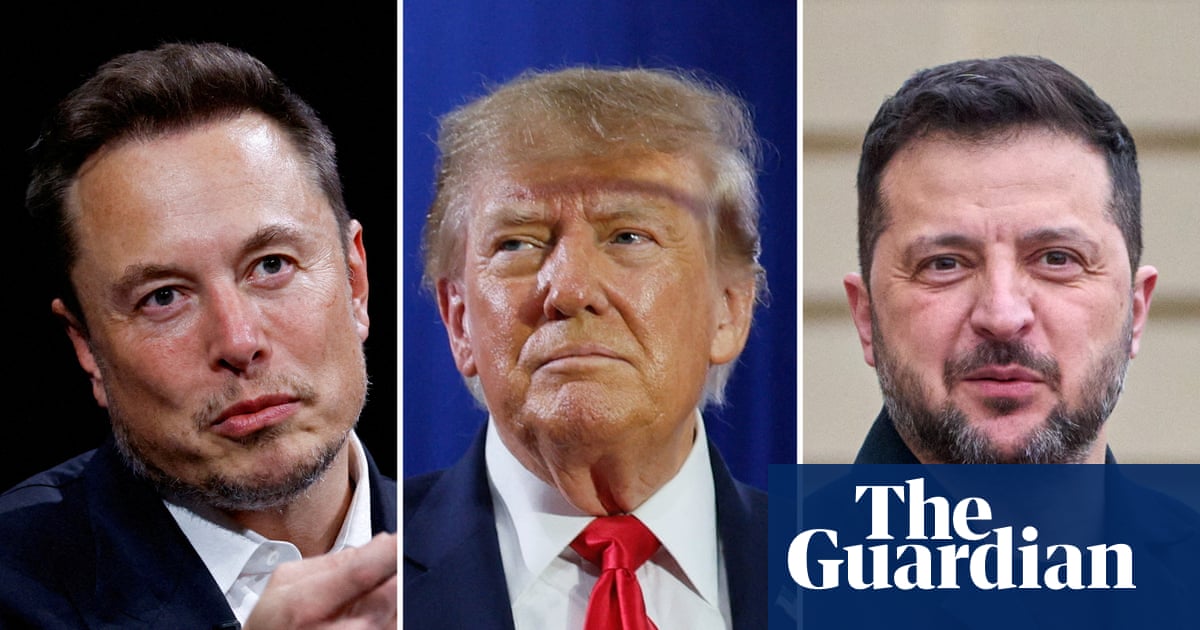
A significant disagreement has developed between Washington, Kyiv, and SpaceX regarding the status of Starshield, a military-grade satellite communication system used by Ukraine. President Donald Trump stated on Thursday that the service had been restored to full speed, suggesting that Elon Musk, the chief executive of SpaceX, had reversed previous limitations. However, this assertion was directly contradicted by a senior European official who told the Associated Press that no changes had occurred in the operation of the system. Ukrainian President Volodymyr Zelenskyy also maintained that full speeds had not been reinstated prior to Trump’s comments, indicating that the dispute over the actual status of the technology remains unresolved.
The restrictions on Starshield have had tangible consequences for Ukraine’s defense capabilities. According to Ukrainian officials, the limitations rendered many drones used for strikes behind frontlines inoperable and hampered air defense systems designed to intercept Russian attacks. The slowdown occurred as relations between the United States and Ukraine reached their lowest point since Russia launched its full-scale invasion nearly five years ago. The diplomatic friction has intensified amid a surge in civilian casualties, raising urgent questions about accountability and the reliability of American support for Kyiv’s military operations.
Responsibility for the restrictions has become a central point of contention. President Trump initially denied any involvement, telling reporters that he did not believe he or Musk was responsible for the changes. Secretary of State Marco Rubio reinforced this position, stating with certainty that neither the president nor anyone in the US government requested changes to the system. Rubio emphasized that SpaceX is a private company and that the White House does not direct its operations. This stance attempts to distance the administration from the decision-making process while highlighting the autonomous nature of the technology provider.
Despite these denials, reports suggest a more complex dynamic involving direct communication between Trump and Musk. The Wall Street Journal reported that the president had asked Musk to restore the service, which aligns with Trump’s later comments implying that Musk held the ultimate power to limit or resume the system. Trump refused to confirm whether he had spoken directly to Musk but suggested that the billionaire had acted independently to put the service back online. This narrative places the burden of decision-making on SpaceX rather than the US government, a position supported by Vice President JD Vance, who argued that Musk does not want to intervene in a war between state actors without explicit direction from the United States.
Elon Musk has publicly shifted blame toward the US government. On his social media platform X, Musk wrote that Starshield systems are owned and controlled by the US government and that any limits on speed or usage are decided by the military and ultimately the president. This contradicts the White House’s assertion of non-involvement and suggests a disagreement over the chain of command for military-grade satellite services. Republican Senator John Cornyn expressed skepticism about Musk acting without at least the acquiescence of the White House, indicating that internal political allies also question the official narrative of complete separation between government policy and corporate action.
Ukrainian officials have characterized the restrictions as a deliberate political message. President Zelenskyy stated that the limitations were a planned operation intended to signal displeasure from the American government. He noted that similar restrictions did not apply to Starshield terminals in European Union countries, suggesting that the measures were targeted specifically at Ukraine. Zelenskyy warned that the loss of access would lead to significant human losses, emphasizing the critical role the technology plays in protecting Ukrainian civilians and military personnel from Russian attacks.
Amid the diplomatic row, the physical conflict continues unabated. Russia launched ballistic missile strikes against Kyiv and twelve other regions overnight, killing at least four people and wounding dozens of others, including children. These attacks occurred shortly after US envoy Steve Witkoff met with Vladimir Putin to discuss the resumption of peace talks. The contrast between diplomatic engagement and ongoing violence has drawn sharp criticism from international partners. Downing Street rejected Witkoff’s characterization of Putin as a humanitarian, while Ukrainian Foreign Minister Andrii Sybiha condemned the description as inconsistent with the brutal reality of Russian strikes on civilian infrastructure.
The broader security environment in Europe is also shifting in response to the conflict. Denmark announced plans to purchase its first long-range precision missiles to bolster its defense capabilities and deter potential aggression, a move that drew condemnation from Moscow. Meanwhile, Romania is accelerating the development of surveillance and counter-drone equipment for the Black Sea following a series of attacks on commercial ships near its coast. These developments highlight the expanding regional impact of the war in Ukraine, as NATO members seek to strengthen their defenses against perceived threats from Russia.
Energy policy remains another flashpoint in the ongoing geopolitical struggle. Finnish Prime Minister Petteri Orpo stated that no deals should be made to buy gas from Russia while the war continues, aligning with EU plans to ban Russian pipeline gas under short-term contracts. In response, senior Russian energy officials have urged the European Union to reconsider its stance, arguing that low storage levels in Europe create a precarious situation. Leonid Mikhelson, head of Novatek, suggested that there is still time to reverse these decisions, reflecting Moscow’s efforts to maintain economic leverage over European markets despite the ongoing conflict.
As the blame game continues, the immediate future for Ukraine remains uncertain. President Zelenskyy expressed hope for talks with Secretary Rubio in the coming days, seeking clarity on US policy and support. The discrepancy between Trump’s claims of restored service and the reports from European and Ukrainian officials underscores a lack of transparency regarding the actual status of Starshield. Until this is resolved, Kyiv faces continued vulnerability to Russian attacks, while Washington navigates complex domestic and international pressures regarding its role in the war.
Sources behind this briefing
Go to the original reporting
- The Guardian US Politics↗Trump, Musk, Zelenskyy: who is blaming who in the Ukraine-Starlink row?
- The Guardian US↗Ukraine war briefing: Uncertainty over Kyiv’s Starlink access after Trump claims Musk restored service