The short version
- Local volunteers on Lismore Island discovered extensive remains of a sixth-century monastery previously thought to be minor.
- Findings include rare evidence of high-status gold and silver crafting, suggesting international importance comparable to Iona.
- The project highlights the value of community-driven heritage initiatives in rewriting regional historical narratives.
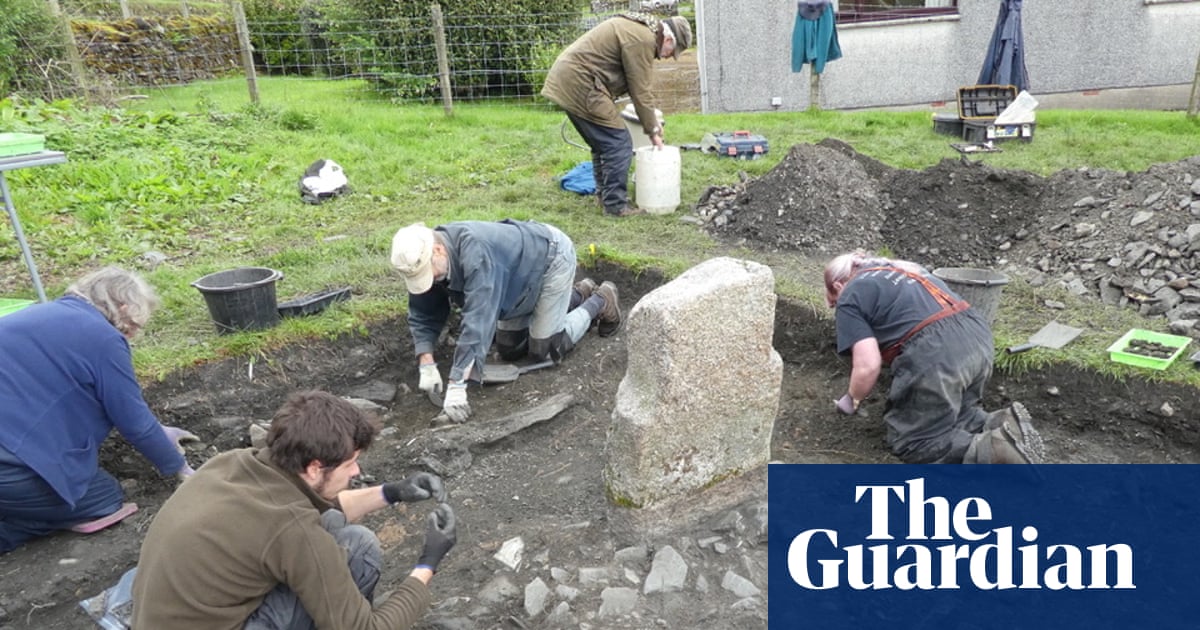
Archaeological work on the small Scottish island of Lismore has produced findings that significantly alter understanding of early Christian expansion in northern Britain. A group of local residents, operating through the island’s historical society, funded and conducted excavations at the site of a medieval cathedral. Their efforts uncovered extensive burial grounds, decorated stonework, and early structures indicative of a major monastic settlement dating to the sixth century AD.
The discovery challenges prior assumptions that Lismore was merely a peripheral religious outpost. Experts now describe the site as comparable in importance to Iona, a well-known monastic center located to the southwest. The monastery, known historically as Lios Mór, was founded by Saint Mo Luóc, also referred to as Moluag. Until now, physical evidence of this establishment was limited to fragments of carved crosses and textual records.
Among the most significant artifacts recovered were numerous crucibles used for casting precious metals. Analysis revealed that artisans on the island were melting gold, silver, and copper to create jewelry during the seventh century. This evidence of high-status craftworking suggests the site held international standing rather than serving as a local backwater. The presence of such specialized industry indicates substantial resources and skilled labor were available at the monastery.
The excavation was driven by a bottom-up initiative from the community rather than top-down academic direction. Residents raised funds through grants, donations, and crowdfunding to hire professional archaeologist Dr. Clare Ellis of Argyll Archaeology. A core group of volunteers, described as a dynamic minority of mostly older islanders, coordinated the logistics. Robert Hay, a retired plant scientist who moved to Lismore in 2001, led the fundraising and volunteer efforts.
Hay noted that the terrain was difficult, with much of the digging occurring in boggy conditions. Despite these challenges, the team recovered what he described as some of the best small crucibles ever found in Scotland. The post-excavation analysis confirmed the production of jewelry on-site, a finding Hay called extraordinary given the island's remote location and small population of 190.
Gordon Noble, a professor of archaeology at the University of Aberdeen, emphasized the significance of the results. He pointed out that while sites like Iona are well-documented, Lismore had been largely overlooked in archaeological studies. The collaboration between the local heritage society and professional experts yielded a series of discoveries that redefine the site's role in the early medieval world.
The findings also have implications for understanding Saint Moluag’s historical impact. Unlike Saint Columba, founder of Iona, Moluag did not have a hagiographer to record his life and deeds in detail. Consequently, his contributions to the evangelization of Scotland have been underestimated in traditional narratives. The physical evidence from Lismore helps recalibrate this view, suggesting Moluag’s influence was far greater than previously credited.
The island lacks commercial amenities such as shops or pubs, with community life centered around a Gaelic heritage center. This setting underscores the residents' deep connection to their history. The successful excavation demonstrates how local engagement can lead to major historical revelations without reliance on large institutional budgets. The results are scheduled for publication in an upcoming edition of Antiquity.
This project serves as a model for community-led archaeology, showing that local knowledge and determination can uncover significant historical data. The rewritten story of Lismore provides new insights into the spread of Christianity in sixth-century Britain. It highlights the importance of preserving and investigating lesser-known sites to gain a more complete picture of the past.
Sources behind this briefing
Go to the original reporting
- The Guardian World↗‘Hugely exciting’ finds on tiny Scottish island shed light on spread of Christianity