The short version
- The solar eclipse marked the most dramatic such event visible from the UK since August 1999, with up to 95 percent of the sun obscured in Scotland.
- Variable cloud cover resulted in inconsistent viewing conditions, with some locations experiencing near-total obstruction while others saw brief, clear glimpses of the phenomenon.
- Crowds gathered at major vantage points including Edinburgh and Ayr Beach, where observers noted atmospheric changes such as cooling temperatures and dimmed light despite visual limitations.
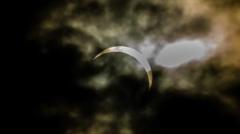
A significant solar eclipse passed over Scotland on Wednesday evening, marking the most substantial celestial event of its kind visible from the United Kingdom since August 1999. The phenomenon began shortly after 18:00 local time and continued for approximately two hours until the sun set around 21:00. While regions in Spain and Portugal experienced a total eclipse where the moon completely blocked the sun, observers in Scotland witnessed a partial event that obscured up to 95 percent of the solar disk at its peak.
Visibility across the country was heavily influenced by atmospheric conditions, leading to varied experiences for skygazers. Heavy cloud cover initially shrouded much of Scotland, limiting views during the early stages of the eclipse. However, as the event progressed, clouds parted in certain areas, allowing intermittent glimpses of the moon moving across the sun. In locations where the sky remained overcast, viewers reported a subtle but noticeable dimming and cooling effect, indicating the moon’s position even when direct observation was impossible.
In Edinburgh, large crowds gathered at Calton Hill, one of the capital’s prominent viewing spots. The turnout was described as unusually high, with some attendees comparing the density of the crowd to that seen during Hogmanay celebrations. Neil Martin, president of the Astronomical Society of Edinburgh, characterized the view from the hill as remarkable, noting the enduring appeal of the location for astronomical events. As the moon advanced across the sun, leaving a crescent shape at the top, a large cloud temporarily obscured the entire disk before clearing just before maximum eclipse, prompting cheers from the assembled spectators.
The atmosphere on Calton Hill shifted noticeably during the peak of the event. The light became muted and subdued, causing the noise level among the crowd to soften as people absorbed the spectacle. Sandy and Nick Burgoyne, visitors from the United States who had delayed their return flight to witness the eclipse, reported that the view above the Edinburgh skyline was superior to the one they observed in New York during the April 2024 event. They considered the delay worthwhile given the quality of the sighting once the clouds cleared.
Other gathering points experienced less favorable conditions. At Whitelee Wind Farm in East Renfrewshire, which hosted one of the larger organized viewing events, approximately fifty to sixty people assembled to watch the spectacle. Cloud cover largely prevented clear visibility for most of the duration, though a brief parting around 19:00 allowed some attendees to see a sliver of the sun behind the moon, eliciting gasps from those present. Similarly, at Ayr Beach, dozens of spectators waited patiently but left disappointed due to persistent cloud interference.
Despite the visual obstructions at Ayr Beach, observers noted distinct environmental changes associated with the eclipse. The area temporarily felt darker, cooler, and eerily quiet as the moon blocked sunlight. Occasional breaks in the cloud cover provided fleeting seconds of visibility, allowing some viewers to catch sight of the sun and moon alignment. One attendee summarized the experience by noting that the weather conditions were not favorable for their location.
Viewing conditions improved in parts of northern Scotland, where cloud cover was generally lower. Photographs submitted from areas such as Balmedie in Aberdeenshire, Bieldside in Aberdeen, and Dornoch in the Highlands showed clearer views of the eclipse compared to other regions. These locations benefited from better atmospheric transparency, allowing for more consistent observation of the celestial mechanics at play.
Experts had advised eclipse watchers prior to the event to seek elevated locations with unobstructed western views to maximize visibility. This guidance proved relevant as western and northern areas tended to offer slightly better conditions than some eastern coastal spots. The next total solar eclipse visible from the UK will not occur until September 23, 2090, making this recent event a rare opportunity for astronomical observation in the region.
The eclipse served as a focal point for public engagement with astronomy, drawing diverse crowds to various vantage points across Scotland. While weather conditions prevented a uniformly clear view, the collective experience highlighted the enduring fascination with celestial events. The combination of scientific significance and public interest underscored the cultural impact of such rare astronomical phenomena, even when partially obscured by atmospheric interference.
As the sun set, the eclipse concluded, leaving observers to reflect on the mixed fortunes of their viewing experiences. The event demonstrated both the unpredictability of weather conditions and the dedication of amateur astronomers willing to travel and wait for optimal moments. Future eclipses in the coming years will be smaller in scale, ensuring that this recent occurrence remains a notable milestone in UK astronomical history for decades to come.
Sources behind this briefing
Go to the original reporting
- BBC Science & Environment↗Cloudy skies lead to mixed fortunes for Scotland's eclipse hunters

