The short version
- Historical records from 1921 to present show a persistent drop in bee and hover fly species richness across most European regions, with only the Alps showing positive trends.
- Researchers warn that stable overall species counts may mask the loss of sensitive varieties, creating a fragile ecosystem dominated by a few resilient pollinators.
- The findings underscore the urgency of addressing habitat loss and pesticide use as diplomats gather in Armenia for the 17th UN conference on biodiversity.
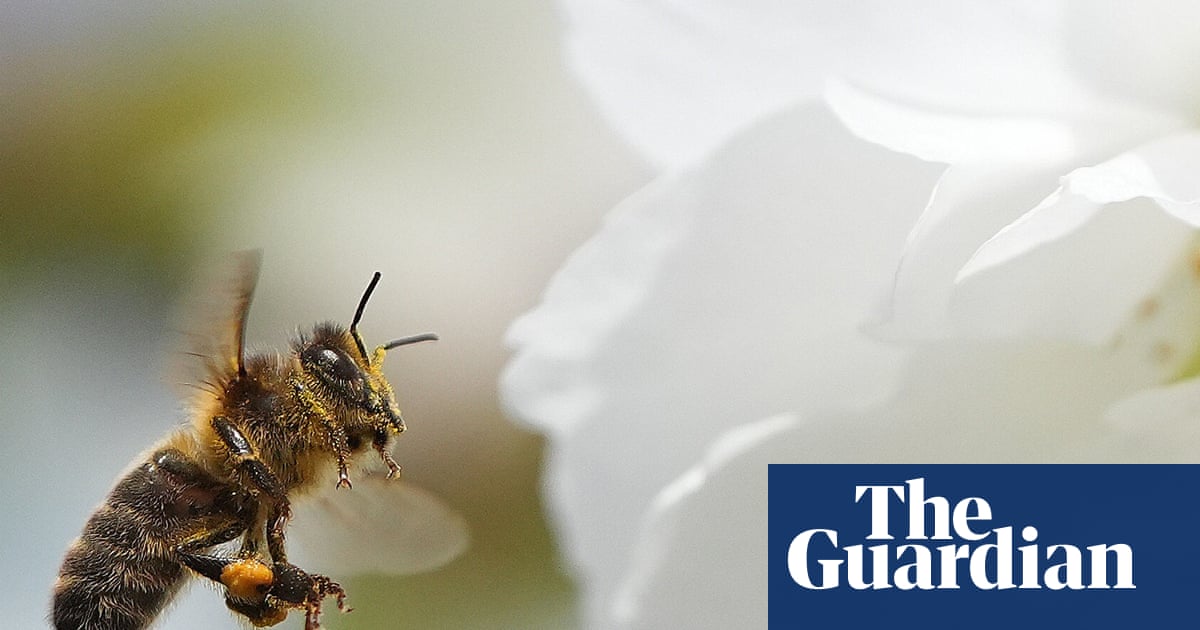
A new analysis of historical data spanning more than a century reveals that the majority of wild bee species across Europe are in decline, alongside approximately half of the continent’s hover fly populations. The study, which examines records dating back to 1921, indicates that this downward trend is widespread, affecting all parts of Europe except for the Alpine region. This comprehensive assessment comes at a critical juncture, coinciding with the start of the 17th UN conference on biodiversity in Yerevan, Armenia, where global leaders are tasked with evaluating progress on nature conservation targets.
The research covers an extensive portion of European pollinator diversity, accounting for 88% of bee and hover fly species found across the continent. Scientists observed a persistent reduction in species richness within the Atlantic and Continental regions, while trends in other areas were either mixed or showed slight improvements. Despite these regional variations, the overarching pattern points to a significant reshaping of pollinator communities. The data suggests that sensitive species are gradually disappearing, leaving behind a smaller group of resilient varieties that dominate current ecosystems.
Carlos Martínez-Núñez, an ecologist at the Spanish National Research Council and the study’s lead author, emphasized that biodiversity loss can remain concealed behind seemingly stable total species numbers. He noted that while some species are currently increasing in population, this does not guarantee their long-term survival as climate change and habitat destruction intensify. The findings present a crucial window for intervention before further declines occur, challenging the assumption that current stability equates to ecological health.
The implications of these trends extend beyond wildlife conservation, touching directly on food security and ecosystem resilience. Nearly 90% of wild flowering plants and more than three-quarters of major food crop types rely partially on animal pollination. The United Nations Food and Agriculture Organization has previously warned that the decline of pollinators triggers a chain reaction that threatens wildlife populations and weakens ecosystems’ ability to withstand environmental stressors, including climate change. This functional disruption poses risks to agricultural systems that depend on consistent pollinator services.
Although the study found that 91% of species logged over the last century were also recorded in the modern period between 2001 and 2020, researchers caution against interpreting this as a sign of stability. The probability of finding specific species at given sites, known as occupancy, has mostly fallen. While up to 9% of species may have been wiped out from Europe, many of those not recently spotted were rare even in historical records. Consequently, scientists do not expect widespread extinctions to have occurred yet, but the contraction in range and abundance is evident.
Ainhoa Magrach, an environmental researcher at the Basque Centre for Climate Change who was not involved in the study, stated that the work confirms long-held suspicions about uneven pollinator declines. Previous evidence was largely limited to a few north-western European countries, including the United Kingdom, Belgium, and the Netherlands. This new analysis demonstrates that the pattern extends across the entire continent, although regional differences persist. The broad scope of the data provides a more complete picture of the ecological shifts occurring in Europe.
The decline in pollinator populations is part of a broader crisis involving habitat destruction, pesticide use, and climate change driven by planet-heating pollution. Wildlife is disappearing at an unprecedented rate, with significant consequences for human societies, including threats to food systems and further breakdowns in climate regulation. Despite these far-reaching impacts, governments have failed to meet any UN targets on nature since the biodiversity convention was established in Rio in 1992.
As diplomats gather in Armenia for Cop17, the summit will focus on assessing progress toward this decade’s conservation goals. These targets include protecting 30% of land and sea areas, reforming $500 billion in environmentally damaging subsidies, and restoring 30% of degraded ecosystems. The study’s findings underscore the urgency of these measures, highlighting the need for immediate action to address the gradual loss of sensitive species and prevent deeper functional disruptions in European ecosystems.
Sources behind this briefing
Go to the original reporting
- The Guardian World↗‘Crucial opportunity to act’ as study finds most of Europe’s wild bee species in decline