The short version
- Peaceful student protests in France have been hijacked by violent rioters, leading to looting and damage to public buildings including city halls in Limoges and Marseille.
- President Macron addressed the nation but offered no concrete policy changes or new spending, blaming 'ultra-left' groups for exploiting the situation.
- Authorities have announced partial curfews as tensions rise between protesters, trade unions, and the government over living costs and public services.
France is grappling with its most severe wave of civil unrest in years as initially peaceful protests by high school students have spiraled into violent riots across multiple cities. The demonstrations, which began as a month-long campaign against crumbling classrooms and overcrowded schools, quickly converged with broader societal frustrations regarding soaring living costs, widening inequality, and declining public spending. This convergence brought together students, teachers, trade unionists, and members of the resurrected gilets jaunes movement, creating a diverse coalition of dissent.
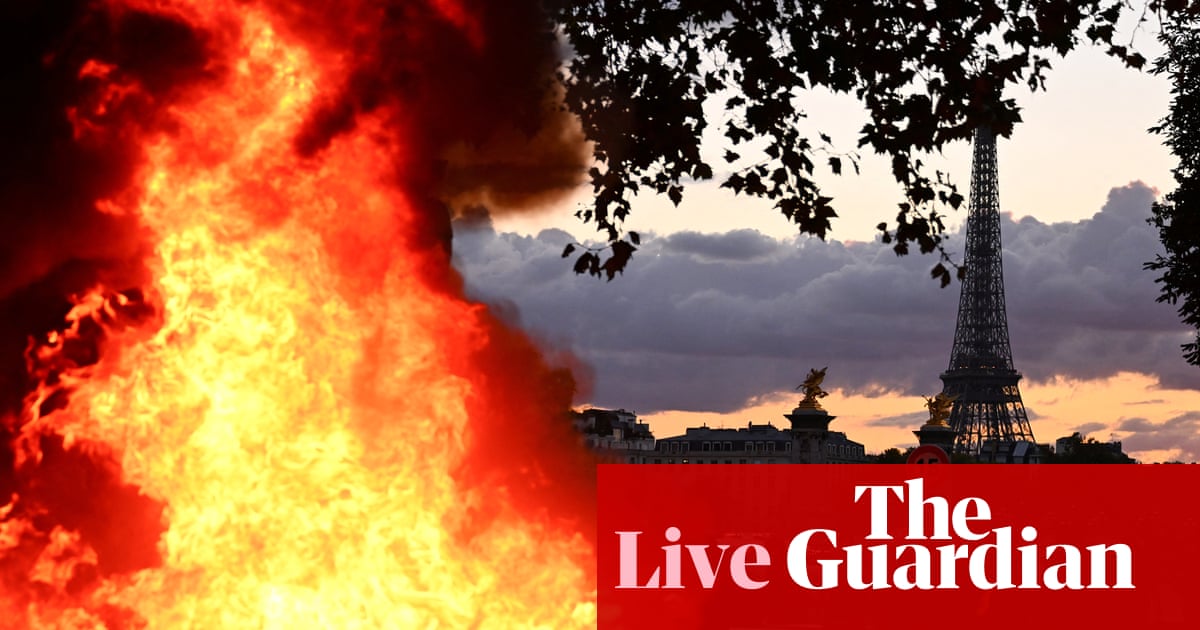
Despite the largely peaceful nature of the initial protests, masked groups have increasingly taken control of the demonstrations, engaging in acts of violence that include torching vehicles, ransacking businesses, and severely damaging public infrastructure. Notable incidents include the setting fire to the city hall in Limoges and the invasion of municipal buildings in Marseille. These actions have drawn widespread condemnation and prompted authorities to implement partial curfews in affected areas to restore order.
President Emmanuel Macron addressed the nation on Sunday following one of the most violent days of rioting, acknowledging the 'deep anxiety' felt by young people but failing to offer concrete policy initiatives or new public spending. Instead, he instructed his prime minister to organize consultations and blamed 'ultra-left' factions for exploiting the legitimate grievances of protesters. The lack of immediate governmental response has further weakened Macron's standing, with critics pointing out the absence of a cabinet reshuffle or tangible measures to address the root causes of the unrest.
The escalation of violence has raised concerns about the stability of public order and the government's ability to manage the crisis. Reuters reported that the mass protests have resulted in the worst riots seen in France in recent years, with significant damage to property and infrastructure. The involvement of various social groups, from educators to labor unions, indicates that the issues at hand extend far beyond the education sector, reflecting deep-seated economic and social tensions within French society.
NPR noted that President Macron has condemned the violent protests erupting across the country, emphasizing the need for dialogue while distancing the government from the actions of the rioters. However, the disconnect between the administration's rhetoric and its policy responses has fueled further anger among demonstrators. The failure to address underlying issues such as cost of living and public service degradation has left many feeling unheard and marginalized.
The Guardian highlighted the near-universal chorus of condemnation directed at Macron's address, reflecting the extent to which his leadership is currently perceived as ineffective. The president's refusal to commit to new spending or structural reforms has been interpreted by many as a dismissal of the protesters' demands. This stance has emboldened some factions within the movement to continue their actions, believing that only sustained pressure will force meaningful change.
Time Magazine explored the broader context of why France is 'burning,' noting that the current unrest is symptomatic of long-term neglect of public services and growing economic disparities. The convergence of student protests with other social movements has created a potent mix of discontent that challenges the government's ability to maintain control. The situation remains volatile, with no clear resolution in sight.
The New York Times provided background on the high school protests, detailing how concerns over educational quality have become a flashpoint for wider societal issues. Teachers and parents have joined students in demanding better resources and conditions, highlighting the interconnectedness of various social problems. The government's slow response to these calls has exacerbated tensions and contributed to the escalation of violence.
As authorities impose curfews and deploy security forces, the risk of further clashes remains high. The partial curfews are intended to limit the scope of the riots but may also serve to stifle legitimate protest activities. The balance between maintaining public order and respecting civil liberties is a delicate one, and the government's handling of this crisis will likely have lasting implications for its political standing.
The future trajectory of these protests depends on whether the government can engage in meaningful dialogue with the diverse groups involved. Without addressing the core issues of economic inequality and public service degradation, the unrest is likely to persist. The coming days will be critical in determining whether a path toward de-escalation can be found or if France faces continued turmoil.
Sources behind this briefing
Go to the original reporting
- The Guardian World↗French authorities announce partial curfews as PM blames ‘ultra-left’ for exploiting protests – Europe live
- NPR↗2026 midterms could be the most expensive on record. And, Macron condemns protests
- Time Magazine↗Why is France Burning?
- The New York Times↗What to Know About France’s High School Protests