The short version
- A temporary ceasefire brokered by US First Lady Melania Trump allowed hundreds of civilians to evacuate the besieged city of Oleshky after four years of occupation.
- Survivors described extreme conditions including food shortages that forced residents to eat weeds and navigate minefields, as well as constant drone attacks and shelling.
- Evacuees traveled through Russian territory to Belarus before arriving in Chernihiv, where they faced the immediate challenge of finding housing and employment.
Hundreds of civilians have been evacuated from Oleshky, a city in southern Ukraine that has remained under Russian control since the initial invasion in early 2022. The exodus occurred on Saturday after a humanitarian ceasefire took effect in the Kherson region, marking the first period of sustained calm in the area in four years. This temporary truce, reportedly facilitated by US First Lady Melania Trump, provided a narrow window for residents to leave the besieged zone. Many evacuees crossed into northern Ukraine via Belarus, reuniting with family members they had not seen since the conflict began.
The journey out of Oleshky was complex and fraught with danger. Evacuees traveled by bus through Russian-occupied territory to southern Russia before flying to Belarus. From there, they were transported to a military facility in Chernihiv. The logistics operation involved a convoy of twenty-five buses capable of carrying up to 750 people, along with ambulances for those with limited mobility. Residents were given only four hours on Friday to depart. Upon arrival at the airfield in Chernihiv, many elderly individuals were so physically weakened by their ordeal that they required stretchers to be carried off the tarmac.
Life inside Oleshky had deteriorated into what survivors described as a living nightmare. The city is geographically constrained by the Dnipro River on one side and encircled by Russian forces on the other, making escape nearly impossible without external intervention. For years, residents endured intense shelling, missile strikes, and frequent drone attacks. Viacheslav and Olha, a couple who evacuated with their adult children and a dog, characterized their experience as returning from hell. They noted that even attempting to flee was perilous due to mined routes and the threat of aerial surveillance.
Food scarcity became a critical issue in the final months before the evacuation. As supplies dwindled, some residents resorted to cooking garden weeds to survive. Others attempted to cross minefields to find food, resulting in casualties among those desperate enough to risk their lives for sustenance. Mykhailo Palii, another evacuee, revealed that he had hidden the severity of the situation from his daughters to spare them worry. He described a hole blown into his bathroom and the constant presence of drones, details he kept secret until he could safely reach them.
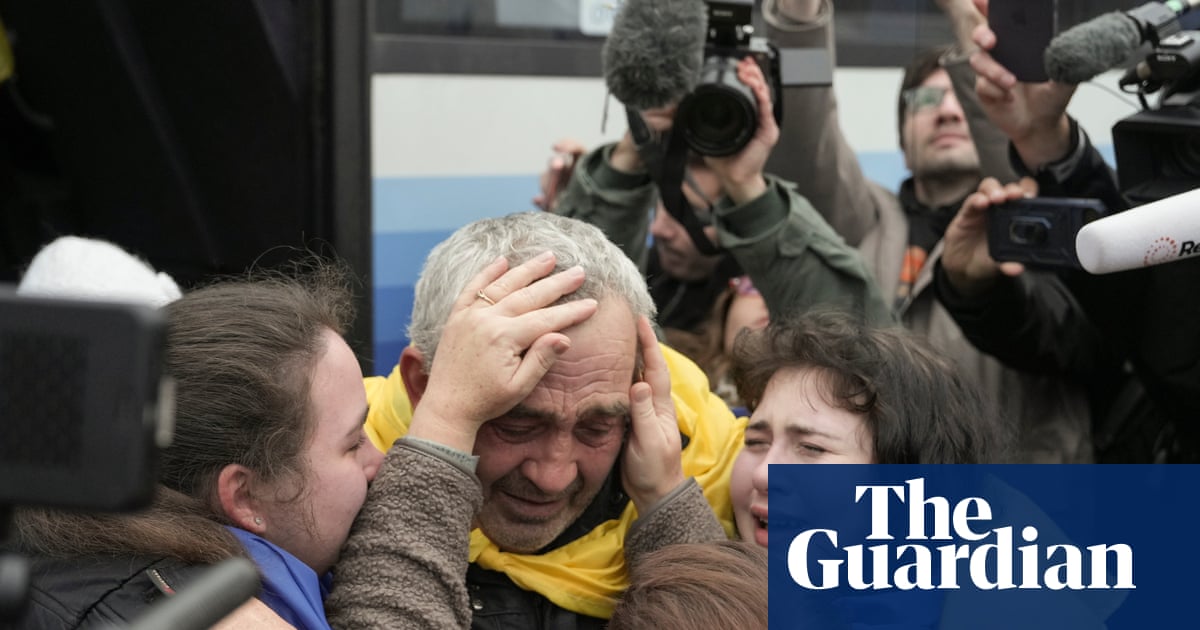
The emotional toll on those who escaped was evident during reunions at the Chernihiv facility. Palii’s daughters sprinted across the tarmac upon seeing him, screaming and crying after years of separation. Tetiana and Volodymyr, an elderly couple carrying a cat, arrived having lost their home to fire three years prior. They had been living in a neighbor’s abandoned house since then. For them, leaving was an easy decision given they had no relatives remaining in the city and their children were already settled elsewhere.
Despite their relief at escaping, many evacuees expressed deep concern for those still trapped in Oleshky. Estimates suggest that up to 6,000 people, including 200 children, remained in the city and surrounding areas prior to this evacuation wave, with approximately 1,700 residing within the city limits itself. Olha noted that many were left behind under the same horrific conditions they had just endured. The evacuation did not resolve the broader humanitarian crisis but offered a lifeline to a select group.
The immediate future for these displaced individuals remains uncertain. They now face the daunting task of rebuilding their lives in unfamiliar locations. Palii stated his intention to find work immediately, expressing willingness to perform any labor necessary, from construction to demolition, to support his family. Olha and her relatives, having no other kin in Ukraine, plan to stay with acquaintances for an extended period while they stabilize. Their resilience is palpable; Olha remarked that if they survived the conditions in Oleshky, they could endure whatever challenges lay ahead.
This evacuation highlights the fragile nature of humanitarian pauses in active conflict zones. While the ceasefire provided a critical opportunity for rescue, it also underscored the prolonged suffering of civilians caught in the crossfire. The route through Belarus and Russian territory illustrates the complex geopolitical realities governing movement in the region. As these survivors begin to settle, their stories serve as a stark reminder of the human cost of the ongoing war in Ukraine.
Sources behind this briefing
Go to the original reporting
- BBC World↗'We came back from hell', say Ukrainians after years in Russia-occupied frontline city