The short version
- Andy Burnham visits Scotland during the SNP conference to promote union stability without ruling out future dialogue on devolution.
- John Swinney aims to reinvigorate support for a second independence vote before 2031, despite recent electoral setbacks and internal party challenges.
- Polling indicates rising support for cooperation between Westminster and Holyrood, even as dissatisfaction with the country's direction increases.
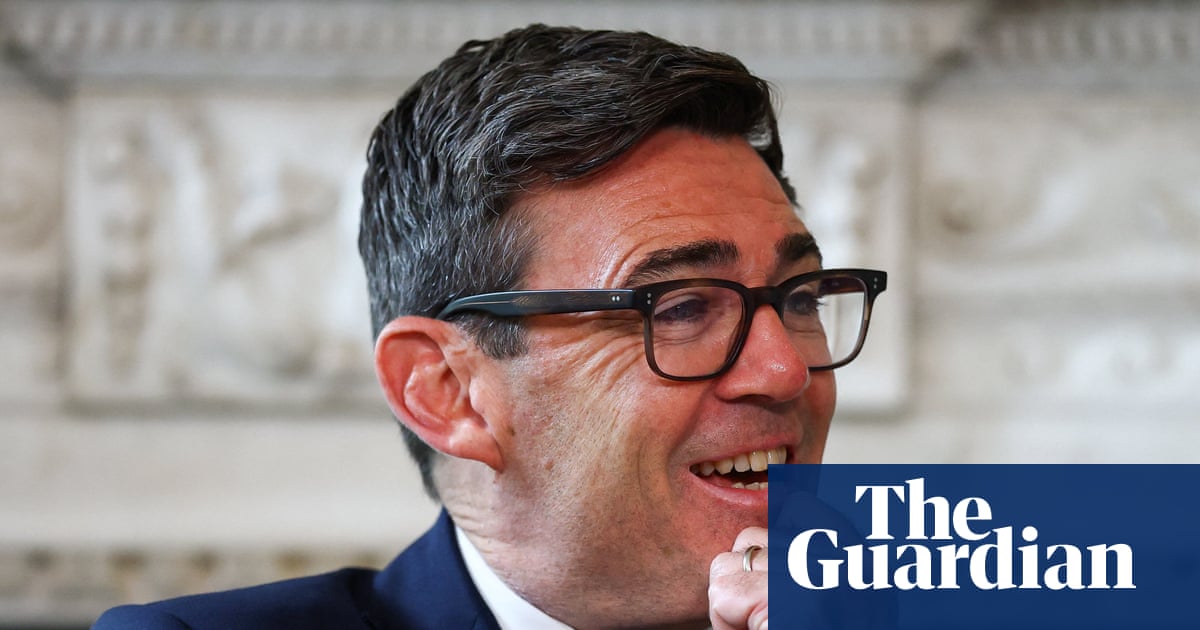
Prime Minister Andy Burnham is scheduled to visit Scotland on Friday, placing his presence at the center of the Scottish National Party’s annual conference in Aberdeen. This timing appears designed to counter the narrative advanced by First Minister John Swinney, who plans to use the event to renew calls for a second independence referendum. While previous British leaders have largely avoided direct engagement with Scottish internal politics, Burnham has adopted a more confrontational stance, choosing to articulate the case for the union on Scottish soil rather than from London.
The dynamic between the two leaders has intensified since Burnham assumed office in July. He notably referenced Swinney during his keynote address at the Labour party conference last month, recalling a prediction made by the Scottish first minister that Burnham would be the last prime minister of the United Kingdom. That comment was delivered on the day Burnham’s father passed away. The prime minister stated that he shared this memory not to seek sympathy or criticize Swinney, but to illustrate his determination to disprove the assertion through action.
Burnham’s approach marks a departure from the strategies of his predecessors, who often dismissed Scottish affairs unless directly challenged by right-wing, pro-Brexit governments. By contrast, Burnham faces an SNP that has governed Holyrood for two decades and is accustomed to framing London as dismissive of Scottish interests. His administration’s focus on devolution, openness to exploring a return to the European Union, and policies such as £2 bus fares present a more complex political landscape for separatists to navigate.
Despite these policy differences, Burnham maintains significant popularity among Scots. Recent polling by PF Global indicates that 46% of Scottish residents hold a favorable view of the prime minister, a figure substantially higher than support for the Labour party itself and double the rating Keir Starmer held upon leaving office. Among SNP voters who supported independence in 2014, Burnham’s approval levels are comparable to those seen for Jeremy Corbyn, suggesting that personal appeal may transcend partisan lines even as political goals diverge.
SNP figures have attempted to leverage Burnham’s stance on European integration to bolster their case for sovereignty. Lara Bird, the MP for Arbroath and Broughty Ferry, argued that the prime minister is unilaterally reopening debates about relitigating referendum results while denying the same democratic principle to Scotland. She described the idea that the union can continue in its current form as farcical, highlighting the tension between Westminster’s flexibility on some issues and its rigidity on independence.
The conference also serves as an opportunity for the SNP to move past recent controversies, including the resignation of Nicola Sturgeon and the fraud conviction of her estranged husband, Peter Murrell. Murrell is serving a five-year sentence for embezzling funds from the party, with a proceeds of crime case scheduled for early December. The party seeks to draw a line under these events as it looks to re-energize its base and address internal questions about vision and strategy following Sturgeon’s departure.
Electoral realities have shifted in Scotland, complicating the SNP’s path forward. Although the party won a fifth successive election in May, it secured only enough seats to form a minority government in Holyrood. Sturgeon criticized the campaign for lacking big-picture thinking in her memoirs, while Swinney maintains they remain friends. Meanwhile, Reform UK has matched Labour with 17 MSPs, the Scottish Greens have won a record 15 seats, and the Conservatives demonstrated continued viability by defeating the SNP in Aberdeen South.
Public sentiment appears to be evolving toward greater collaboration between the UK and Scottish governments. Ipsos polling reveals that 42% of Scots would feel happy about an SNP-led government working closely with London, a 12-point increase since May when Starmer was in charge. However, this desire for cooperation exists alongside growing dissatisfaction, with just over half of Scots believing the country is heading in the wrong direction, up six points from the previous period.
As Swinney prepares to address members on Saturday afternoon, he faces the dual challenge of revitalizing the independence argument while managing a political environment where his own party’s popularity is tested by both internal scandals and external competition. Burnham’s visit underscores a new phase in UK-Scotland relations, one defined less by ideological polarization over Brexit and more by pragmatic debates about governance, devolution, and the future structure of the union.
The outcome of this political theater may hinge on whether voters perceive Burnham’s engagement as a genuine effort to strengthen ties or merely a tactical maneuver to undermine separatist momentum. With no clear consensus for another independence vote currently evident, the prime minister’s strategy relies on demonstrating that the union can adapt and respond to Scottish needs without fracturing. The coming days will test whether this approach resonates with a public increasingly divided between desire for cooperation and dissatisfaction with the status quo.
Sources behind this briefing
Go to the original reporting
- The Guardian World↗Burnham v Swinney: will the UK PM overshadow the SNP’s conference?