The short version
- Radiocarbon dating places the skeleton in the late 10th or early 11th century, contradicting the Roman origin of the stone coffin.
- The individual was likely a high-ranking ecclesiastic, with Abbot Ælfwig identified as the most probable candidate.
- The sarcophagus shows signs of reuse, including a modified lid and evidence of a wooden inner coffin lined with lime.
A longstanding archaeological mystery concerning a skeleton discovered within a Roman-era sarcophagus at Westminster Abbey has been resolved by new expert analysis. The remains, which were found inside the stone coffin during excavations in the mid-19th century, have been identified as likely belonging to an abbot from the 11th century. This conclusion resolves questions about the identity of the individual and explains the chronological discrepancy between the ancient container and the human remains it held.
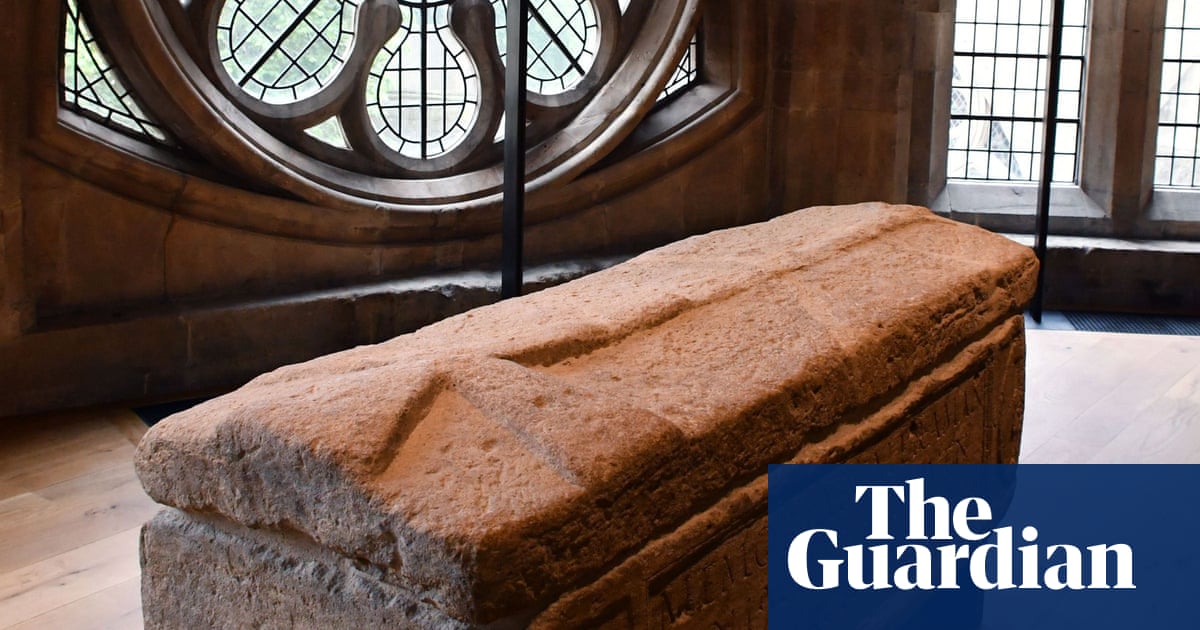
The limestone sarcophagus was first uncovered in 1820 and officially excavated in 1869 from a grassy area north of the nave, which had previously served as the yard for a sacristy constructed under King Henry III. The coffin itself dates to the late Roman period and bears a Latin inscription dedicated to Valerius Amandinus, along with decorative motifs typical of that era. However, subsequent archaeological work in the vicinity failed to uncover other Roman artifacts, suggesting the sarcophagus was not originally buried at this specific location.
Professor Warwick Rodwell, a consultant archaeologist for Westminster Abbey, argues that the coffin was likely moved from its original resting place, possibly a wall recess within a mausoleum. The presence of such an elaborate container indicates that Valerius Amandinus was a person of significant wealth during the Roman period. The reuse of this prestigious burial vessel centuries later points to a deliberate effort by medieval authorities to honor a figure of comparable status.
Recent investigations conducted in 2018, aimed at preparing the artifact for display in the Queen’s Diamond Jubilee Galleries, provided new insights into the contents of the sarcophagus. When the lid was removed in a laboratory setting, researchers discovered a skeleton that had been thought lost according to earlier written records. The physical characteristics of the bones matched 19th-century illustrations, confirming the continuity of the find despite gaps in historical documentation.
Analysis of the skeletal remains revealed that the individual was a male standing approximately five feet nine inches tall, with an estimated age at death between 35 and 49 years. Radiocarbon dating placed the bones firmly in the late 10th or early 11th century, a period significantly later than the Roman origin of the stone coffin. This temporal gap necessitated a reevaluation of who might have been interred within such an ancient and ornate vessel.
Further examination of the sarcophagus interior uncovered a rectangular outline formed by a white substance at the bottom. Rodwell interprets this as evidence that the body was covered in powdered lime before being placed inside a wooden coffin, which then sat within the stone sarcophagus. This layering suggests a complex burial process involving multiple materials and stages of preparation.
The lid of the sarcophagus also provides critical clues regarding its medieval reuse. A large carved cross runs across the full length and width of the top surface, identified as a modification made to the original Roman lid. The style of this cross is specific to the late Anglo-Saxon period, reinforcing the connection to the 11th century. Rodwell notes that such a prominent Christian symbol would typically be associated with a major ecclesiastic rather than a layperson.
Based on these findings, Rodwell posits that only someone of high rank, such as an abbot, would have been accorded burial in a repurposed Roman sarcophagus. Two abbots fit the chronological and status criteria: Ælfwig, who died around 1020, and Wulfnoth, who died around 1049. Rodwell favors Ælfwig as the most likely candidate, citing his long tenure of approximately 27 years and his presence at Westminster during a period of significant monastic development.
The final resting place of the sarcophagus within the abbey grounds also reflects its complex history. Rodwell suggests the coffin was initially interred in the eastern arm of the church, with the lid potentially serving as a floor slab. It was later excavated and reburied during construction projects undertaken by Henry III. This sequence of events illustrates how archaeological artifacts often carry layers of meaning that extend far beyond their original creation.
The resolution of this mystery highlights the intricate history of Westminster Abbey, where Roman, Anglo-Saxon, and medieval elements converge. The identification of the skeleton not only clarifies a specific historical question but also underscores the continuity of religious significance at the site across different eras. Future displays will aim to present these findings in a way that respects both the ancient origins of the sarcophagus and its later medieval use.
Sources behind this briefing
Go to the original reporting
- The Guardian World↗Mystery of Roman sarcophagus unearthed at Westminster Abbey solved at last, expert says