The short version
- President Zelenskyy firmly opposes holding elections during active conflict, citing risks to national unity and state survival.
- Kyiv warns of a potential Russian mobilization of 300,000 troops and increased production of ballistic missiles targeting infrastructure.
- Ukraine seeks additional air defense interceptors from Western allies to mitigate winter attacks and protect civilian populations.
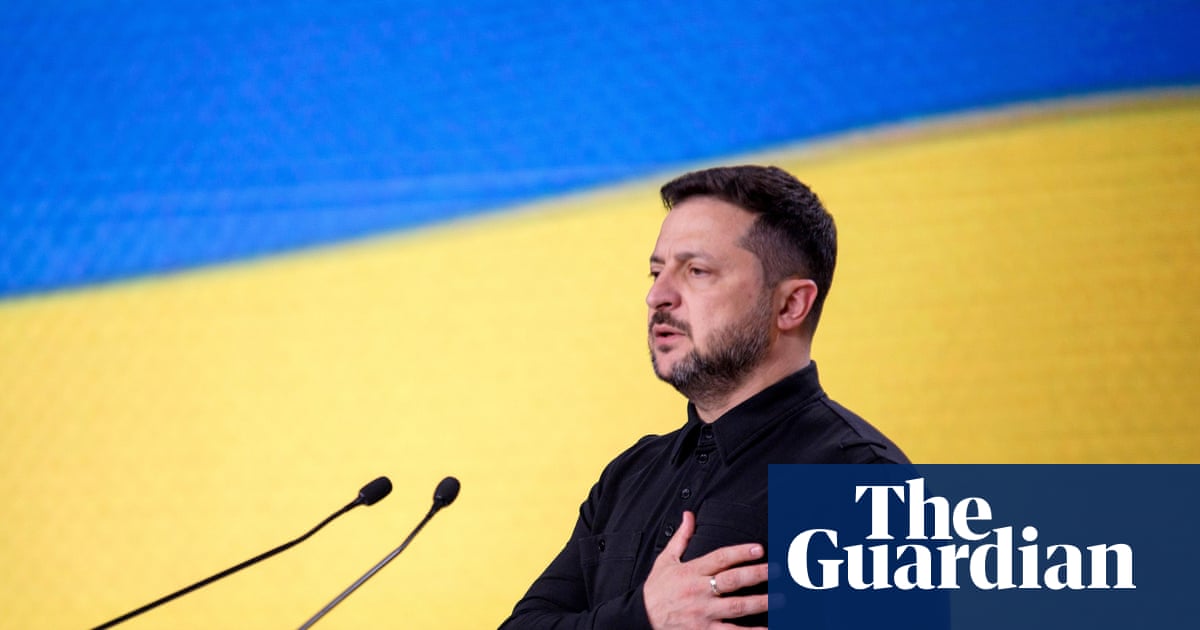
President Volodymyr Zelenskyy has issued a stark warning against holding national elections in Ukraine while the war with Russia continues, describing such a move as a catastrophic risk to the state’s integrity. In a briefing to journalists, the president characterized the proposal for an immediate vote as a tsunami that would split the country at a critical juncture. This response marks a direct rebuttal to recent calls from Mykhailo Fedorov, the former defense minister who was dismissed last month, for a fresh contest. Zelenskyy’s stance underscores the administration’s prioritization of survival and territorial preservation over democratic scheduling during active hostilities.
The controversy surrounding the election timeline has intensified following Fedorov’s public challenge to Zelenskyy’s authority. Fedorov, who remains a popular figure within certain political circles, argued for a vote despite the ongoing martial law that has suspended elections since the full-scale invasion began in 2022. Zelenskyy’s five-year term technically expired in May 2024, yet there had been little domestic pressure to hold a poll until Fedorov’s intervention. The president described Fedorov’s departure from office as a result of overstepping boundaries by encroaching on military functions, noting that the former minister declined four alternative government positions offered after his removal.
Zelenskyy outlined specific conditions under which he would support holding elections, emphasizing that any process must be safe, legitimate, and democratic. He stated that such a vote could only occur if allies established frameworks ensuring the participation of military personnel stationed at the front, citizens abroad who fled the conflict, and voters in territories currently under fire. The president insisted that elections cannot proceed while strikes and shelling continue, arguing that the current security environment makes a fair and inclusive poll impossible. Until these conditions are met, he maintains that postponing the vote is essential to preventing internal division.
Beyond the political dispute, Zelenskyy highlighted escalating military threats from Moscow, particularly regarding ballistic missile capabilities. He reported that Russia possesses a stockpile of 600 to 630 high-speed ballistic missiles, its most potent weapon class, and is producing approximately 100 additional units monthly in preparation for winter operations. The maximum annual production capacity for these weapons stands at 1,300 units. These missiles have been deployed against Ukrainian infrastructure, warehouses, and the capital, resulting in significant civilian casualties. The president noted a critical shortage of US-made Patriot interceptors, which remain the only effective countermeasure against such high-speed threats.
To address the air defense gap, Zelenskyy detailed urgent requests for additional interceptor missiles from Western partners. He stated that Ukraine’s air force requires 360 Patriot missiles for the winter package, though he acknowledged the difficulty of securing this number given global production limits of roughly 600 PAC-3 interceptors annually. The president mentioned reaching an agreement with France for at least one SAMP/T air-defense system this year and with Germany for approximately 600 PAC-2 and PAC-3 interceptors in 2027 and 2028. He also called on the United States to release a small percentage of its stockpiles, estimating that even five to ten percent would make a significant difference in protecting lives and strengthening diplomatic leverage.
International support appears to be coalescing around these defense needs. Following discussions with Zelenskyy, French President Emmanuel Macron announced strengthened French support for Ukraine, including the delivery of interceptor missiles, though specific details were not provided. A coalition of willing nations, led by France and Britain, is scheduled to meet to discuss strategies for increasing pressure on Moscow to halt its invasion. This diplomatic push aligns with Kyiv’s efforts to secure the hardware necessary to withstand anticipated Russian offensives during the colder months.
On the battlefield, Zelenskyy expressed confidence that Russia will fail in its objective to capture the remainder of the eastern Donetsk province by year-end. The region, which includes the key cities of Kramatorsk and Sloviansk, remains a focal point of intense fighting. However, the president warned that Moscow is likely to attempt a peripheral mobilization of 300,000 additional soldiers following parliamentary elections in September. This recruitment drive would reportedly occur away from major urban centers like Moscow and St. Petersburg, aiming to regain momentum on a frontline that has largely deadlocked. Zelenskyy views this potential surge as a serious threat that requires robust defensive preparations.
The intersection of political timing and military necessity defines the current crisis in Ukraine. While domestic critics argue for democratic renewal, the executive branch maintains that survival takes precedence. The administration’s refusal to hold elections is framed not as an avoidance of accountability but as a pragmatic measure to prevent fragmentation during existential conflict. As Russia ramps up missile production and considers further troop mobilization, Kyiv continues to rely on Western aid to bolster its air defenses. The coming months will test both the resilience of Ukrainian institutions and the commitment of international partners to sustain support amid evolving threats.
Sources behind this briefing
Go to the original reporting
- The Guardian World↗Holding election in wartime would risk destroying Ukraine, says Zelenskyy

