The short version
- President Volodymyr Zelenskyy attributes the dismissal of Defense Minister Mykhailo Fedorov to misguided political actions and inaccurate reporting regarding satellite usage in Russian territory.
- Zelenskyy warns that holding elections during active conflict poses severe risks to national unity, rejecting calls for immediate polls despite weeks of mass protests.
- The president highlights a $27 billion budget deficit in the defense sector and declining Western missile supplies while noting territorial gains in the Dnipropetrovsk region.
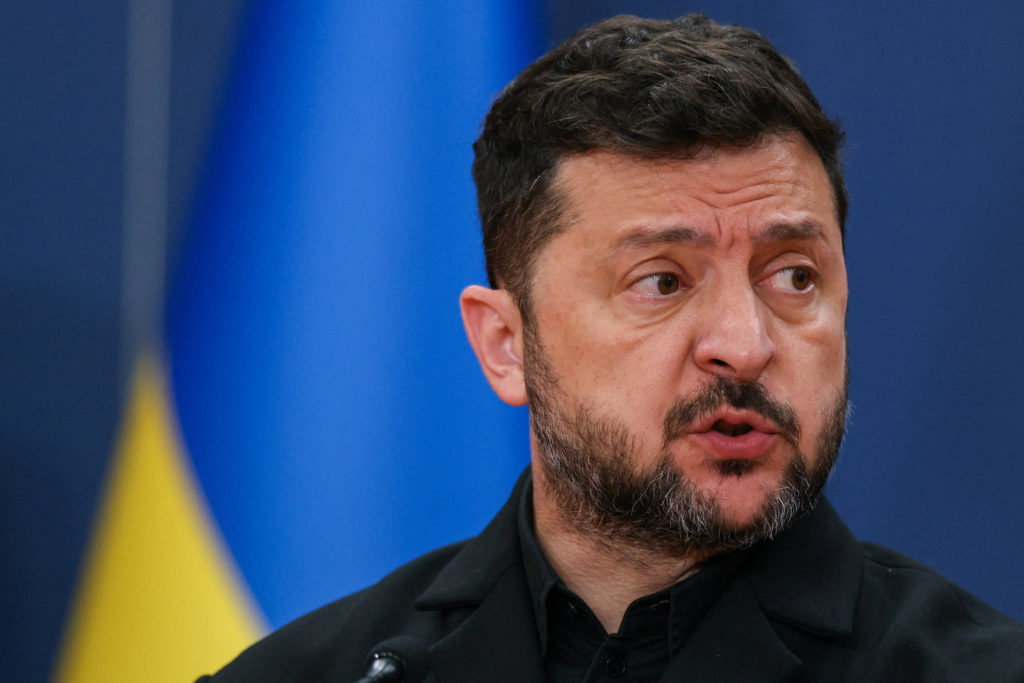
Ukrainian President Volodymyr Volodymyr Zelenskyy has provided his first public explanation for the controversial dismissal of Defense Minister Mykhailo Fedorov, citing a combination of strategic miscalculations and political missteps. In a detailed address to reporters, Zelenskyy characterized Fedorov’s involvement in recent mass protests and his subsequent calls for early elections as counterproductive to the nation’s wartime stability. The president emphasized that while he maintains personal respect for Fedorov, who is widely credited with modernizing Ukraine’s military infrastructure and integrating drone warfare capabilities, the minister’s recent actions diverged sharply from the administration’s strategic priorities.
A central point of contention appears to be a diplomatic incident involving SpaceX and its Starlink satellite network. Zelenskyy revealed that the Defense Ministry had previously assured him that Elon Musk had agreed to permit Ukrainian forces to use Starlink terminals over Russian territory for deep-strike operations, pending political approval. Acting on this information, Zelenskyy raised the matter with U.S. President Donald Trump, asserting that Musk had confirmed the arrangement. However, subsequent discussions revealed that Musk had actually rejected the proposal, viewing it as a dangerous escalation. Zelenskyy stated that Trump accused him of being misled by his defense leadership, an error in intelligence transmission that contributed to the president’s decision to remove Fedorov from office.
The dismissal has triggered weeks of sustained public demonstrations, with protesters demanding Fedorov’s reinstatement and criticizing the government’s handling of military leadership. Zelenskyy addressed these gatherings directly, pushing back against what he described as excessive vilification of both former Army Commander-in-Chief Gen. Oleksandr Syrskyi and current Defense Minister Maj. Gen. Yevhen Khmara. He argued that labeling military leaders as adversaries undermines the armed forces’ ability to maintain order and protect civilian spaces during protests. The president stressed that the military’s role in ensuring safe conditions for peaceful assembly should be acknowledged rather than attacked, framing the rhetoric against these officials as intolerable.
Beyond personnel disputes, Zelenskyy outlined significant structural challenges facing Ukraine’s defense apparatus. He disclosed a $27 billion shortfall in the Defense Ministry’s budget, attributing part of this deficit to spending decisions made earlier in the year that advanced funds originally allocated for later periods. This financial strain coincides with a broader trend of diminishing support from Western allies regarding critical air-defense assets. Zelenskyy presented data indicating that deliveries of Patriot missiles have declined over the past three years, even as Russian ballistic missile strikes have intensified. This gap in defensive capabilities leaves Ukraine increasingly vulnerable to aerial attacks despite ongoing efforts to bolster its own production and procurement channels.
Despite these logistical and financial headwinds, the president highlighted recent operational successes on the battlefield. He reported that Ukrainian forces have nearly fully recaptured the Dnipropetrovsk region, with only approximately 10 square kilometers remaining under Russian control. This territorial gain serves as a counterpoint to the internal political turmoil, suggesting that military effectiveness persists even amid leadership changes and resource constraints. Zelenskyy used these updates to reinforce his argument that stability in command structures is essential for maintaining such momentum, implying that frequent shifts in high-level appointments could disrupt ongoing campaigns.
The question of electoral timing remains a flashpoint in Ukrainian politics. Fedorov’s call for elections during the war has been firmly rejected by Zelenskyy, who described such a move as a potential catalyst for national division. He argued that conducting a vote under current conditions would create a ‘tsunami’ effect, splitting the country at a critical juncture. Zelenskyy noted that while he has faced pressure to hold elections, no viable plan has emerged from international partners or domestic stakeholders that ensures safety, legitimacy, and democratic integrity. The absence of a secure framework for polling further solidifies his stance against immediate electoral processes.
Zelenskyy also mentioned that he had offered Fedorov four alternative roles within the government following the initial decision to remove him as defense minister. According to the president, Fedorov declined all proposals, opting instead to engage in public advocacy and protest activities. This refusal to accept a transitional position may have exacerbated tensions between the executive branch and the former minister’s supporters. The breakdown in negotiation underscores the depth of the rift, moving it beyond policy disagreements into the realm of political confrontation.
Looking ahead, the Ukrainian government faces the dual challenge of stabilizing its defense budget and managing public sentiment amid ongoing hostilities. The combination of reduced Western aid, internal fiscal pressures, and political dissent creates a complex environment for decision-making. Zelenskyy’s remarks suggest a strategy focused on consolidating authority and minimizing distractions from the war effort. By framing Fedorov’s dismissal as a necessary correction to strategic errors rather than a purely political purge, the president aims to justify his actions while preparing the public for continued hardships in both economic and military domains.
The situation remains fluid, with no immediate resolution in sight regarding the protests or the long-term restructuring of the defense ministry. International observers will likely monitor how these internal dynamics affect Ukraine’s ability to coordinate with allies and sustain its defensive operations. The interplay between domestic politics and wartime exigencies continues to define the trajectory of Ukraine’s response to Russian aggression, with leadership stability emerging as a critical factor in determining future outcomes.
Sources behind this briefing
Go to the original reporting
- PBS NewsHour↗Zelenskyy details rift with Ukraine's dismissed defense minister Fedorov

