The short version
- Over eight million registered voters are casting ballots in a contest largely viewed as a two-way race between the incumbent president and his main challenger.
- The election tests Zambia's democratic stability amid reports of restricted political rights and ongoing disputes regarding the burial of former President Edgar Lungu.
- Voters express mixed sentiments, with some supporting the administration's debt restructuring efforts while others cite persistent unemployment and inflation as reasons to seek change.
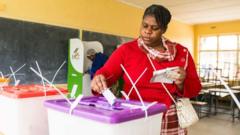
Zambians are heading to the polls on Thursday to select a new president and parliament, marking a critical juncture for a nation often cited as one of Africa’s most stable democracies. More than eight million citizens are registered to participate in this high-stakes election, which will determine whether President Hakainde Hichilema secures a second five-year term or faces defeat at the hands of his primary rival, Brian Mundubile. Polling stations opened early in the morning across the country, including in the capital, Lusaka, where long queues formed despite chilly weather conditions. While officials aim to close voting by 18:00 local time, some locations experienced initial delays, prompting civil society monitors to report a mix of orderly proceedings and procedural irregularities.
The contest is widely interpreted as a referendum on Hichilema’s economic management since he took office in 2021. The incumbent has championed a narrative of recovery, pointing to successful debt restructuring, a strengthening national currency, and reduced inflation rates as evidence of his administration’s competence. He argues that these foundational steps have cleared the path for more aggressive growth strategies aimed at job creation and infrastructure development. However, this economic optimism is contested by voters who continue to struggle with high unemployment and escalating living costs. The disconnect between macroeconomic indicators and daily financial realities has created a polarized electorate, with many citizens feeling that the benefits of stabilization have not yet reached their households.
Brian Mundubile, a former minister under the Patriotic Front government that ruled from 2011 to 2021, represents the opposition’s best chance at overturning the current administration. His campaign draws significant support from backers of the late former President Edgar Lungu, whose death more than a year ago has left a lingering political vacuum. Mundubile has framed his candidacy around themes of peace, unity, and the empowerment of women and young people, describing the election as a second independence for Zambia. The unresolved status of Lungu’s burial, with his body remaining in South Africa amid a bitter dispute between his family and Hichilema’s government, has further inflamed political divisions and added emotional weight to the voting process.
Beyond the economic debate, the election is also scrutinized as a test of Zambia’s democratic integrity. Amnesty International has accused the Zambian government of restricting rights and freedoms in the lead-up to the vote, allegations that authorities have not publicly addressed. These concerns raise questions about whether the country can maintain its reputation for political stability while facing internal pressures on civil liberties. International observers are present to monitor the process, but the presence of such scrutiny underscores the fragility of the democratic environment. The outcome will signal whether Zambia can navigate these challenges without compromising the openness that has characterized its recent political history.
On the ground, voter sentiment reflects a deep sense of uncertainty and division. Some citizens, like university students, express support for Hichilema, citing tangible improvements such as restored meal allowances as reasons to back his re-election. Others, including workers in manual trades, voice frustration with the pace of economic progress, arguing that stories of recovery ring hollow when jobs remain scarce. This split highlights the complexity of the electorate’s priorities, with some prioritizing institutional stability and others demanding immediate relief from financial hardship. The election thus serves as a barometer for public patience with gradual reforms versus the desire for rapid transformation.
The voting process itself has been marked by both civic engagement and logistical hurdles. Early turnout was notable, with hundreds of voters braving the cold to cast their ballots before official opening times. Officials have employed indelible ink on voters’ thumbnails to prevent multiple voting, a standard security measure in many democracies. Despite these precautions, reports of delays and minor procedural issues suggest that the administration is not immune to operational challenges. The presence of civil society monitors provides an additional layer of accountability, ensuring that any irregularities are documented and potentially addressed in post-election reviews.
If no candidate secures more than 50% of the vote, a run-off election will be required within 37 days. This possibility adds another layer of tension to the current voting day, as both campaigns must prepare for a potential extended battle. The fourteen candidates on the ballot indicate a fragmented political landscape, but the focus remains squarely on the duel between Hichilema and Mundubile. Their respective platforms offer contrasting visions for Zambia’s future, with one emphasizing continued economic stabilization and the other advocating for a shift in governance style and social priorities.
As the polls close, the nation awaits results that will define its political trajectory for the next five years. The election is not just about choosing a leader but also about affirming or challenging the direction of Zambia’s democratic and economic policies. Whether Hichilema can consolidate his gains or Mundubile can capitalize on voter frustration remains to be seen. The coming days will reveal whether the country’s reputation as a stable democracy holds firm under the pressure of contested freedoms and economic disparities.
In the broader context, this election reflects wider trends in African politics where incumbents face increasing scrutiny over their ability to deliver tangible improvements in citizens’ lives. Zambia’s experience offers insights into how nations balance macroeconomic achievements with micro-level welfare concerns. The resolution of the Lungu burial dispute and the handling of civil liberties issues will also influence how international partners view Zambia’s governance standards moving forward.
Ultimately, the significance of this vote extends beyond the immediate political contest. It serves as a critical moment for assessing the resilience of democratic institutions in the face of economic strain and social division. The choices made by Zambian voters today will shape not only their own future but also serve as a case study for other nations navigating similar challenges in an increasingly complex global landscape.
Sources behind this briefing
Go to the original reporting
- BBC World↗Zambians voting as president bids for second term

