The short version
- Police have taped off and restricted access to key courts in Lusaka, including the High Court and Supreme Court, as the deadline for election petitions approaches.
- Opposition candidate Brian Mundubile plans to challenge the results citing irregularities but remains in hiding due to security threats following recent violence.
- International observers noted significant procedural flaws during vote tallying, while preparations for the incumbent president's inauguration continue despite the legal uncertainty.
Judicial access in Zambia’s capital has been abruptly restricted as the deadline for challenging the recent presidential election results approaches. Court premises in Lusaka, including the High Court and the Supreme Court which houses the Constitutional Court, have been sealed off with tape. An unusual police presence has been reported at these locations, with officers instructing lawyers to depart from the area. This closure creates immediate uncertainty regarding the ability of opposition figures to file legal petitions before Monday, the final day allowed for such actions.
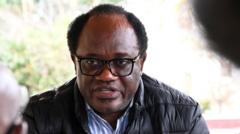
The restrictions come amid a tense post-election period marked by violence and political instability. Brian Mundubile, the opposition candidate who secured 38% of the vote, has announced his intention to contest the results in court. He cited irregularities in the voting process as grounds for his challenge. However, Mundubile is currently in hiding under the protection of an international human rights body, citing threats against his life. His decision to seek legal recourse follows a rejection of the election outcome that awarded incumbent Hakainde Hichilema a second term with 60% of the vote.
The security situation for opposition figures has deteriorated significantly since the August 13 poll. Mundubile went into hiding after several opposition associates were arrested and former minister Mutotwe Kafwaya was killed during a security raid in the capital. Officials described the incident involving Kafwaya as an exchange of fire during a security operation, but rights groups have expressed grave concern. Amnesty International labeled the killing deeply alarming and called for prompt, impartial investigations. The Law Association of Zambia has similarly demanded independent inquiries into the deaths and arrests.
International observers have raised substantial concerns about the integrity of the electoral process. While regional and international monitors described election day as largely peaceful, they highlighted serious issues regarding late electoral reforms and media freedom restrictions that may have created an uneven contest. The European Union observation mission reported that a heavy military presence at tallying centers was intimidating. They also noted reports of attacks on some centers and observed that staff often failed to record results immediately on tally sheets.
Procedural weaknesses were evident in the verification process between digital entries and paper records, according to the EU mission. Returning officers frequently paused proceedings while awaiting instructions from headquarters, further complicating the transparency of the vote count. The mission emphasized the need for maximal transparency, noting that the electoral commission did not publish separate polling-station results. These observations suggest systemic vulnerabilities that could undermine confidence in the final outcome.
Despite the legal challenges and security concerns, preparations for Hakainde Hichilema’s inauguration appear to be proceeding on schedule. The ceremony is set for September 1 at the National Heroes Stadium. The youth and sport ministry has issued media invitations for journalists to accompany a cabinet official during an inspection of the arrangements. This continuation of state functions contrasts sharply with the judicial blockade and the opposition’s claims of irregularities.
It remains unclear when the sealed court premises will reopen or how the judiciary will handle petitions filed after access is denied. The BBC has contacted both the Zambian police and the judiciary for comment regarding the closures. The intersection of legal deadlines, physical barriers to justice, and ongoing political violence presents a complex scenario for resolving the election dispute. The coming days will likely determine whether the judicial system can function independently amidst these pressures.
The situation underscores broader tensions in Zambia’s democratic institutions. The combination of restricted media access, military involvement in electoral processes, and the use of force against opposition figures has drawn criticism from international bodies. As the petition deadline looms, the ability of Mundubile and other challengers to present their case effectively is compromised by the physical inaccessibility of the courts. The resolution of this crisis will have significant implications for Zambia’s political stability and rule of law.
Observers are watching closely to see if the inauguration proceeds without incident or if legal interventions can halt the process. The lack of published polling-station results limits public verification of the vote count, fueling skepticism among opposition supporters. With Mundubile in hiding and courts closed, the traditional avenues for democratic dispute resolution are currently obstructed. The international community remains concerned about the potential for further escalation if grievances are not addressed through transparent legal channels.
The closure of courts represents a critical juncture in Zambia’s post-election timeline. If petitions cannot be filed or heard, the legitimacy of the second term for President Hichilema may remain contested by significant portions of the electorate. The government’s decision to seal off judicial facilities while simultaneously preparing for an inauguration suggests a prioritization of political continuity over legal scrutiny. This approach risks deepening divisions and undermining trust in state institutions.
Sources behind this briefing
Go to the original reporting
- BBC World↗Access to Zambian courts prevented as election petition deadline looms

