The short version
- Two recent WNBA games were halted after objects were thrown onto the court by spectators in Chicago and Los Angeles.
- Players have criticized the individuals responsible, describing their actions as weak and reflective of personal internal struggles rather than legitimate protest.
- The incidents appear linked to ongoing tensions regarding transgender athlete eligibility, despite no such athletes currently competing in the league.
Two Women's National Basketball Association matches were recently interrupted when objects were thrown onto the court from the stands, reigniting concerns about spectator conduct and safety. The disruptions occurred during games involving the Chicago Sky and the Atlanta Dream, forcing officials to pause play while security personnel removed the items. These events echo a pattern of disturbances seen in previous seasons, suggesting a persistent issue that league administrators are struggling to fully contain despite strict enforcement policies.
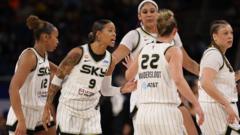
In Chicago, the incident took place during the third quarter of a home game against the Golden State Valkyries. A green object landed on the playing surface, necessitating a stoppage until it could be safely retrieved. The Sky ultimately secured a narrow 73-70 victory after play resumed. Similarly, in Los Angeles, the Atlanta Dream’s dominant 124-88 win over the Sparks was interrupted when an object was thrown as guard Park Ji-hyun prepared for a free throw attempt. Both occurrences highlight the vulnerability of live sporting events to targeted disruptions from the audience.
Chicago Sky guard Natasha Cloud addressed the behavior publicly, characterizing the individuals responsible as lame and weird. She emphasized that such actions reveal more about the internal conflicts of the perpetrators than they do about any collective group. Cloud argued that throwing objects demonstrates extreme weakness and reflects poorly on how these individuals view women. Her comments underscore a broader sentiment among players who feel targeted by harassment disguised as political protest.
Security measures have been implemented to address these violations. In Los Angeles, arena staff identified a male spectator responsible for the disruption at Crypto.com Arena. This individual is set to receive a lifetime ban from attending WNBA matches, signaling the league's commitment to zero tolerance for such behavior. However, it remains unclear whether those involved in the Chicago incident have been apprehended or identified. The disparity in outcomes raises questions about the consistency and effectiveness of security protocols across different venues.
The context for these disruptions appears tied to ongoing debates surrounding transgender athlete participation in women's sports. Although no transgender athletes are currently competing in the WNBA, recent comments by Indiana Fever guard Sophie Cunningham regarding league rules have sparked intense discussion in the United States. The controversy has drawn attention from various groups, including members of a meme-coin community who claimed responsibility for similar incidents last season.
Last year, six WNBA matches across Atlanta, New York, and Los Angeles were interrupted between July and August due to objects being thrown onto the court. At that time, the league stated that any spectator caught engaging in such behavior would face bans and potential prosecution. Reports indicate that the same group responsible for last year's disruptions has vowed to continue targeting WNBA games to protest the league's policy on transgender athletes. This continuity suggests an organized effort rather than isolated acts of vandalism.
The WNBA operates under a collective bargaining agreement negotiated between the league and the players' association, which outlines rules regarding player eligibility. The agreement specifies that only players who are women are eligible to compete in the league. This clause has become a focal point for critics and supporters alike, with interpretations varying widely. The lack of transgender athletes currently in the league complicates the narrative, as protests seem directed at potential future scenarios rather than present realities.
As the season progresses, the league faces the challenge of balancing free expression with player safety and game integrity. While bans serve as a deterrent, they do not eliminate the risk of further disruptions. The incidents in Chicago and Los Angeles demonstrate that despite heightened security and clear consequences, determined individuals may still attempt to interfere with games. Moving forward, the WNBA must continue to refine its strategies for managing crowd behavior while addressing the underlying social tensions fueling these actions.
The broader implications extend beyond individual games, affecting the atmosphere of professional basketball and the perception of women's sports in America. Fans who attend matches expect a safe environment free from harassment and intimidation. When objects are thrown onto the court, it undermines that expectation and detracts from the athletic performance on display. Addressing this issue requires not only punitive measures but also a deeper understanding of the motivations behind such behavior.
Ultimately, the WNBA's response to these incidents will shape how future disruptions are handled. By enforcing bans and pursuing legal action where possible, the league sends a strong message that such conduct is unacceptable. However, without resolving the underlying cultural debates surrounding gender and sports eligibility, similar challenges may persist. The focus now shifts to ensuring that players can compete without fear of harassment, preserving the integrity of the game for athletes and fans alike.
Sources behind this briefing
Go to the original reporting
- BBC Sport↗Sex toys again thrown on court during WNBA matches

