The short version
- The President hosted Nathanial Rai and Ryder Williams at the White House following a viral video of the teen's rescue of the ten-year-old boy in Santa Cruz.
- Trump praised the lifeguard's bravery while stating he likely would not have performed such a dangerous intervention himself.
- State lawmakers are currently reviewing legislation to designate lifeguards as first responders, a move that could improve benefits but raises questions about training standards and funding.
A dramatic rescue along the California coast has moved from viral internet footage to the Oval Office, where President Donald Trump recently hosted both the survivor and his savior. The meeting centered on Nathanial Rai, a ten-year-old boy who was swept away by powerful waves at Seabright Beach in Santa Cruz, and Ryder Williams, the sixteen-year-old lifeguard who pulled him from the churning water. The incident, captured on video in late July, showed Williams clinging to Rai as large swells repeatedly crashed over them, briefly submerging the pair before they reemerged when the water receded.
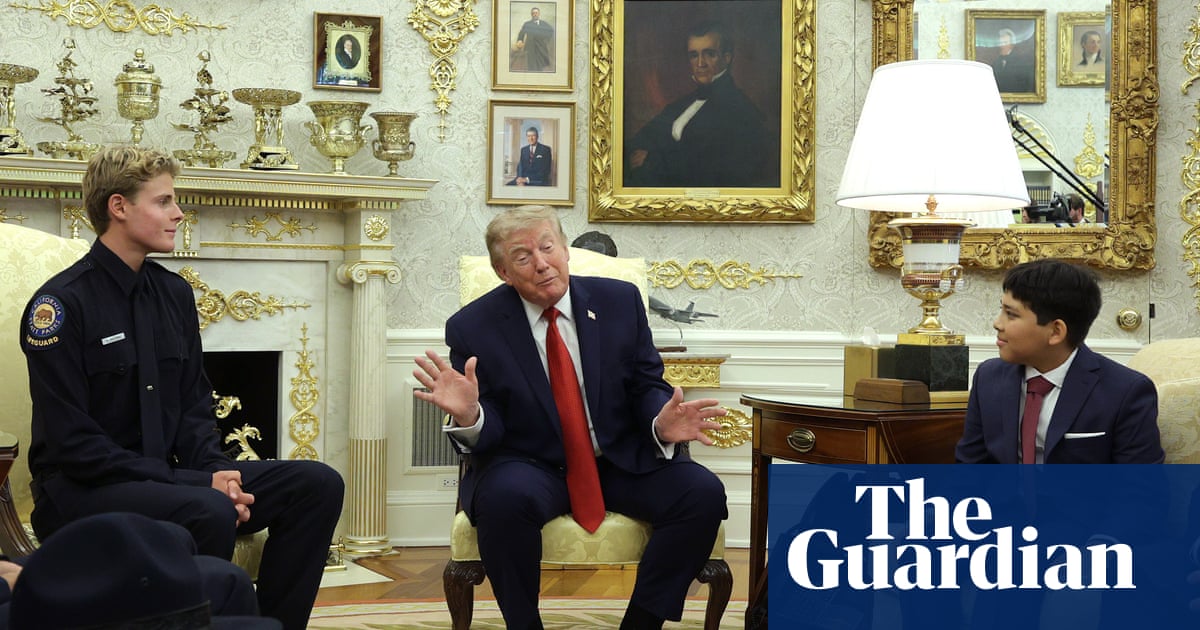
During the White House visit, Trump offered high praise for Williams, describing him as a genuine hero while simultaneously expressing doubt about his own ability to replicate such an act. Speaking directly to Rai, who sat on a gold couch beside his father wearing a dark suit and maroon tie, the President remarked that he was uncertain if he would have intervened in the same manner. He suggested that Rai was fortunate Trump was not on duty that day, implying the outcome might have been different under his watch.
The invitation to the White House followed public comments from Eric Trump, who argued that Williams deserved the highest civilian honor available. The President had previously indicated on social media that he intended to reward the teenager’s bravery in person. The meeting served as a formal recognition of the event that captured national attention, with both boys present to hear the President discuss the ordeal. Sumit Rai, Nathanial’s father, expressed profound gratitude to the Associated Press, stating that he could never fully repay Williams for his actions and remained forever thankful for his son’s safety.
While the White House celebration highlighted individual heroism, the incident has also reignited a broader policy discussion in California regarding the professional status of lifeguards. State lawmakers are currently reviewing proposed legislation that would officially classify lifeguards as first responders. Analysts suggest that such a designation would provide these workers with greater professional recognition, improved resources, and enhanced worker protections. The change could also offer better benefits, aligning their employment conditions more closely with other emergency service personnel.
However, the path to legislative approval is not without complications. Some members of the public expressed disbelief that lifeguards do not already hold first responder status, given the inherent dangers of their work. Yet, state Senator John Laird of Santa Cruz noted that the designation involves complex logistical and regulatory considerations. He pointed out that traditional first responders undergo rigorous training protocols, such as the eight-month peace officer standards training, and questioned how similar requirements would apply to lifeguards.
Laird raised several practical questions regarding the implementation of such a law. He asked who would be responsible for funding the necessary training and how the designation would be structured administratively. The debate underscores the tension between recognizing the life-saving nature of lifeguarding and defining it within existing legal frameworks for emergency services. Determining what constitutes appropriate training and support remains a central challenge for legislators attempting to craft effective policy.
The rescue itself required the efforts of more than one individual. After Williams initially secured Rai, a second lifeguard named Aaron Bohnen assisted in bringing both boys back to shore safely. The coordinated effort prevented a potential tragedy at Seabright Beach, where conditions can turn dangerous quickly. The viral nature of the video ensured that the details of the rescue were widely disseminated, prompting both personal accolades and political scrutiny.
As the legislative review continues, the case of Ryder Williams serves as a focal point for discussions about worker safety and professional standards in coastal communities. The White House meeting provided a moment of national recognition for a specific act of bravery, but the underlying issues regarding lifeguard classification remain unresolved. Lawmakers must balance the desire to honor these workers with the practical realities of training requirements and financial responsibilities.
The incident highlights the unpredictable nature of ocean safety and the critical role played by trained personnel in preventing fatalities. While the President’s comments focused on the personal courage displayed by Williams, the broader implications for labor policy and emergency response definitions continue to unfold in Sacramento. The outcome of the proposed legislation could set a precedent for how similar roles are classified and supported across the state.
For now, the immediate danger has passed for Nathanial Rai, who returned home with his family after the White House visit. The attention drawn to the rescue has brought visibility to the risks faced by lifeguards daily. Whether this visibility translates into lasting legislative change remains to be seen, as lawmakers navigate the complexities of expanding first responder definitions without compromising established training standards.
Sources behind this briefing
Go to the original reporting
- The Guardian US Politics↗Trump tells 10-year-old rescued by teen lifeguard: ‘I don’t know if I’d do it’