The short version
- School officials installed metal fencing and reinforced gates to protect students after five teenagers were killed by settlers in the previous academic year.
- Residents report that Israeli military forces often stand by during settler raids, creating an environment where violence against Palestinians goes unchecked.
- Local leaders characterize the escalating harassment as part of a broader strategy to displace Palestinian communities from their land.
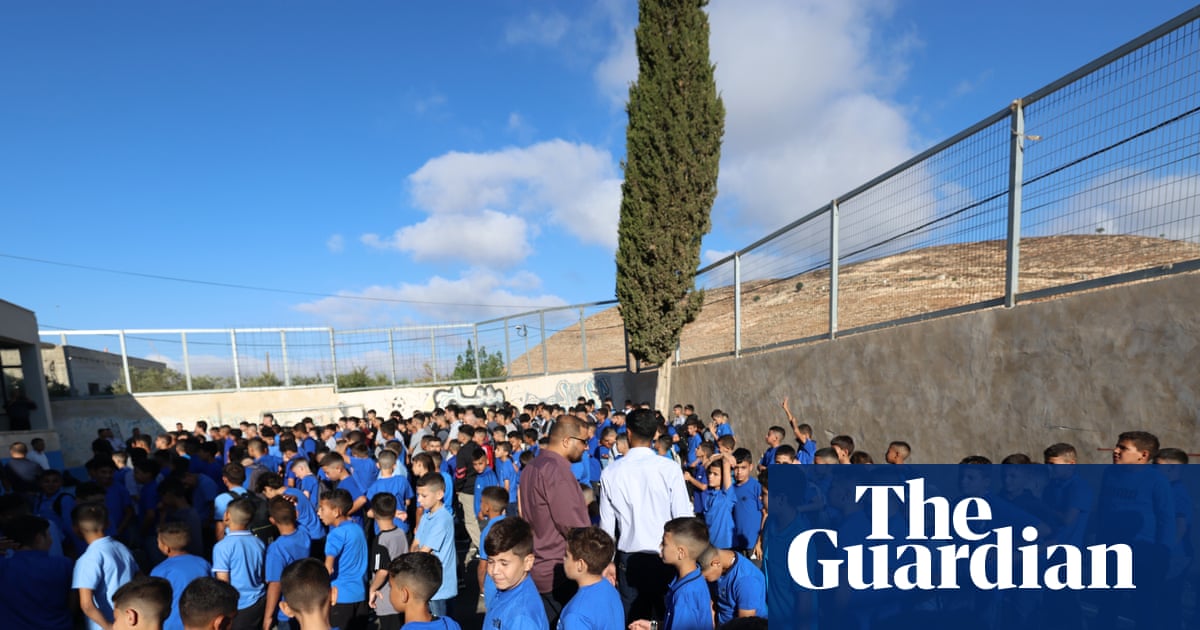
In the occupied West Bank town of al-Mughayyir, educators and students have adopted a heightened state of vigilance this academic year. Following a period in which five teenage pupils were killed by Israeli settlers, school administrators spent the summer break reinforcing the campus infrastructure. The goal was to reassure parents who had initially resisted sending their children back to class after one student was shot at the school entrance last year.
The physical changes to the secondary school are stark. Metal fences now rise above the existing perimeter walls, and a heavy metal gate has replaced the former door. A new barrier shields classrooms from a nearby hilltop, a location where settlers previously opened fire, killing two people including a student. These fortifications reflect a community attempting to create safety in an environment that residents describe as increasingly hostile.
Al-Mughayyir, a village of approximately 3,000 inhabitants located northeast of Ramallah, faces what locals term a siege by Israeli settlers. Armed individuals regularly enter the town, assaulting residents, damaging homes, and seizing livestock. Israeli military checkpoints frequently restrict movement, preventing people from entering or leaving for extended periods. The school sits isolated at the village edge, making it a focal point for these incursions.
A single Israeli soldier often patrols the village entrance, controlling access while settlers conduct raids nearby. Residents observe that soldiers typically provide protection for the settlers rather than intervening to stop attacks on Palestinians. This dynamic has led to a sense of abandonment among villagers, who feel that the military presence enables rather than prevents violence against their community.
Local officials view these events as part of a larger displacement strategy. Ameen Abu Alia, the town’s mayor, noted that settler outposts have multiplied significantly in recent years. In 2023, only one such outpost existed near al-Mughayyir; by late 2026, there were twelve. He argues that tactics previously used to displace small farming communities in the Jordan Valley are now being applied to entire villages.
The violence has targeted individuals directly involved in defending their property. Waheed Abu Naim, a schoolteacher, recounted an incident where he attempted to stop a settler from attacking a home. The settler pointed a pistol at him and pulled the trigger, but the weapon had already been discharged. Such encounters highlight the lethal risks faced by residents who resist harassment.
Livestock theft has become a common provocation for conflict. Settlers graze sheep on fields adjacent to the school and within the village, often stealing animals from locals who depend on them for livelihoods. When villagers attempt to reclaim their property or defend themselves, they face arrest or death. In early September, two teenagers were killed while trying to prevent settlers from taking their sheep.
Despite international law considering settlements illegal, the Israeli government has taken limited action to curb settler violence. Extremist ministers in the current administration have reportedly equipped settlers with weapons and vehicles, contributing to a surge in settlement expansion. Residents fear that the escalating pressure is designed to make life intolerable, forcing them to leave their homes permanently.
The pattern of displacement mirrors events in other parts of the West Bank. In Ras ‘Ein al-‘Auja, settlers drove out the last inhabitants after a sustained campaign of attacks. Al-Mughayyir residents worry they are facing a similar trajectory. The combination of military inaction and settler aggression has created an atmosphere of fear, with shops remaining shuttered on weekdays and daily life disrupted by the threat of violence.
As the academic year progresses, the fortified school stands as a symbol of resistance against displacement. Teachers continue to navigate the dangers of their surroundings, aware that the physical barriers may not be enough to stop determined attackers. The situation in al-Mughayyir underscores the broader instability in the region, where legal protections are often ignored and civilian safety remains precarious.
Sources behind this briefing
Go to the original reporting
- The Guardian US↗‘Our aim is that children are protected’: besieged West Bank school fortifies its defences against settler violence


