The short version
- Stan Wawrinka will retire at the end of the year without playing in the US Open main draw, having been denied a wildcard despite winning the title there in 2016.
- The Swiss star received wildcards for the Australian Open, French Open, and Wimbledon earlier this season but fell short of automatic qualification for New York due to ranking declines.
- Wawrinka expressed deep appreciation for the city and tournament on social media, describing his victory as one of the greatest moments of his life despite the exclusion.
Stan Wawrinka is concluding his professional tennis career without making a final appearance at the US Open, a tournament where he secured his most significant title a decade ago. The 41-year-old Swiss player was not awarded a wildcard entry for the main draw in New York, marking an abrupt end to his participation in the Grand Slam event that defined much of his legacy. While Wawrinka received special invitations to compete at the Australian Open, French Open, and Wimbledon earlier this year, the United States Tennis Association opted against extending similar courtesy for the season finale.
The decision has drawn scrutiny from observers who note the unusual nature of excluding a former champion from a farewell tour. Wawrinka did not enter the qualifying rounds, remaining within the ranking cutoff that typically allows players to bypass qualifiers if they hold a top-100 position. However, his ranking has slipped outside that threshold in recent years due to persistent injuries and fluctuating form. Wildcards are discretionary entries granted to players who have not qualified automatically through their rankings, often used to support local talent or honor significant contributions to the sport.
Despite the disappointment of missing out on a final New York appearance, Wawrinka responded with public gratitude rather than criticism. In a social media statement, he reflected on his journey from a small farming village in Switzerland to the bright lights of Flushing Meadows. He described how the city’s intensity and energy initially overwhelmed him but eventually became one of his favorite places in the world. The former world number three emphasized that New York challenged him to bring out his best, creating memories of battles and crowd support that he will cherish indefinitely.
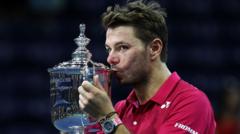
Wawrinka’s career is distinguished by his success during an era dominated by Novak Djokovic, Rafael Nadal, and Roger Federer. He stands as one of the few players to capture major singles trophies while these three competitors held sway over the tour. His Grand Slam victories include the 2014 Australian Open, the 2015 French Open, and the 2016 US Open, where he defeated Djokovic in a historic final. These achievements cemented his status as a top-tier competitor who managed to break through the dominance of the so-called Big Three.
The logistics of wildcard distribution further complicate the narrative surrounding Wawrinka’s exclusion. Unlike France, which hosts the French Open and granted a wildcard to fellow retiring player Gael Monfils through its national federation, Switzerland does not host a Grand Slam event. Consequently, Swiss players do not benefit from reciprocal wildcard arrangements that might otherwise facilitate entry into major tournaments. The US Open wildcards are assigned by the United States Tennis Association, which operates independently of such international reciprocity norms.
Wawrinka’s coaching team also acknowledged the sting of the decision. Magnus Norman, his coach, stated on Instagram that they had pushed for one last Grand Slam appearance at age 41 but fell short of securing a spot. Norman expressed sadness over the outcome but thanked the tournament organizers and the broader New York tennis community for thirteen years of shared experiences. The emotional weight of ending a career without a final bow in a city where he achieved his greatest success is palpable, even as Wawrinka maintains a respectful tone.
The US Open is set to begin on August 30 at Flushing Meadows, continuing its tradition as the final Grand Slam of the year. For Wawrinka, the tournament will serve as a backdrop for reflection rather than competition. His seventeen appearances in the men’s singles main draw since his debut in 2005 highlight a long and consistent presence on the stage where he won his most prized title. The absence of his name from this year’s draw marks the end of an era for a player who helped define competitive tennis in the 2010s.
As Wawrinka prepares to retire at the end of the year, his legacy remains intact despite the lack of a farewell match in New York. The US Open organization has not provided a detailed explanation for the wildcard decision, and BBC Sport has reached out to the United States Tennis Association for comment. Until then, the focus remains on Wawrinka’s own words, which emphasize gratitude and nostalgia over resentment. His career serves as a testament to resilience and excellence in a highly competitive field.
The broader tennis community watches with interest how this decision will be perceived in the long term. While wildcards are often used to generate goodwill or honor veterans, the exclusion of a former champion raises questions about the criteria applied by tournament organizers. Wawrinka’s response suggests a desire to leave on positive terms, focusing on the memories and emotions associated with his time in New York rather than the administrative details of his final season.
Ultimately, Wawrinka’s story is one of triumph and transition. He overcame the dominance of his peers to claim three Grand Slam titles, including a memorable victory at the US Open. His retirement marks the end of a significant chapter in tennis history, characterized by fierce competition and unforgettable moments. Even without a final appearance in New York, his impact on the sport and his connection to the city remain undeniable.
Sources behind this briefing
Go to the original reporting
- BBC Sport↗Retiring Wawrinka 'forever grateful' to US Open despite no wildcard

