The short version
- Prince Andrew received up to £2,000 monthly from sub-letting cottages at Royal Lodge while his main lease required no rent payments.
- King Charles covered a £1.5 million repair bill for the property after Andrew surrendered his lease early following controversy over his ties to Jeffrey Epstein.
- The Public Accounts Committee recommended banning future sub-letting of Crown Estate properties unless explicitly approved and raised concerns about rising administrative costs.
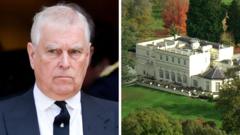
A parliamentary watchdog has determined that Prince Andrew, Duke of York, generated personal income by sub-letting three cottages at his former residence, Royal Lodge, while he himself paid no rent for the main estate. The Public Accounts Committee report reveals that the former prince received up to £2,000 per month from these arrangements. This finding emerges as part of a broader inquiry into the management of the Crown Estate, the independent property portfolio whose profits are surrendered to the Treasury.
The financial arrangement at Royal Lodge was structured such that Andrew did not pay rent for his primary residence. He had entered into a 75-year lease in 2003 and contributed approximately £7.5 million toward renovations and other charges, which exempted him from rental payments. However, the committee noted that he intermittently rented out three cottages on the grounds, properties generally intended for staff use. The income from these sub-leases went directly to Andrew rather than to the Crown Estate, his landlord.
The report highlights a lack of oversight regarding these transactions. The Crown Estate informed MPs that it did not monitor how much Andrew charged for the cottages and confirmed that sub-letting was permitted under the terms of his lease. The committee could not calculate the total sum earned over the more than two decades Andrew occupied the property, noting that he did not consistently rent out all three units during that period.
In response to these findings, MPs have recommended a shift in policy for Crown Estate properties. They propose that future leases should prohibit sub-letting by default, allowing it only if specifically agreed upon with the landlord. This recommendation aims to close loopholes that allowed royals to generate private income from state-owned assets without transparent oversight or contribution to public funds.
The scrutiny of Royal Lodge also covers the financial settlement following Andrew’s departure. He left the Windsor property in February, a move linked to renewed media attention on his association with convicted sex offender Jeffrey Epstein. Andrew has consistently denied any wrongdoing related to Epstein. Upon leaving, he was due a payment of roughly £300,000 for the early surrender of his lease. However, an assessment of the building’s condition revealed significant disrepair, resulting in a repair bill of £1.8 million.
Consequently, Andrew owed the Crown Estate £1.5 million rather than receiving a payout. King Charles paid this debt on his brother’s behalf. This transaction underscores the complex financial interplay between private royal finances and public assets, particularly when properties are returned in poor condition after long-term occupancy by senior royals.
Beyond the specific case of Prince Andrew, the committee expressed concern about rental arrangements for other non-working royals. The report questions whether rents charged to individuals such as Princess Beatrice, Princess Eugenie, and Prince and Princess Michael of Kent reflect current market valuations. Previous reports indicated that Beatrice and Eugenie do not pay rent directly; instead, the King covers these costs from his private income. MPs called for a more consistent approach to ensure value for money in these accommodations.
The inquiry also criticized the Crown Estate’s broader financial management. MPs noted a significant concentration of urban property holdings in London and southeast England, urging a more regional distribution. Additionally, they flagged a sharp rise in administrative costs, which increased by 129 percent since 2020-21. The chief executive’s salary rose by 106 percent over the same period, reaching £2.3 million in 2025-26. A Crown Estate spokesperson stated that the organization is considering the committee’s findings and will respond in due course.
Sources behind this briefing
Go to the original reporting
- BBC News↗Andrew received up to £2,000 per month from sub-letting, watchdog reports


