The short version
- The US Treasury announced Operation Economic Outcast, threatening secondary sanctions on any entity facilitating financial transactions with Iran.
- China, which purchases the majority of Iranian oil, has signaled resistance to US pressure, creating uncertainty about how far Washington will enforce penalties against Beijing.
- Iranian officials vowed retaliation through military or cyber means, while allies like the UAE have suspended trade ties in anticipation of US measures.
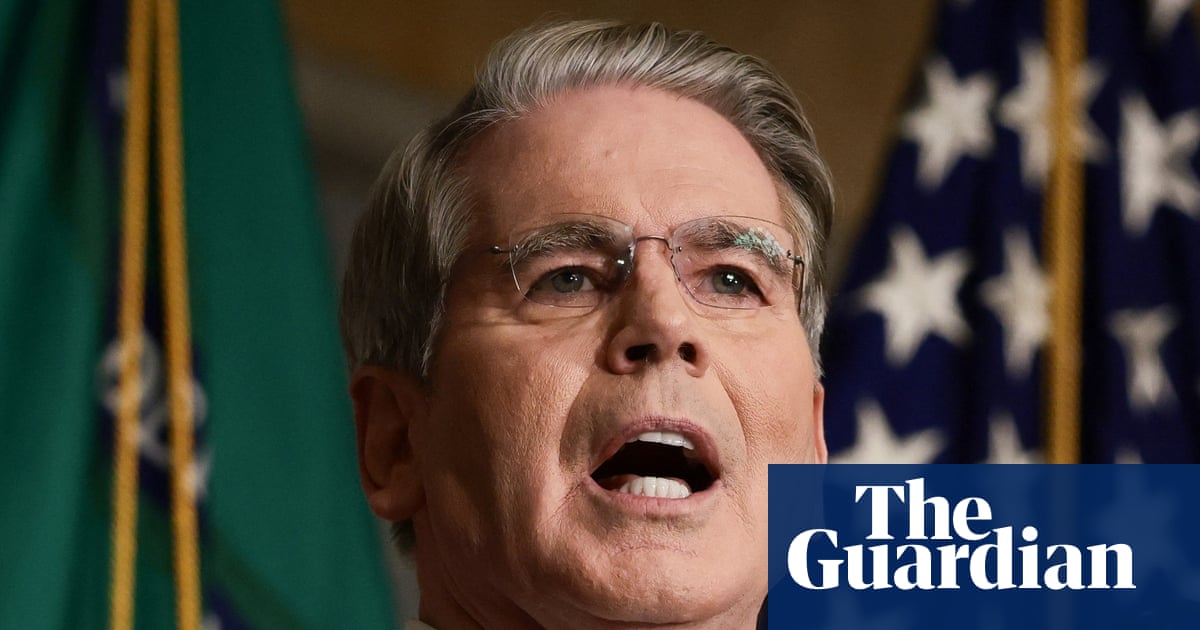
The United States has initiated a broad economic offensive aimed at isolating Iran from the global financial system, marking a significant escalation in tensions that have persisted since a joint US-Israeli military operation six months ago. Treasury Secretary Scott Bessent described the initiative, dubbed Operation Economic Outcast, as an unprecedented campaign designed to sever every economic lifeline sustaining the Iranian government. The administration hopes to achieve through financial pressure what military force has thus far failed to accomplish: compelling Tehran to abandon its nuclear enrichment program and other key strategic objectives.
Under the new framework, any country or entity that continues to maintain economic ties with Iran faces the threat of severe secondary sanctions. Bessent stated that violators would be given specific deadlines to cease interactions with the regime, after which they could be removed from the US dollar system if they facilitate money laundering or other financial transactions on behalf of Tehran. The Treasury Secretary emphasized that no actor is above the reach of these measures, signaling a zero-tolerance approach to the ecosystem that converts Iranian oil into revenue.
A central uncertainty in this campaign involves China, which remains Iran’s largest trading partner and purchased an estimated 80 percent of its shipped oil last year. While Bessent asserted that facilitators of Iranian transactions would be targeted regardless of their national origin, it remains unclear how aggressively the Trump administration will confront Beijing. The Chinese embassy in Washington responded by stating that sanctions do not help resolve the underlying issues, calling instead for political and diplomatic solutions. It is not yet known whether President Donald Trump has directly contacted his Chinese counterpart regarding these specific demands.
The timing of this economic push follows a period of military stalemate. Early expectations that the US-Israeli attack, which resulted in the death of Supreme Leader Ali Khamenei, would lead to regime collapse or immediate capitulation on nuclear issues have not materialized. Instead, hardline factions within Iran appear to have consolidated power, responding by declaring the closure of the Strait of Hormuz and attacking vessels that ignored the decree. The US imposed a counter-blockade on Iranian oil exports through the strait, creating an impasse that has already exerted profound effects on global energy markets.
Iranian officials have vowed to retaliate against any nation participating in the US-led isolation effort. Major General Ali Abdollahi, chief of staff for the armed forces, indicated that retaliation could take multiple forms, including land, sea, or air operations as well as cyber-attacks. This threat underscores the risks associated with the economic campaign, as Tehran seeks to impose its own costs on adversaries and their partners. The potential for expanded conflict remains a significant concern for regional stability.
International reactions have begun to crystallize in anticipation of the new sanctions. The United Arab Emirates, a close ally of both the US and Israel, announced it is suspending trade ties with Iran, likely to avoid secondary penalties. Turkey, another significant trading partner that has been critical of the US campaign against the Islamic Republic, has yet to respond publicly to the threat of sanctions. These divergent responses highlight the complex geopolitical landscape in which Washington must navigate its enforcement strategy.
Analysts suggest that while economic strangulation is a powerful tool, it is unlikely to produce a quick settlement favorable to US interests. Sina Toossi of the Center for International Policy noted that Washington appears to be attempting to achieve through intensified economic pressure what military force could not, but Tehran is answering with its own zero-sum approach. Andrew Miller from the Center for American Progress added that the announcement signals the failure of previous military actions to eliminate Iran’s nuclear program or cripple the regime, raising doubts about the efficacy of sanctions in achieving rapid diplomatic breakthroughs.
As the clock starts ticking on deadlines for various entities, the global economy faces renewed uncertainty. The interplay between US enforcement capabilities, Chinese resistance, and Iranian retaliation creates a volatile environment. Whether this economic onslaught will force Tehran to negotiate or simply harden its stance remains one of the most pressing questions in international relations today. The coming weeks will likely reveal how seriously major powers take the threat of exclusion from the dollar system.
Sources behind this briefing
Go to the original reporting
- The Guardian US↗US threatens severe sanctions against countries with economic ties to Iran

