The short version
- The Wales women's rugby team is undergoing rigorous physical conditioning to address fitness deficits identified during previous tournaments.
- A newly cohesive coaching staff aims to improve performance consistency over full eighty-minute matches for the upcoming WXV Global Series.
- Victories in the autumn tests against South Africa, the USA, and Japan are viewed as essential for World Cup qualification prospects.
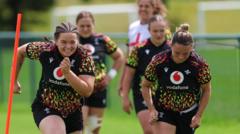
The Wales women's national rugby union team is currently engaged in an intensive pre-season training camp designed to address significant physical shortcomings that have contributed to a recent decline in competitive performance. Players are subjected to demanding conditioning protocols, including high-intensity interval runs and spin bike sessions, under the supervision of strength and conditioning coach Gareth Harris. The objective is clear: elevate the squad's fitness levels to ensure they can maintain high standards throughout entire matches, a capability that has been lacking in recent fixtures.
This push for physical improvement comes as Wales sits at twelfth place in the world rankings, a position that reflects a slump following a period where the team was ranked as high as sixth. The squad has lost its last nine competitive games, a streak that underscores the urgency of the current training cycle. While a victory over the Barbarians in June provided a brief respite, the coaching staff acknowledges that broader issues remain unresolved. The focus is now on translating individual effort into collective dominance on the international stage.
Head coach Sean Lynn and his backroom staff have been working to refine the squad ahead of the WXV Global Series, which begins in September. The extended roster of forty-six players has been in camp since early August, enduring high temperatures and rigorous drills. Harris noted that despite the physical toll and resulting soreness among the athletes, the attitude within the group has been exceptional. Players are demonstrating a strong sense of ownership regarding their personal standards and accountability to one another.
The coaching structure itself has evolved, contributing to a more unified approach. Forwards coach Steve Salvin, who joined the staff permanently in the summer, highlighted the shift from working in isolated silos during the Six Nations to a more cohesive collective strategy. This integration allows for better coordination across set pieces, attack, and defense. The goal is to cover all bases of the game rather than relying on fragmented efforts that previously allowed the team to perform well for only fifty to sixty minutes before fading.
Sustaining performance for the full eighty minutes is identified as a critical area for improvement. During the Six Nations, Wales showed promise but lacked the endurance to close out games effectively. The current training regimen is specifically designed to extend that window of high-level play. By improving stamina and tactical discipline in the latter stages of matches, the team hopes to secure results that were previously elusive due to late-game fatigue or defensive breakdowns.
The upcoming autumn series presents a significant opportunity for Wales to rebuild momentum. The campaign kicks off against South Africa at Cardiff Arms Park on September 18, followed by a home match against the United States on September 26. The team will then travel to Japan for two additional tests in October. All three opponents are ranked higher than Wales, making these fixtures challenging but necessary for any meaningful climb back up the global standings.
Beyond immediate results, the stakes extend to long-term qualification pathways. The WXV competition now feeds directly into qualification for the 2029 Rugby World Cup. Additionally, strong performances could influence selection for the inaugural Women's British and Irish Lions tour of New Zealand scheduled for next September. These factors add pressure to deliver not just wins, but convincing displays that demonstrate genuine progress.
Uncapped players like Amy Williams are catching the eye during training, suggesting a deepening of talent within the squad. The integration of new faces alongside established veterans offers potential for fresh energy and tactical flexibility. As the three-week pre-season period draws to a close, the coaching staff remains optimistic that the hard work will yield a visibly different team on match day.
The path forward requires consistency and resilience. Wales must navigate a difficult schedule while managing player welfare after an intense training block. Success in these autumn tests could signal a turning point for the program, reversing the downward trend and re-establishing competitiveness at the highest level. The coming weeks will reveal whether the physical and tactical adjustments have been sufficient to overcome recent struggles.
As the team prepares to face ranked opponents, the emphasis remains on execution under pressure. The coaching staff's confidence stems from the visible dedication of the players during camp. If this commitment translates to match performance, Wales may begin to climb out of its current ranking slump and position itself favorably for future international competitions.
Sources behind this briefing
Go to the original reporting
- BBC Sport↗Wales pushing the pain barrier in bid to improve
