The short version
- Massachusetts Question 9 asks voters to maintain a 2024 law requiring firearm serialization and expanding restrictions on certain weapons.
- Idaho presents a nonbinding advisory measure allowing residents to select one of six historic firearms as the official state gun.
- The contrasting ballot items highlight deep regional divides in American attitudes toward gun ownership rights and regulatory oversight.
American voters in two states separated by roughly two thousand miles are casting ballots that reflect starkly different approaches to firearm policy. In Massachusetts, the electorate is deciding whether to sustain a comprehensive regulatory framework enacted in 2024. Conversely, Idaho residents are weighing a symbolic gesture regarding the state’s relationship with gun culture. These measures do not resolve the broader national debate over Second Amendment rights versus public safety mandates, but they offer a clear snapshot of regional priorities during this election cycle.
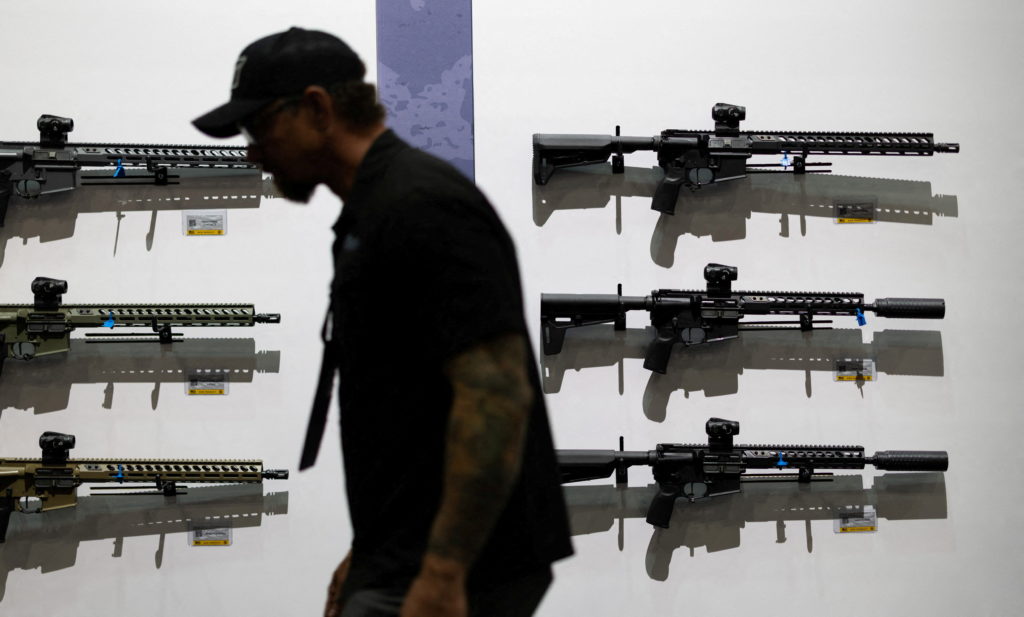
In Massachusetts, Question 9 seeks to preserve legislation that requires all firearms to be serialized and registered with state authorities. The law also broadens existing prohibitions on assault-style weapons and bans devices capable of converting standard firearms into rapid-fire mechanisms. Additionally, it expands the state’s red flag laws, permitting healthcare providers and school administrators to petition courts for temporary firearm removal from individuals deemed a risk to themselves or others. Proponents argue these updates represent the most significant overhaul of state gun laws in ten years.
Supporters of the Massachusetts measure emphasize that the registry aids law enforcement in solving crimes and tracking stolen or trafficked weapons. They contend that such data helps discourage illegal sales and provides officers with critical information when responding to incidents involving firearms. Advocates maintain that the legislation balances legal ownership pathways with necessary safety guardrails, aiming to reduce violence without eliminating lawful gun possession entirely.
Opponents of the Massachusetts registry argue that the timing of the law’s implementation violates residents’ rights. The measure took effect immediately upon signing by Governor Maura Healey, who invoked an emergency provision to bypass the usual legislative hold pending a referendum. Critics note that gun owners faced a deadline to register their weapons just days before the vote on whether to repeal the requirement. This sequence has drawn sharp criticism from groups like The Civil Rights Coalition, which contends that forcing compliance before allowing a democratic vote is fundamentally unfair.
Security concerns also drive opposition to the Massachusetts registry. Critics warn that creating a centralized government database of gun owners could expose sensitive information to hackers or malicious actors. They argue that leaked data could provide thieves with precise locations and inventory details, facilitating targeted burglaries. While federal law prohibits a national firearm registry, several states have adopted similar requirements, with Massachusetts joining Hawaii and the District of Columbia in implementing comprehensive systems.
In Idaho, the ballot question takes a markedly different tone. The Republican-led legislature placed a nonbinding advisory measure on the ballot asking voters to designate an official state gun. Residents must choose from six historic firearms, including options like the M1 Garand rifle, which was widely used by U.S. troops during World War II. Lawmakers hope this symbolic gesture will encourage higher voter turnout and celebrate the state’s strong gun-owning culture.
Idaho ranks among the states with the highest rates of household gun ownership, with approximately sixty percent of adults living in homes that contain firearms. The push for a state gun follows similar moves by Utah and Arizona, which adopted official firearms in 2011. However, some local gun rights advocates have expressed skepticism about the specific options presented to Idaho voters, noting that none of the candidates hold significant historical ties to the state itself.
The juxtaposition of these two ballot measures underscores the geographic and ideological polarization surrounding gun policy in the United States. Massachusetts, with one of the lowest gun ownership rates nationally, is reinforcing strict regulatory controls. Idaho, with high ownership rates, is focusing on cultural recognition rather than legislative restriction. As results come in, these outcomes will provide insight into how different regions prioritize safety, security, and symbolic expression in the context of firearm policy.
Sources behind this briefing
Go to the original reporting
- PBS NewsHour↗Massachusetts and Idaho put guns on the ballot. One to restrict them, the other to honor them