The short version
- Shannon Taylor and Elaine Luria secured Democratic nominations in Virginia's 1st and 2nd Congressional Districts, defeating progressive challengers and other rivals.
- The victories align with a broader strategy by state Democrats to flip Republican-held seats after a court-ordered redistricting plan was overturned earlier this year.
- Both nominees face incumbent Republicans in November, with the 2nd District rematch between Luria and Jen Kiggans viewed as a critical contest for House control.
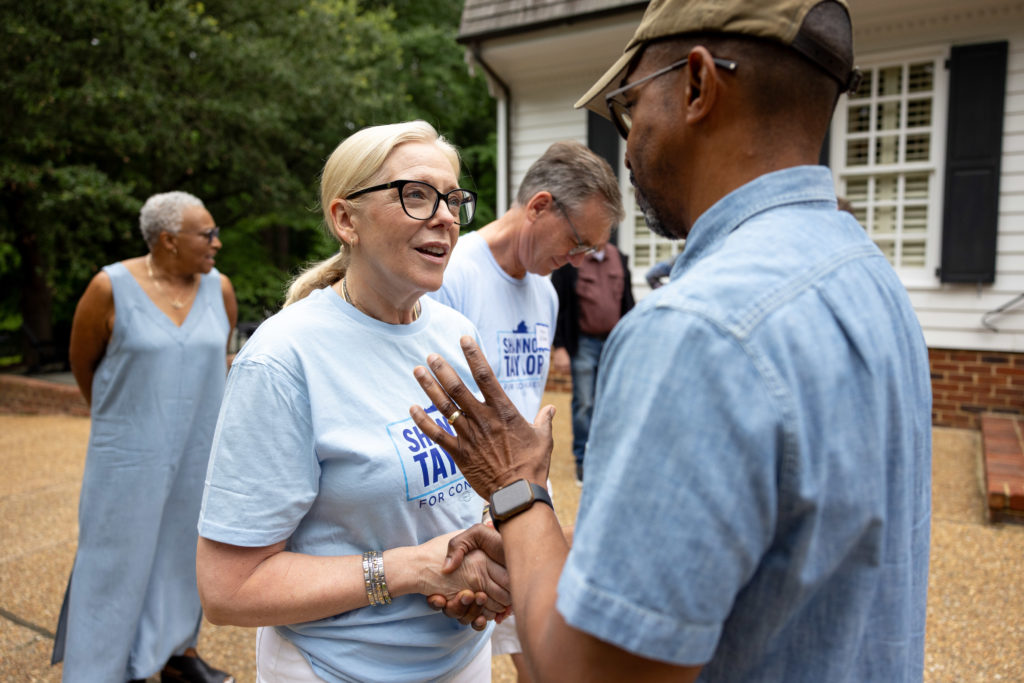
Virginia Democratic voters have selected moderate candidates to challenge Republican incumbents in two pivotal congressional districts, signaling a return to establishment preferences despite national trends favoring progressive outsiders. On Tuesday, Shannon Taylor, the elected commonwealth’s attorney in Henrico County, won the nomination for the 1st Congressional District, while former Representative Elaine Luria secured the nod for the coastal 2nd District. Both candidates received backing from the House Democratic Campaign Committee and prominent state leaders, including Governor Abigail Spanberger, underscoring a unified effort to compete aggressively in the upcoming general election.
The primary outcomes reflect a distinct pattern within Virginia’s Democratic electorate, which has historically favored centrist nominees over more progressive alternatives. Taylor emerged victorious in a crowded seven-way race, defeating Salaam Bhatti, a progressive candidate who captured approximately twenty percent of the vote. Luria faced three opponents in her contest, navigating a field that included various challengers seeking to unseat the former congresswoman. These results stand in contrast to primary upsets seen in other states this cycle, where insurgent candidates have occasionally displaced establishment figures.
The strategic importance of these races has intensified following earlier developments in state politics. Virginia Democrats had previously approved an aggressive redistricting plan designed to create more competitive districts and potentially flip additional seats. However, the state Supreme Court overturned that map earlier this year, altering the landscape for the current election cycle. Party officials now view the 1st and 2nd Districts as essential targets for regaining influence in the U.S. House, with some optimistic observers suggesting that up to four districts could change hands by November.
In the 2nd Congressional District, Luria’s victory sets up a high-stakes rematch against incumbent Republican Jen Kiggans. This coastal district, centered around Virginia Beach and characterized by a significant military population, is considered a must-win for Democrats aiming to retake control of the House. Luria originally flipped the seat in 2018 and served two terms before losing to Kiggans in 2022. As a member of the January 6 committee, Luria brings national visibility to the race, while Kiggans, a former Navy helicopter pilot, emphasizes her record of bipartisan cooperation and service to military families.
Luria has framed the upcoming contest as a choice between moderate governance and alignment with President Donald Trump’s agenda. In her victory remarks, she argued that Kiggans had failed to distinguish herself from the president’s policies despite claims of bipartisanship. Acknowledging the district’s history of swinging between parties, Luria cautioned supporters that the path to victory would require sustained effort. Conversely, Kiggans highlighted her ability to deliver results for constituents and lower costs, positioning herself as a pragmatic leader focused on economic relief and cross-aisle collaboration.
Meanwhile, in the 1st Congressional District, Taylor will challenge longtime Republican incumbent Rob Wittman. This suburban Richmond area has generally leaned Republican, making it a difficult target for Democrats. Taylor leveraged her fourteen years of experience as a prosecutor to build her campaign platform, drawing parallels between holding criminals accountable and pursuing accountability in Washington. She advocated for specific anti-corruption measures, including bans on stock trading by members of Congress and lifetime lobbying restrictions, appealing to voters concerned about ethical standards in government.
The broader political context in Virginia remains competitive, with the state currently represented by six Democrats and five Republicans in the U.S. House, all of whom are seeking reelection this year. State Democratic Party Chairman Lamont Bagby emphasized an offensive strategy, pledging to defend existing seats while targeting Republican-held districts. He framed the election as a referendum on national issues, including economic costs and political freedoms. Republican Party Chairman Jeff Ryer countered by criticizing Governor Spanberger’s leadership and promising to elect conservative leaders focused on tax reduction and expanded opportunities.
Additional races in Virginia may also influence the overall balance of power. In the 5th Congressional District, former Representative Tom Perriello won the Democratic primary and will face incumbent John McGuire. While less certain than the contests in the 1st and 2nd Districts, this race represents another potential opportunity for Democrats to expand their majority. The outcomes of these primaries suggest that Virginia’s Democratic base remains aligned with moderate candidates who emphasize experience and pragmatic governance, even as national debates over party direction continue to evolve.
As the campaigns move into the general election phase, both parties are likely to focus on local issues alongside national themes. Taylor and Luria will need to mobilize voters in districts that have shown volatility in recent cycles. The overturned redistricting plan adds an element of uncertainty, as candidates must navigate boundaries that may differ from those used in previous elections. With the November election approaching, the success of these moderate nominees will depend on their ability to unify diverse voter coalitions and effectively counter Republican incumbents who emphasize fiscal conservatism and limited government.
The primary results also highlight the enduring influence of state-level party organizations in shaping candidate selection. Despite national pressures toward ideological purity, Virginia Democrats have consistently rewarded candidates with established records and broad appeal. This approach may provide stability in competitive races but could face challenges if voter sentiment shifts further toward progressive or populist alternatives. The coming months will test whether this moderate strategy can withstand the complexities of a polarized political environment and deliver the gains necessary to alter the composition of the U.S. House.
Sources behind this briefing
Go to the original reporting
- PBS NewsHour↗Virginia Democrats pick establishment nominees for 2 House seats they hope to flip

