The short version
- A recent poll indicates Labor has fallen to third place with an 18% primary vote, behind both the Coalition and One Nation.
- Internal dissent is growing among Labor MPs who criticize the government's recent pivot to crime-focused messaging as a failed strategy.
- Premier Ben Carroll maintains his campaign focus while denying concern over the data, even as opposition leaders capitalize on public safety issues.
A newly released opinion poll has revealed a dramatic shift in the political landscape of Victoria, showing the ruling Labor Party at an historic low just weeks before the state election. The survey, conducted by DemosAU and PremierNational, indicates that Labor’s primary vote share has dropped seven points to 18%, placing it behind both the Coalition and One Nation. This development has sparked significant anxiety within the Labor caucus, with many members expressing skepticism about the party’s current campaign direction and its ability to retain power.
The data suggests a potential realignment of voter preferences that could fundamentally alter election outcomes. The Coalition leads with 33% of the primary vote, while One Nation holds 21%, surpassing Labor for the first time in this context. The Greens have also seen an increase, rising three points to 17%. On a two-party preferred basis, the Coalition now leads Labor by 56% to 44%, a widening gap from the 52%-48% margin recorded in September. These figures suggest that if replicated on election night, many contests could become direct battles between Liberal or National candidates and One Nation representatives.
Experts analyzing the poll warn of the implications for preference flows. George Hasanakos, head of research at DemosAU, noted that such a scenario would likely result in a clear majority for the Coalition. He explained that preferences from Labor and Green voters typically flow to Liberal candidates, meaning One Nation would need exceptionally strong performance to secure seats despite its higher primary vote. Hasanakos emphasized the rigor of the survey, stating he had verified the results multiple times due to their extraordinary nature. The poll included 1,562 respondents with an effective sample size of 818 and a margin of error of 3.4%.
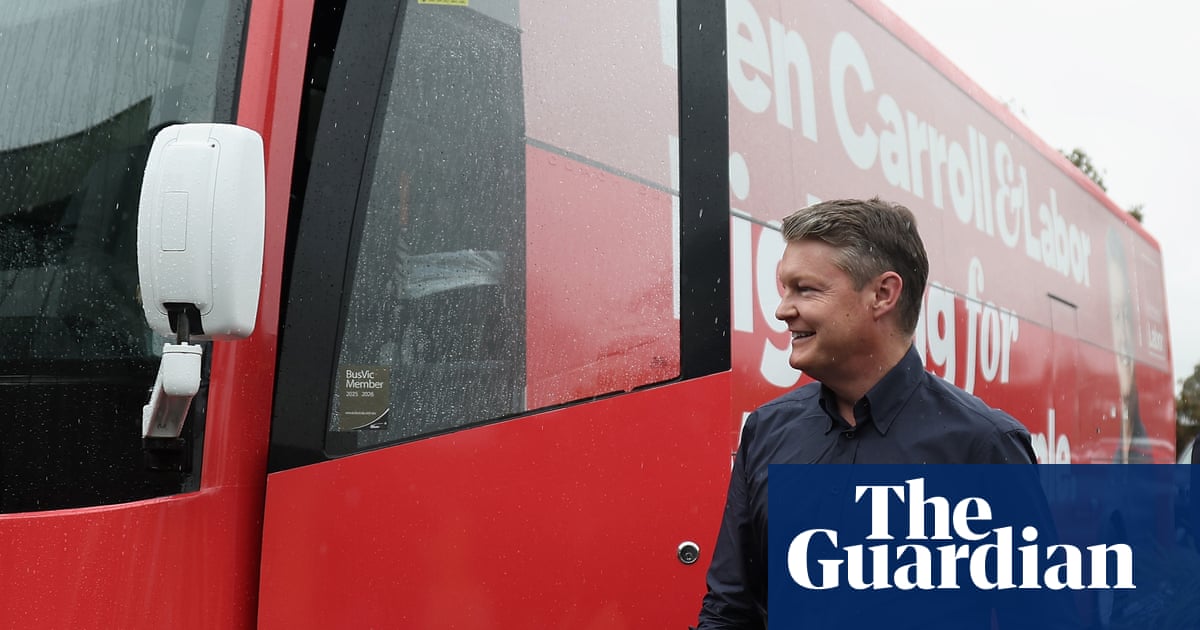
Despite the alarming numbers, Premier Ben Carroll has refused to acknowledge any concern during public appearances. In a press conference in South Melbourne, he declined to comment directly on whether the poll results worried him. Instead, he reiterated his government’s commitment to supporting working people and framed the election as a choice between his administration and an alternative that would harm the economy. He characterized the opposition as likely to cause recession and make life more difficult for Victorians, avoiding any direct engagement with the specific polling data.
Inside Labor’s campaign headquarters, however, the mood is markedly different. While some officials are treating the poll as an outlier, pointing to other surveys that show Labor in the 20s, many MPs are deeply troubled. Unauthorized comments from within the caucus reveal anger and deflation regarding the party’s recent strategic choices. Critics inside the party argue that the focus on crime issues has been a disastrous move, particularly because these concerns have been building for years without adequate government response. Some members describe the campaign as being in freefall and warn that conditions are likely to deteriorate further.
The controversy centers on Premier Carroll’s recent announcements regarding law enforcement and youth justice. On Sunday, he unveiled a $204 million plan to allow judges to sentence low- and mid-level youth offenders to a new rehabilitation detention program. The following day, he announced an additional $70 million to recruit 200 police reservists, aiming to reopen stations and upgrade facilities. These moves appear to be a direct response to opposition pressure on crime, but internal critics label the strategy as ill-conceived. They argue that the government had ample time to address community safety concerns and that this late pivot has damaged their credibility.
Opposition Leader Jess Wilson has capitalized on these developments by emphasizing her party’s tough stance on crime. She highlighted plans to introduce Aidan’s Law, which would increase sentencing for individuals who attack people intervening in violent incidents. The proposed legislation is named after Aidan Becker, a 22-year-old man fatally stabbed at Mernda station while protecting a teenager during an alleged robbery. Carroll quickly matched this commitment, agreeing to support the introduction of the law. This rapid alignment suggests an attempt to neutralize the opposition’s advantage on public safety issues.
Meanwhile, One Nation leader Pauline Hanson has addressed reports regarding her former campaign director, Sean Black. Media outlets had reported that Black, who was previously jailed for rape and later rehired by One Nation, continued to work secretly for the party in Victoria. Hanson denied these claims, stating that Black’s employment ended when she sacked him earlier this year following political pressure. This controversy adds another layer of complexity to the election dynamics, as One Nation navigates its rising poll numbers amidst internal scrutiny.
As election day approaches on November 28, the Victorian Electoral Commission is preparing for a two-candidate-preferred count in each seat. The commission will select indicative counts based on polling and historical preference flows but will not publish them before voting to avoid influencing voter behavior. The combination of shifting poll numbers, internal party strife, and strategic maneuvering on crime issues creates an uncertain environment. Voters face a choice between a struggling incumbent government, a leading coalition, and a resurgent third party, all while grappling with questions about public safety and economic stability.
The coming days will be critical in determining whether the poll reflects a genuine shift in voter sentiment or a temporary fluctuation. Labor’s ability to recover from this low point depends on addressing internal dissent and reconnecting with voters who may feel alienated by recent policy announcements. The Coalition and One Nation must also consolidate their support to maintain momentum. With multiple parties vying for dominance and significant issues at stake, the Victorian election promises to be a pivotal moment in the state’s political history.
Sources behind this briefing
Go to the original reporting
- The Guardian World↗Victorian election 2026: Concern and scepticism among Labor MPs as new poll shows party trailing One Nation


