The short version
- Robert Bush was sentenced to twenty years in prison for failing to bury or cremate dozens of deceased individuals and misappropriating charitable funds.
- A written apology released by Bush has been met with hostility from victims, who describe the statement as insincere and self-serving.
- Police raids revealed thirty-five unburied bodies and over one hundred sets of ashes at the Hull funeral home, causing profound distress to grieving families.
The legal conclusion of the Legacy Independent Funeral Directors scandal has arrived with a twenty-year prison sentence for its former operator, Robert Bush. The conviction marks the end of a prolonged period of uncertainty for dozens of families who entrusted their loved ones to the Hull-based business. However, the judicial resolution has not brought closure for many victims, particularly following the release of a written statement from Bush that has sparked renewed outrage among those affected by his actions.
Bush was sentenced at Hull Crown Court after admitting to sixty-seven offenses. These charges included thirty counts of preventing lawful and decent burials, as well as theft from twelve charities. Prosecutors characterized the operation under Bush’s management as chaotic and shambolic, noting that his conduct caused extreme emotional pain and anguish. The scale of the misconduct was revealed during police raids in March 2024, which uncovered thirty-five bodies and more than one hundred sets of ashes stored improperly at the Hessle Road premises.
In the wake of the sentencing, Bush issued a letter addressed to those impacted by his failures. In the statement, he acknowledged that families had entrusted him with care during difficult times and expressed regret for the distress and uncertainty caused. He stated that no words could undo the harm or remove the pain experienced by victims. Bush accepted responsibility for his actions, admitting he should have acted differently sooner, while clarifying that he did not expect forgiveness nor seek to minimize the severity of his conduct.
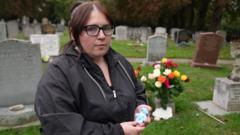
Despite the formal acknowledgment of guilt, the response from victims has been sharply negative. Jasmine Beverley, whose son Sunny was stillborn in May 2022, described feeling only anger after reading the letter. Her son’s remains were discovered nearly two years later, stored in a brown paper bag on the floor of the funeral parlour. Beverley noted that she had been given a set of ashes by Bush the following March, unaware they did not belong to her child. She criticized the statement for appearing to apologize for the families’ reactions rather than his own actions.
Beverley emphasized that the trauma is inextricably linked to her memories of her son. She stated that she cannot separate her recollections of Sunny from the mismanagement of his funeral, which she viewed as a final act of love. The discovery of her son’s remains after such a long delay has left lasting psychological scars. For Beverley and others, the written apology fails to address the depth of the betrayal or the specific horrors uncovered by investigators.
Tristan Essex, whose grandmother Jessie Stockdale was among those whose bodies were found at the facility, expressed similar disgust. His grandmother’s body had been retained for five months after her funeral service. Essex described the letter as mocking and tormenting, suggesting that Bush was sorry for the consequences of his actions rather than the actions themselves. He questioned the authenticity of the statement, speculating that it might have been generated by artificial intelligence due to its perceived lack of sense and emotional resonance.
The case highlights the severe breach of trust inherent in funeral services, where families are at their most vulnerable. Prosecutors argued that Bush’s offending was motivated by financial gain, a claim supported by former workers who described the operation as driven by money rather than care. The dissolution of the Legacy firm due to debts underscores the complete collapse of the business structure that facilitated these crimes.
As the legal proceedings conclude, the focus shifts to the long-term impact on the victims. Many families are left grappling with tainted memories and unresolved grief. The apology, intended perhaps as a final gesture from behind bars, has instead served to rekindle anger and highlight the inadequacy of words in the face of such profound negligence. For now, the justice system has delivered a verdict, but for the families involved, the path to peace remains obstructed by the enduring legacy of betrayal.
Support resources remain available for those struggling with bereavement issues related to this case. The incident serves as a stark reminder of the importance of oversight in industries dealing with human dignity and final rites. While Bush faces two decades of incarceration, the emotional toll on the victims continues, illustrating that legal penalties do not automatically equate to personal resolution or healing for those whose trust was violated on an industrial scale.
Sources behind this briefing
Go to the original reporting
- BBC News↗Jailed funeral boss angers families with 'apology'

