The short version
- A Burlington jury found Jason Eaton guilty of attempted murder after rejecting his claim that he acted under orders from the CIA and Mossad due to a psychotic disorder.
- The November 2023 shooting left Hisham Awartani paralyzed from the waist down and injured Tahseen Aliahmad and Kinnan Abdalhamid, who were walking near the University of Vermont campus.
- Families of the victims described the act as a hate crime driven by prejudice, noting that no such charges were filed during the initial investigation due to questions about the defendant's mental state.
A jury in Burlington, Vermont, has convicted Jason Eaton of attempted murder for his role in a November 2023 shooting that targeted three Palestinian college students. The verdict, delivered after several hours of deliberation during a week-long trial, rejects the defense argument that Eaton was not guilty by reason of insanity. Eaton, 51, now faces up to life in prison for the attack, which occurred near his residence close to the University of Vermont campus. He was ordered to remain in jail pending sentencing, a date that has not yet been scheduled.
The prosecution and defense presented competing narratives regarding Eaton’s state of mind at the time of the shooting. Defense attorneys argued that Eaton suffered from a delusional psychotic disorder following his termination from a credit union job two weeks prior to the incident. They claimed he believed he was receiving commands via FM radio broadcasts from the Central Intelligence Agency and Mossad, as well as divine instructions to protect Jewish neighbors. Had the jury accepted this insanity plea, Eaton could have been committed for mental health treatment rather than imprisoned.
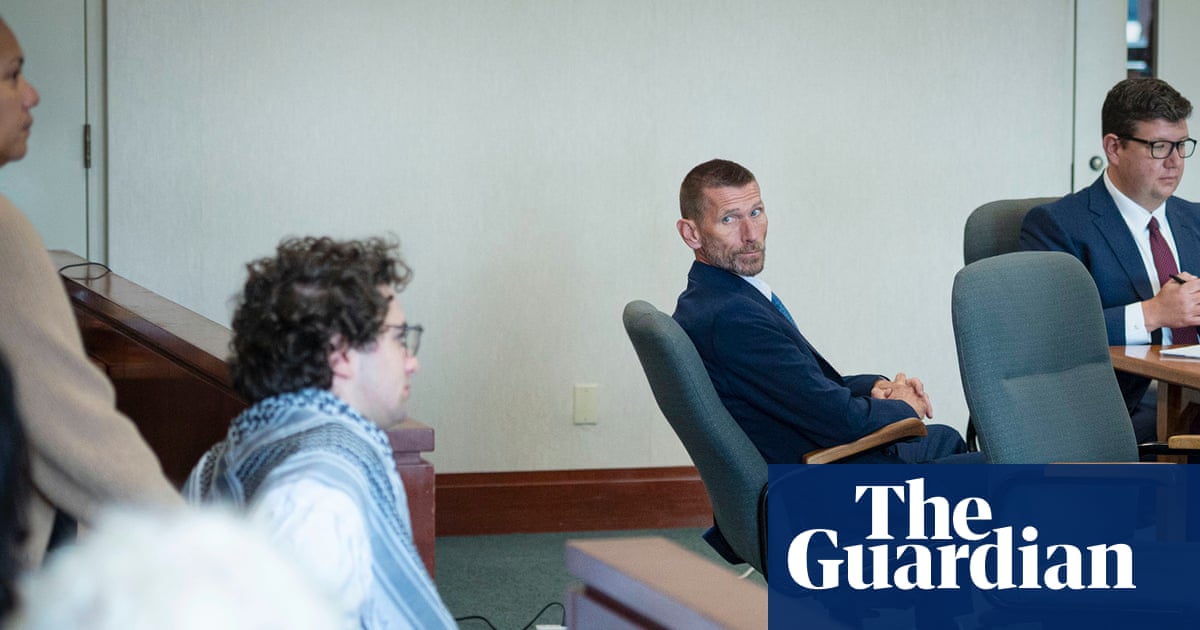
Instead, the jury found Eaton responsible for his actions. During the trial, Eaton pleaded not guilty but did not contest that he was the shooter. His demeanor in the courtroom remained stoic; he stared ahead blankly as the verdict was read. In contrast, Hisham Awartani and Tahseen Aliahmad, two of the survivors, sat in the front row of the gallery. Upon hearing the decision, they smiled and embraced those around them, marking a moment of relief after three years of legal proceedings.
The attack took place shortly after Thanksgiving 2023, weeks into the military conflict between Israel and Hamas in Gaza. The incident sparked immediate calls for a hate crime investigation given the timing and the victims’ backgrounds. However, prosecutors did not file hate crime charges at that time, citing persistent questions about whether anti-Palestinian animus, an altered mental state, or other factors motivated Eaton. No specific causal link between his political views and the violence was legally established in the initial charging decision.
The three victims—Awartani, Aliahmad, and Kinnan Abdalhamid—were 20 years old at the time of the shooting. They had grown up as schoolmates in Ramallah, in the occupied West Bank, before moving to the United States for higher education. On that evening, they were returning from a visit to Awartani’s grandmother’s house and a trip to a bowling alley to celebrate his twin cousins’ birthday. As dusk fell, they walked near the apartment complex where Eaton lived.
Awartani, who was studying at Brown University in Rhode Island, testified that the group was smoking cigarettes and speaking a mix of English and Arabic. Two of the men were wearing keffiyehs, traditional Palestinian scarves. Awartani recalled seeing Eaton standing on his porch as they approached. Within seconds, Eaton descended from the porch and walked toward them with an expressionless face, saying nothing. When he was five to ten feet away, he drew a handgun and opened fire.
The injuries sustained were severe. Awartani was shot in the chest; the bullet ricocheted off his scapula and damaged his spinal cord, leaving him paralyzed from the waist down and reliant on a wheelchair. Aliahmad, a student at Trinity College in Connecticut, was struck in the collarbone. Abdalhamid, who attended Haverford College near Philadelphia, was shot in the right buttock. He fled the scene and hid behind another home after seeing Aliahmad fall, only realizing he had been wounded when he sat down later.
Jacob Pyne, a resident of a different apartment in the same building as Eaton, testified that he heard four to six gunshots followed by footsteps ascending the stairs. He ran outside and heard two men speaking, one of whom was yelling for help after being shot. Pyne brought blankets to the victims and called emergency services. Authorities later recovered three shotguns from Eaton’s apartment and identified a Ruger .380-caliber handgun, purchased seven months earlier from a Vermont gun store, as the weapon used in the attack.
The families of the three men issued a joint statement following the verdict, expressing relief but emphasizing that justice does not erase trauma. They characterized the shooting as a hate crime driven by Eaton’s prejudices, noting that he used hateful language to describe their sons during the trial. The families highlighted the broader context of Palestinian suffering in Gaza and the West Bank, stating that while their sons’ recovery received local support, much of the violence affecting Palestinians remains overlooked.
The case has drawn attention to the intersection of mental health, political violence, and bias crimes in American communities. While the legal system determined Eaton was criminally responsible, the debate over his motivations continues among observers. The families thanked the community in Burlington for their solidarity throughout the long recovery process. They stated that the verdict affirms Eaton’s accountability, even as they continue to advocate for a world where violence against Palestinians is recognized and stopped.
Sources behind this briefing
Go to the original reporting
- The Guardian World↗Vermont man convicted of attempted murder of three Palestinian students
- PBS NewsHour↗Jury convicts Vermont man of attempted murder in shooting of 3 Palestinian students

