The short version
- The exhibition features eight Mercedes-Benz vehicles spanning from 1930 to 2012, excluding models from other manufacturers like Fiat or Land Rover.
- Security concerns following an assassination attempt in the early 1980s drove the transition from open-top designs to bulletproof glass enclosures.
- Recent additions include an electric vehicle gifted to Pope Francis, aligning with broader calls for environmental sustainability within the Church.
The Vatican Museums has opened a specialized exhibition titled 'A Century of the Popemobile,' offering visitors a detailed look at the mechanical history of papal transportation. The collection focuses exclusively on vehicles manufactured by Mercedes-Benz, presenting eight distinct models that span from 1930 to 2012. This curated selection omits contributions from other automotive brands such as Land Rover, Fiat, and Ferrari, which have also produced custom vehicles for pontiffs at various times. By narrowing the scope to a single manufacturer, the display highlights a specific lineage of engineering adaptations made to serve the unique ceremonial and security requirements of the papacy.
The earliest vehicle in the collection is a 1930 460 Nürburg limousine, originally gifted to Pope Pius XI. Unlike the heavily fortified vehicles seen in modern times, this initial model was characterized by its black exterior and interior featuring a red armchair upholstered in silk brocade. Historical accounts suggest that Pius XI was impressed by the vehicle's capabilities, reportedly praising it as a masterpiece of modern technology during his first drive through the Vatican Gardens. Despite this early enthusiasm, these luxury sedans remained largely confined to the papal garage for decades, serving more as status symbols than practical tools for public engagement.
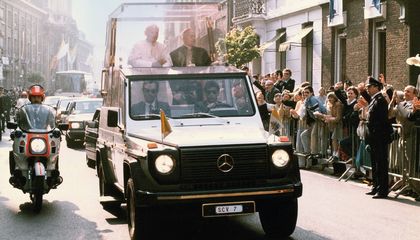
The role of the automobile in papal ministry shifted significantly in the late 1970s, when it became standard practice for the pontiff to travel through crowds rather than relying on traditional sedan chairs carried by footmen. Automakers began modifying vehicles to enhance visibility and accessibility, allowing the pope to interact directly with the faithful. A key milestone in this evolution was a modified 230 G model from 1980, which introduced a large glass dome in the rear seating area. This design allowed congregants to see the pontiff clearly as he passed, transforming the vehicle from a mere transport mechanism into an instrument of encounter.
Security considerations have profoundly influenced the physical design of these vehicles over time. Following an attempted assassination of Pope John Paul II in 1981 while he was riding in an open-topped Fiat, manufacturers began incorporating bulletproof glass into their designs. This shift marked a departure from the open-air configurations that had previously facilitated direct contact with crowds. Modern iterations are described as sophisticated armored vehicles, engineered to mitigate risks associated with large public gatherings. The transition reflects a broader tension between the desire for accessibility and the necessity of protection.
The exhibition includes several notable models that illustrate this progression. A 1960 300D Landaulet built for Pope John XXIII featured removable side windows, offering a middle ground between openness and enclosure. Later designs, such as a 1997 'lungo' Landaulet with an electrohydraulic soft top, served multiple pontiffs including John Paul II. The collection concludes with a 2012 ML 500 model used by Pope Benedict XVI, which featured a large, enclosed glass rear compartment. These vehicles demonstrate how engineering solutions have adapted to the specific preferences and security protocols of different eras.
Beyond historical models, the evolution of the popemobile continues to reflect contemporary values and technological advancements. In 2024, Mercedes-Benz gifted Pope Francis an electric vehicle, marking the first time an electric car entered the papal fleet. This addition aligns with Pope Francis's longstanding advocacy for environmental stewardship and sustainability. The inclusion of this modern technology underscores how the Church is integrating current ecological concerns into its operational practices, even in areas as traditional as ceremonial transportation.
Pope Leo XIV addressed Mercedes-Benz executives prior to the exhibition's opening, emphasizing the dual role of these vehicles. He noted that they facilitate the Church's mission by enabling outreach and conveying messages of faith, hope, and charity. The pontiff also encouraged continued innovation that serves human dignity and care for creation. This perspective frames the automotive history not just as a technical achievement, but as a tool for spiritual connection and social engagement.
The exhibition provides a tangible record of how papal mobility has changed from luxury conveyance to secure public platform. While earlier models prioritized comfort and status, later designs emphasize safety and visibility. The exclusion of non-Mercedes vehicles limits the scope of this historical narrative, but the selected pieces offer a coherent view of one manufacturer's long-standing relationship with the Vatican. Visitors can observe how each iteration responds to the specific challenges of its time, from technological novelty to security threats and environmental responsibility.
As the display remains open at the Vatican Museums, it offers insight into the intersection of faith, technology, and public life. The popemobile serves as a unique symbol of papal authority and accessibility, evolving in response to both internal Church priorities and external world events. The collection highlights how design choices reflect broader cultural shifts, from the embrace of modern technology in the early 20th century to the focus on sustainability and security in the present day. This historical overview underscores the enduring importance of visible leadership in religious institutions.
The narrative presented by the exhibition suggests that the popemobile is more than a vehicle; it is a medium for communication between the pontiff and the global faithful. Each modification, from the silk-upholstered chairs of the 1930s to the bulletproof glass of recent decades, tells a story about how the Church navigates its relationship with the public. The ongoing development of these vehicles indicates that this dialogue is far from over, with future designs likely to continue balancing tradition, safety, and modern values.
Sources behind this briefing
Go to the original reporting
- Smithsonian Magazine↗From a Black Limo With a Silken Armchair to a Bulletproof 'Sardine Can,' the Vatican Looks Back at the Evolution of the Popemobile

