The short version
- The World War II Memorial in Washington was defaced with soap bubbles and paint bearing a political message on Thursday.
- Federal authorities have cordoned off the site, launching an investigation while workers begin cleaning the granite structures.
- Critics describe the act as a disgraceful violation of a sacred space, even as debates over national monuments continue.
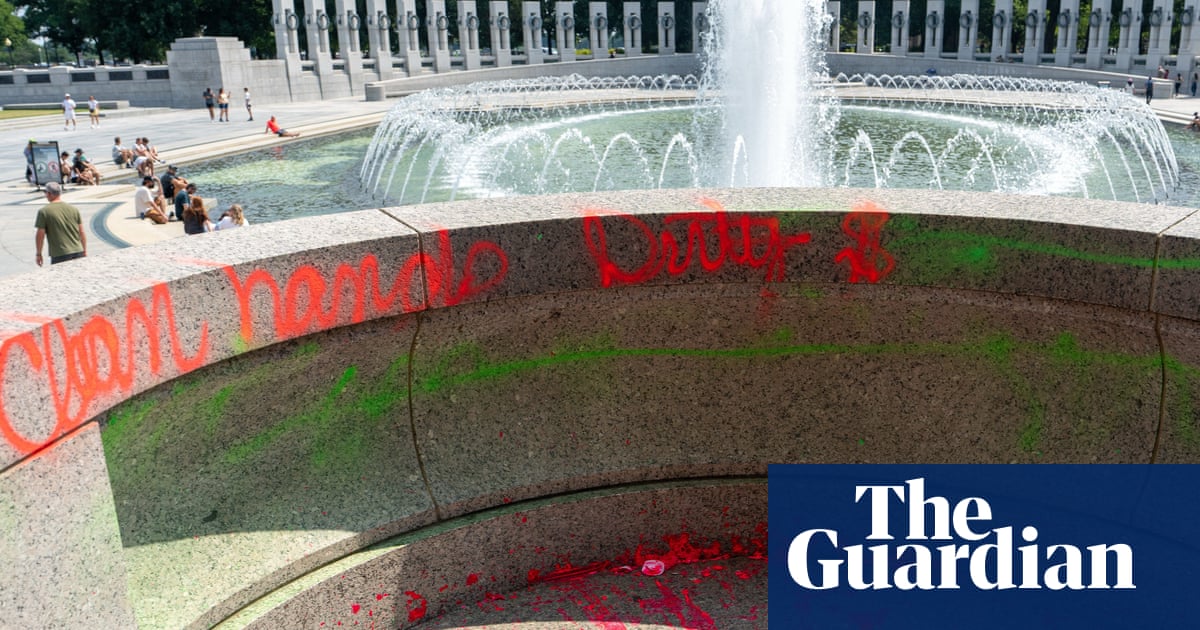
A significant act of vandalism targeted the World War II Memorial in Washington on Thursday, disrupting the solemn atmosphere of the National Mall. The incident involved the deliberate release of large quantities of soap bubbles that overflowed from the memorial’s fountain, creating a chaotic scene of suds across the plaza. In addition to the foam, perpetrators applied red and green paint to one of the monument’s surfaces. The graffiti included the phrase “Clean hands Dirty $,” a message that appeared to carry political weight given the current climate surrounding national monuments.
Law enforcement responded swiftly to the disturbance. Uniformed police officers and members of the National Guard converged on the area, establishing a perimeter with yellow crime scene tape to keep visitors at bay. Investigators in plainclothes were seen examining the site closely, using tape measures to document the extent of the damage. According to reports from Park Police officers present at the scene, cleanup crews arrived shortly after the initial response to begin removing the paint and clearing the debris.
The Department of the Interior, which oversees the National Park Service, issued a strong condemnation of the event. Officials described the vandalism as an “utter disgrace” that would not be tolerated. The department emphasized that the United States Park Police are actively investigating the incident and vowed to identify those responsible for what they termed a disgusting act. The statement underscored the government’s commitment to protecting federal properties from such disruptions.
The memorial itself holds deep historical significance, dedicated in 2004 to honor the American experience during the second global conflict. It features fifty-six granite pillars arranged around an elliptical plaza, symbolizing the states that were part of the union at the time. The site serves as a tribute to the approximately four hundred thousand Americans who died and the sixteen million who served in the armed forces during the war. For many, it remains a place of national pride and unity, even amidst broader political polarization.
Non-profit organizations dedicated to the preservation of the memorial also expressed outrage. The Friends of the National World War II Memorial labeled the vandalism unacceptable, describing the site as a sacred place of remembrance. They argued that while there are many venues in the country for expression, debate, and disagreement, national memorials should not be used as canvases for such acts. Their statement highlighted the distinction between legitimate political discourse and the defacement of spaces dedicated to fallen soldiers.
The incident occurs against a backdrop of ongoing tensions regarding public monuments in Washington. Former President Donald Trump has recently launched a campaign aimed at altering various memorials around the capital, a move that has been both personally driven and politically divisive. While the direct connection between this specific act of vandalism and broader political campaigns remains unproven, the timing suggests it may be part of a larger pattern of unrest or protest targeting symbolic government sites.
Public reaction to the event has been largely negative, with many viewing the desecration of a war memorial as an affront to veterans and their families. The use of soap bubbles, while seemingly innocuous, created a visual contrast that drew significant media attention. The addition of paint and political slogans transformed what might have been a prank into a serious criminal act. Authorities are treating the matter with gravity, recognizing the potential for further incidents if the perpetrators are not identified.
As cleanup efforts continue, the memorial remains closed to the public. The investigation is ongoing, with federal agents working to piece together evidence from the scene. The incident serves as a reminder of the challenges faced by park services in maintaining order and respect at high-profile locations. It also highlights the fragility of shared national symbols in an era of intense political debate.
Looking ahead, the focus will remain on identifying those responsible for the vandalism. The Department of the Interior has indicated that no such acts will go unpunished. Meanwhile, the Friends of the National World War II Memorial and other advocacy groups are likely to call for increased security measures at similar sites. The event underscores the need for vigilance in protecting places that hold deep emotional and historical significance for the American public.
The vandalism at the World War II Memorial is a stark example of how political tensions can spill over into physical spaces dedicated to memory and honor. While the immediate damage can be cleaned, the impact on public sentiment may linger. The incident raises questions about the boundaries of protest and the responsibilities of citizens in preserving national heritage. As the investigation proceeds, the nation watches to see how justice will be served.
Sources behind this briefing
Go to the original reporting
- The Guardian World↗Memorial for second world war vandalized with bubbles and graffiti in Washington

