The short version
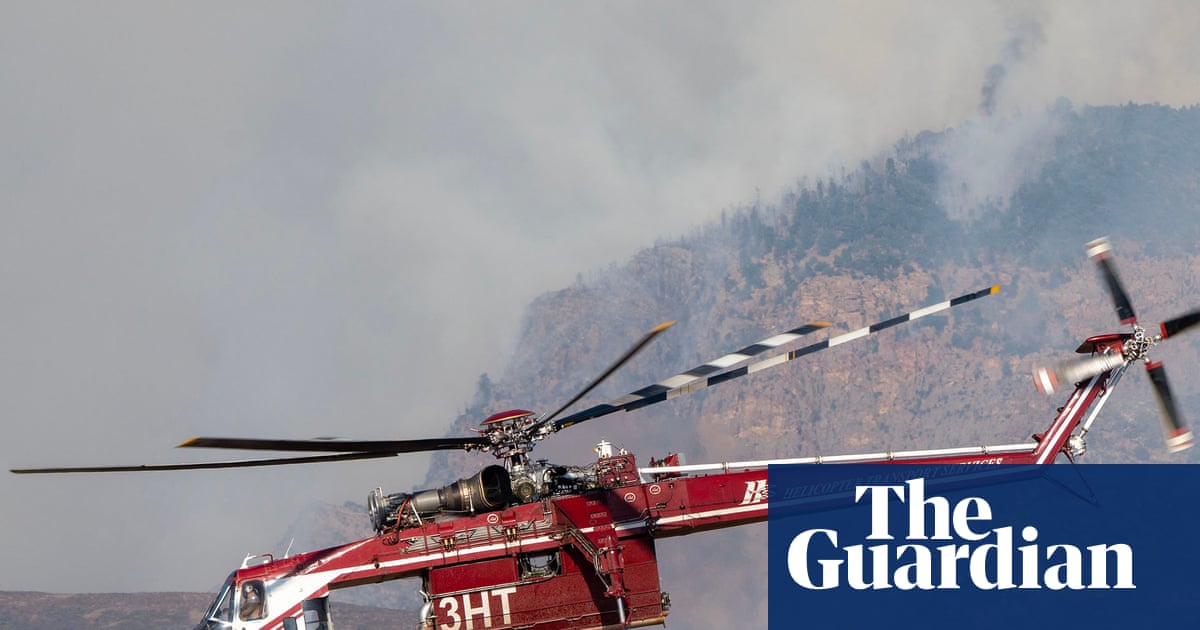
- A Sikorsky S-64 helicopter contracted by the US Forest Service crashed in central Utah on Friday morning while responding to the Widemouth 2 fire, leaving two passengers trapped within the blaze perimeter.
- While the National Interagency Fire Center reported that the pilot and one crewmember were fatally injured, the US Forest Service has declined to confirm their status, citing a need to avoid speculation and respect for the victims.
- Ground rescue efforts have been suspended because the crash site remains inaccessible due to active flames, with officials stating it is unsafe to deploy personnel until fire conditions subside significantly.
The search for two individuals trapped in a crashed firefighting helicopter has stalled as one of the largest wildfires in the United States continues to rage through central Utah. The Sikorsky S-64 aircraft went down on Friday morning while responding to the Widemouth 2 fire, a lightning-sparked blaze that has consumed more than 114,600 acres since late July. More than twenty-four hours after the accident, authorities have been unable to reach the remote crash site because the area remains engulfed in flames, creating an immediate barrier to any rescue or recovery operations.
The situation is complicated by conflicting information released by federal agencies regarding the fate of those onboard. The US National Interagency Fire Center, a coalition representing state and federal fire management entities, stated in a Saturday report that the pilot and one crewmember had sustained fatal injuries. This assertion was followed by a moment of silence at a Saturday morning briefing to honor the passengers. However, the US Forest Service, which contracted the aircraft, has refused to verify these claims, maintaining that the status of the individuals remains unconfirmed.
Officials from the Forest Service emphasized the need for restraint in public communications, noting that numerous false reports and rumors have already circulated. In a statement issued on Saturday, the agency argued that the victims deserve respect and that speculation should be avoided until definitive information is available. This divergence in messaging has left families and the public without clear answers, as the primary federal land management body declines to align with the casualty report provided by the interagency coalition.
Access to the scene remains impossible due to the intensity of the surrounding fire. Ground resources attempted to respond immediately after the crash, but their path was blocked by an emergent blaze ignited by the accident itself. The Incident Management Team determined that placing additional lives at risk without a established safety zone was not viable. Consequently, all efforts to reach the wreckage have been paused until environmental conditions improve enough to allow safe passage for emergency personnel.
The Widemouth 2 fire has shown significant growth in recent days, expanding from over 105,000 acres on Friday morning to more than 114,600 acres by Saturday. Despite this expansion, containment efforts have seen a slight improvement, with the fire now reported as 24% contained. The crash site lies within the active perimeter of the blaze, meaning that any movement toward the wreckage would require navigating through unpredictable and dangerous terrain. Federal officials have advised the public to refrain from guessing about the cause or nature of the crash while these logistical hurdles persist.
Investigative teams from the National Transportation Safety Board are en route to Richfield, a city approximately 160 miles south of Salt Lake City, to prepare for their eventual arrival at the scene. Once fire conditions allow safe access, NTSB investigators will document the site before retrieving the aircraft for detailed analysis. The delay in reaching the crash site means that critical evidence may be exposed to further environmental degradation, potentially complicating the determination of the mechanical or operational factors that led to the accident.
This incident occurs against a backdrop of a particularly deadly wildfire season across western United States states. Earlier this year, three firefighters lost their lives while battling a blaze along the Colorado-Utah border in June. A fourth firefighter subsequently died from burn injuries sustained during emergency response efforts in the same region. The current crisis in Utah underscores the extreme risks faced by aerial and ground crews operating in remote areas where fire behavior can change rapidly and without warning.
As the Widemouth 2 fire continues to threaten surrounding communities and infrastructure, the focus remains on containing the blaze to create a safe corridor for rescue operations. Until the flames recede or are sufficiently contained around the crash site, the status of the two passengers will remain officially ambiguous. The coming days will likely involve intense firefighting efforts aimed not only at protecting property but also at clearing a path for investigators and recovery teams to fulfill their duties.
The broader implications of this event highlight the challenges of coordinating multi-agency responses during large-scale disasters. With different federal entities providing varying levels of information, the public is left to navigate a landscape of uncertainty. The Forest Service’s insistence on caution contrasts with the more definitive reporting from the National Interagency Fire Center, raising questions about communication protocols during active emergencies. Regardless of the outcome, the incident serves as a stark reminder of the dangers inherent in wildfire suppression efforts.
Local communities in central Utah are bracing for continued disruptions as evacuation orders and road closures may expand to accommodate firefighting operations. The inability to reach the crash site means that no immediate closure can be provided to those affected by the loss or potential loss of life. Authorities continue to monitor weather patterns and fire behavior, hoping for a shift that will allow them to safely access the area and bring resolution to this unfolding tragedy.
Sources behind this briefing
Go to the original reporting
- The Guardian World↗Utah wildfire blocks rescuers from reaching firefighting helicopter crash site

