The short version
- The US Department of the Treasury has designated Palestine Action as a specially designated global terrorist, freezing assets and prohibiting American entities from engaging with the group.
- This move follows the UK’s controversial proscription of the organization under terrorism laws last year, a decision currently being challenged in British courts.
- Palestine Action leaders condemn the sanctions as hypocritical repression of free speech, while US officials cite property damage and injuries to law enforcement as justification.
The United States has formally designated Palestine Action, a UK-based direct action organization, as a specially designated global terrorist. The decision by the Department of the Treasury imposes significant economic restrictions, including the freezing of assets held by foreign individuals and entities associated with the group. It also prohibits US citizens and businesses from conducting any transactions with them. This classification places the organization under the same legal framework used to target transnational terror networks, marking a sharp escalation in how Washington views domestic protest movements linked to international conflicts.
Treasury Secretary Scott Bessent announced the sanctions alongside measures against two other organizations, framing the move as part of a broader administration strategy to combat far-left extremism. He stated that political terrorism has no place in society and vowed to use economic tools to cut off financial lifelines to such groups until they are eliminated. The powers utilized for this designation were originally established by President George W. Bush in the aftermath of the September 11 attacks, indicating a high threshold for legal justification regarding national security threats.
The US government’s rationale cites specific activities attributed to Palestine Action since July 2020. According to Treasury statements, the group has supported acts intended to intimidate lawful commercial enterprises and coerce the UK government. Officials highlighted incidents involving physical injury to law enforcement personnel in Britain, as well as break-ins at defense infrastructure and military installations that resulted in millions of dollars in damage to equipment. The department also noted that the group promotes its tactics on social media, encouraging similar actions internationally, including within the United States.
Palestine Action has primarily focused its campaigns in the UK on facilities operated by Elbit Systems, an Israeli weapons manufacturer, and other companies with ties to it. One notable incident involved the targeting of Donald Trump’s Turnberry golf course in Scotland, where protesters defaced the clubhouse and dug up parts of the course with anti-war messages. These actions have drawn intense scrutiny from both British and American authorities, who view the disruption of commercial and political targets as crossing the line from protest into terrorism.
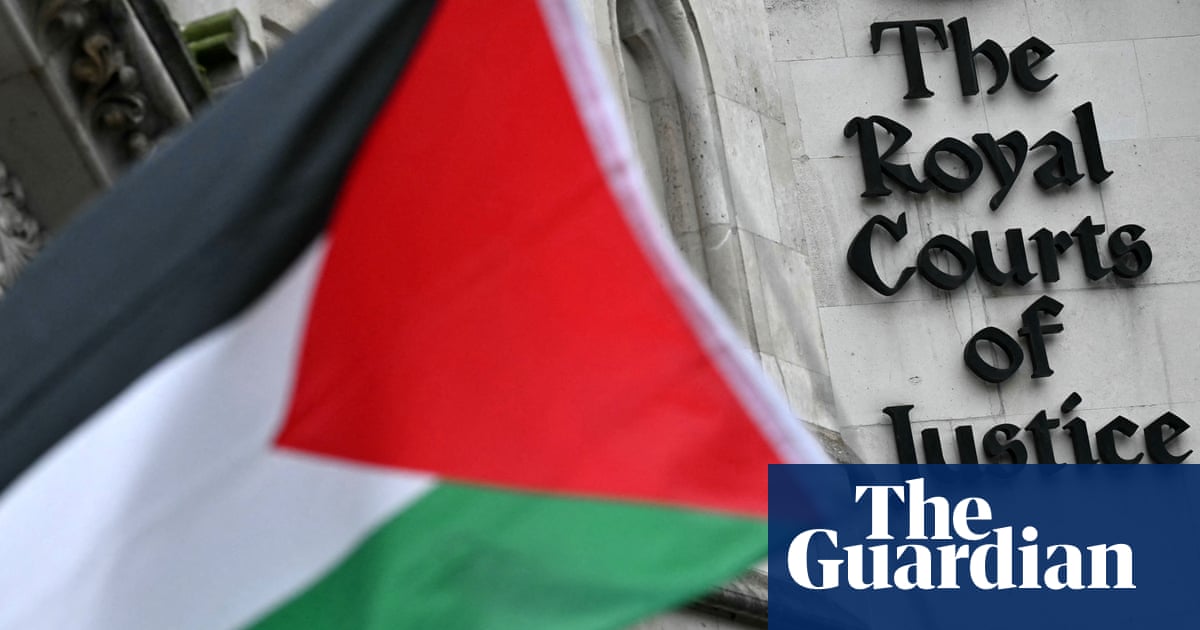
The US sanctions arrive amid a contentious legal battle in the United Kingdom regarding the group’s status. Palestine Action became the first direct action organization to be proscribed under the UK’s Terrorism Act in July 2025, placing it alongside groups like Islamic State and Boko Haram. At the time, officials acknowledged that banning an organization primarily for property damage rather than violence against persons was relatively novel and lacked clear precedent. The move sparked immediate controversy over the balance between national security and civil liberties.
Huda Ammori, a co-founder of Palestine Action and lead figure in the legal challenge against the UK ban, strongly condemned the US sanctions. She described the designation as hypocritical, noting her Palestinian and Iraqi heritage and criticizing the US role in conflicts affecting those regions. Ammori argued that the group’s activities are aimed at saving lives by disrupting what she characterizes as a war machine committing genocide in Gaza. She warned that adopting Britain’s repression tactics sets a dangerous precedent for authoritarian governments seeking to suppress political dissent globally.
The legal challenge to the UK ban is progressing through the British judicial system. In June, Court of Appeal judges ruled that the government’s interference with freedom of expression rights was justified and proportionate. However, Palestine Action has been granted permission to appeal this decision to the Supreme Court, which is scheduled to hear the case in November. Four members of the group were recently jailed for a raid on a defense firm that caused over £1 million in damage, including one conviction for grievous bodily harm after a police officer was struck with a sledgehammer.
The convergence of US sanctions and ongoing UK litigation highlights growing tensions around how Western democracies handle anti-war activism. While the Trump administration views these groups as legitimate security threats requiring economic isolation, critics argue that labeling direct action protesters as terrorists undermines democratic norms. The outcome of the Supreme Court case could set a lasting precedent for how property-based protests are treated under terrorism legislation in Britain and potentially influence similar policies abroad.
Sources behind this briefing
Go to the original reporting
- The Guardian World↗US issues sanctions against UK-based direct action group Palestine Action
- BBC News↗US designates Palestine Action a terrorist group