The short version
- More than 70,000 people crossed into Ceuta amid unclear triggers, prompting speculation about Moroccan involvement or passive acquiescence.
- The Trump administration’s close relationship with King Mohammed VI appears to have influenced US responses, which focused on criticizing Spain rather than investigating Rabat’s role.
- Analysts suggest Morocco may be leveraging border incidents to strengthen its position on Western Sahara and potentially challenge Spanish sovereignty over Ceuta.
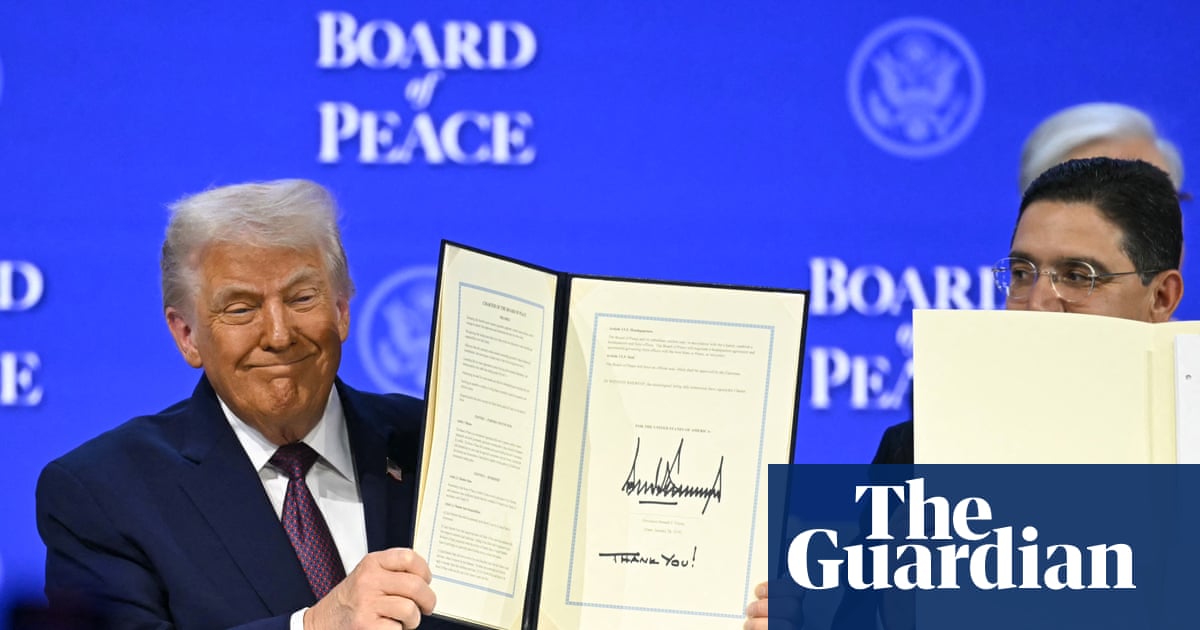
The relationship between Washington and Rabat has come under intense scrutiny following a chaotic influx of more than 70,000 people into the Spanish enclave of Ceuta. While the immediate cause of the mass border crossing remains unclear, the incident has highlighted the deepening strategic alignment between Morocco and the Trump administration. Observers note that the crisis occurred against a backdrop of strong diplomatic ties, including Morocco’s recent designation as the first African nation to join Donald Trump’s Board of Peace and the US president’s public congratulations on King Mohammed VI’s long reign.
Questions persist regarding what precisely triggered the deadly surge across one of the European Union’s few land borders with Africa. Riccardo Fabiani, a project director for the International Crisis Group, noted that while there is evidence to suggest Moroccan involvement, no clear trigger has been identified. This ambiguity has left analysts puzzled about whether Rabat actively orchestrated the event or simply allowed it to unfold. Some observers point to Spain’s recent diplomatic rapprochement with Algeria, Morocco’s regional rival, as a potential catalyst for Moroccan frustration.
However, another plausible theory centers on Morocco’s desire to curry favor with its powerful ally in Washington. Fabiani suggested that given the close relationship between Rabat and the current US administration, it is not impossible to imagine that Moroccan officials might have seen an opportunity to earn political capital. This hypothesis gains weight when considering the timing of King Mohammed VI’s decision to name a $1 billion highway flanking Western Sahara after Trump, a move announced shortly before the border crisis unfolded.
The response from US officials has been notably one-sided. Vice President JD Vance and State Department representatives blamed Spain’s Socialist-led government for the influx, while Trump warned that Democratic leadership would make such events seem minor by comparison. Notably, none of these figures mentioned Morocco or explored its potential role in the incident. This silence stands in contrast to the administration’s long-standing antipathy toward Spanish Prime Minister Pedro Sánchez, whose refusal to allow US military access during the Iran conflict and criticism of Israel’s actions in Gaza have made Spain a frequent target of American political rhetoric.
The crisis appears to serve Rabat’s broader geopolitical objectives. Since normalizing ties with Israel in exchange for US recognition of its sovereignty claim over Western Sahara, Morocco has aggressively cultivated relationships with key decision-makers in Washington. Haizam Amirah-Fernández, director of the Centre for Contemporary Arab Studies in Madrid, observed that interest in Ceuta remained high among circles close to Trump and the Israeli government in the days following the incident. This sustained attention suggests that Rabat may be using hybrid tactics to advance its territorial claims beyond Western Sahara.
A recent US congressional report hinted at this shifting dynamic by describing Ceuta as “Spanish-administered” rather than an integral part of Spain, a phrasing that aligns with Morocco’s refusal to recognize Spanish sovereignty over the territory. This subtle linguistic shift could signal growing American sympathy for Moroccan positions on disputed lands. The incident echoes a similar event in May 2021, when Rabat loosened border controls to allow thousands to cross into Ceuta in protest of Spain allowing a Western Sahara independence leader to seek medical treatment there.
This time, however, the scale was significantly larger, with nearly ten times as many people crossing the border. The resulting finger-pointing across the European Union has yet to translate into a coordinated response leveraging the bloc’s status as Morocco’s largest trading partner. Instead, the crisis has exposed the complexities of transatlantic diplomacy and the potential for regional actors to exploit divisions within Western alliances. As investigations continue, the lack of clarity surrounding the incident underscores the challenges of managing border security in an era of heightened geopolitical competition.
The implications extend beyond immediate border control issues. The incident raises questions about how closely aligned US foreign policy is with Moroccan interests and whether this alignment compromises broader European stability. With no concerted effort to address the root causes or hold any party accountable, the situation remains volatile. Analysts warn that without a unified approach from EU partners and clear communication from Washington, similar incidents could recur, further straining relations between North African nations and their European counterparts.
Sources behind this briefing
Go to the original reporting
- The Guardian World↗‘Morocco feels emboldened’: Trump’s influence in spotlight after Ceuta disaster