The short version
- US Central Command reported firing two Hellfire missiles at a Panama-flagged cargo ship to disable its steering after the vessel ignored repeated warnings.
- The incident occurs as mediators fail to reopen the Strait of Hormuz, with global energy prices remaining volatile due to the effective closure of the waterway.
- Separately, Iran-backed Houthi forces in Yemen killed six people in a strike on a cargo ship in the Red Sea, signaling continued regional instability.
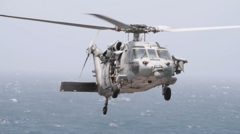
United States military forces have taken direct kinetic action against commercial shipping in the Gulf of Oman, marking a significant escalation in enforcement measures surrounding the ongoing conflict with Iran. According to statements from US Central Command, an MH-60 helicopter fired two Hellfire missiles at the M/V Vela Nova, a cargo vessel registered under the Panamanian flag. The strikes were specifically targeted at the ship's engine room with the intent of disabling its steering gear rather than sinking the vessel.
The military operation was conducted on Tuesday after American forces issued repeated warnings to the civilian crew aboard the M/V Vela Nova. Centcom stated that the crew ignored these directives as the ship attempted to transit through waters restricted by the US-imposed blockade of Iranian ports. Following the missile strikes, the vessel ceased its movement toward Iran, and US officials confirmed that the blockade remains fully active. This incident represents one of several recent actions taken by American forces to maintain maritime restrictions in the region.
Since the collapse of a ceasefire agreement in June, tensions between Washington and Tehran have remained high, characterized by intermittent exchanges of fire. The current blockade is part of a broader military posture adopted after diplomatic efforts to end the war, which began in late February involving both the US and Israel, failed to produce a lasting resolution. Iran has responded to these pressures by launching attacks against Israel and nations allied with the United States across the Gulf region.
A critical component of this geopolitical standoff is the effective closure of the Strait of Hormuz by Iranian forces. This narrow waterway historically serves as a vital artery for global energy supplies, handling approximately one-fifth of the world's oil and liquefied natural gas transit prior to the outbreak of hostilities. The disruption has led to severe volatility in international energy markets, with prices fluctuating wildly as supply chains face uncertainty and potential shortages.
Diplomatic channels have thus far proven ineffective in resolving the maritime crisis. Mediators working to facilitate an agreement on reopening the strait have not succeeded in bringing the opposing sides to a consensus. While Iran has indicated it is engaged in talks with Oman, it has explicitly stated that negotiations are not currently taking place directly with the United States. This lack of direct dialogue complicates efforts to de-escalate the situation and restore normal commercial shipping routes.
US Central Command provided updated statistics on its enforcement activities as of August 11, noting a pattern of increasing intervention in maritime traffic. In addition to disabling the M/V Vela Nova, American forces have redirected fifty-five other commercial vessels that attempted to run the blockade. The military also reported disabling three non-compliant vessels and boarding two others during this period. These figures underscore the intensity of the naval presence and the rigorous application of restrictions on shipping destined for Iranian ports.
The conflict has expanded beyond the immediate US-Iran confrontation, affecting broader regional security dynamics. In a separate development on Tuesday, Yemen's internationally recognized government reported that six people were killed and ten others injured in an attack by Iran-backed Houthi forces. The Houthis struck a cargo ship in the Red Sea, claiming it was carrying Saudi military equipment. This appears to be the first deadly attack by the group on a commercial vessel since the war began, highlighting the widening scope of violence.
As of now, Iranian authorities have not issued any official comment regarding the missile strike on the M/V Vela Nova or the broader blockade enforcement actions. The situation remains fluid, with no clear path toward de-escalation visible in the immediate future. The combination of direct military action against commercial shipping, continued diplomatic stalemates, and spillover violence in neighboring regions suggests that the instability in the Middle East is likely to persist, posing ongoing risks to global trade and energy security.
Sources behind this briefing
Go to the original reporting
- BBC World↗US says helicopter fired missiles to disable ship breaking Iran blockade

