The short version
- US investigators determined that a broken engine fan blade caused the cabin breach on a Ryanair flight in July.
- A passenger was partially sucked out of the aircraft but was secured by fellow travelers before full ejection occurred.
- The report notes previous bird strike incidents involving the same engine, though recent inspections showed no defects.
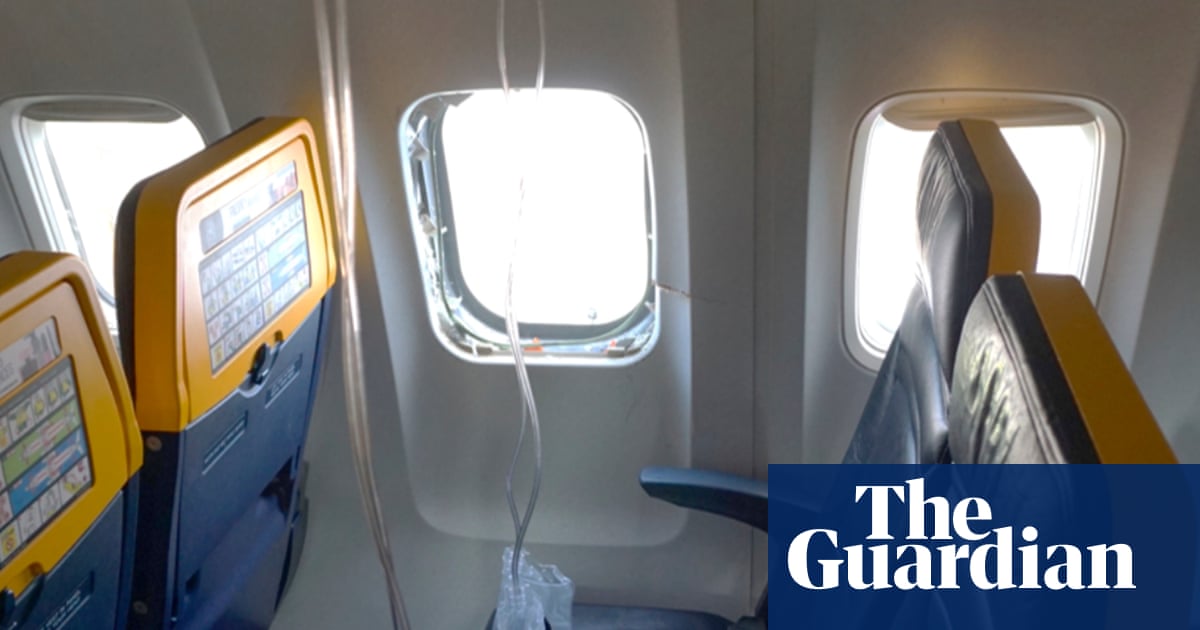
Preliminary findings from United States investigators have identified the mechanical cause behind a dramatic mid-air incident on a Ryanair flight in July. The National Transportation Safety Board concluded that a fan blade detached from the aircraft’s right engine shortly after takeoff, striking and shattering a passenger window. This breach led to rapid cabin depressurization, which pulled a seated traveler partially outside the fuselage before other passengers intervened to secure him.
The incident occurred on July 10 during flight FR1879, operated by Malta Air, a subsidiary of the budget carrier. The Boeing 737-800 was traveling from Thessaloniki, Greece, to Memmingen, Germany, carrying 149 passengers and four flight attendants. According to the NTSB report, the failure happened during the climb-out phase from Thessaloniki International Airport. The sudden loss of cabin pressure created a powerful suction force at seat 11F, where Ljubisa Karović, a 61-year-old Serbian entrepreneur, was seated.
Karović’s head and right arm were drawn out through the broken window frame. He remained inside the aircraft only because fellow passengers grabbed hold of him, preventing his complete ejection into the slipstream. Karović has described the event as a matter of luck and faith, noting that he fainted multiple times during the ordeal and suffered painful injuries to his head and neck. His wife reported that he lost consciousness several times, even after being pulled back into the cabin.
The flight crew’s response followed standard emergency protocols for engine failure and depressurization. Pilots initially detected high vibration alerts in the number two engine and reduced power while conducting checks. Although vibrations temporarily subsided, they soon intensified significantly, accompanied by a loud bang heard by the crew. The pilots donned oxygen masks, declared an emergency, and initiated an immediate descent to return to Thessaloniki. The landing was described as uneventful once the aircraft touched down.
Flight attendants corroborated the timeline, reporting intense continuous vibration and visible fog or smoke before the automatic deployment of passenger oxygen masks. The NTSB was delegated full investigative authority by Greek authorities shortly after the crash-landing. The agency’s preliminary report focuses on the mechanical sequence that led to the fan blade separation, identifying it as a fan-blade-out failure during the climb phase.
Maintenance records and historical data provide additional context for the investigation. The report highlights that flight crews had reported four bird strikes to the same right engine in the twelve months preceding this incident. In two of those cases, bird remains were reportedly found on the aircraft. Despite these prior impacts, ultrasonic inspections conducted on the fan blades in recent months yielded no findings of damage or defects.
The contrast between the clean inspection reports and the catastrophic failure raises questions about the durability of engine components under stress from foreign object debris. While the NTSB has not yet determined whether the bird strikes directly caused the blade fracture, the history of impacts is a notable factor in the ongoing analysis. The investigation continues to examine how the blade detached and why it was not detected during routine maintenance checks.
This case underscores the critical role of passenger intervention in aviation emergencies. Without the quick actions of those seated nearby, Karović likely would have been fully ejected from the aircraft at cruising altitude. The incident also highlights the robustness of modern emergency procedures, as the crew successfully managed both engine failure and cabin depressurization to ensure a safe return. Further details regarding liability and long-term safety recommendations are expected as the investigation progresses.
Ryanair has not issued a detailed statement regarding the specific mechanical failures cited in the NTSB report, but the airline’s subsidiary operated the flight in question. The aviation industry closely monitors such incidents to refine maintenance protocols and emergency response training. As investigators finalize their findings, the focus remains on understanding the precise failure mechanism to prevent similar occurrences in the future.
The preliminary report serves as an initial step in a broader inquiry that may take months or years to complete. It establishes the factual sequence of events but does not yet assign blame or determine root causes beyond the immediate mechanical failure. Stakeholders, including regulators and manufacturers, will await the final report for comprehensive conclusions regarding engine design, maintenance standards, and operational safety.
Sources behind this briefing
Go to the original reporting
- The Guardian World↗Engine parts shattered Ryanair window that passenger was partly sucked out of, report says

