The short version
- The United States has broadened sanctions aimed at cutting off Iran's economic revenue while explicitly warning global partners to sever ties with Tehran or risk exclusion from the dollar-based financial system.
- Chinese imports of Iranian crude have declined significantly since mid-year due to renewed US blockades, though independent Chinese refiners continue to purchase discounted oil through opaque supply chains.
- Washington has refrained from sanctioning major Chinese banks despite warnings, reflecting a strategic caution regarding potential Chinese retaliation in critical mineral exports ahead of scheduled presidential talks.
The United States government has announced an expansion of sanctions designed to isolate Iran economically, signaling a heightened effort to sever the Islamic Republic’s financial lifelines. Treasury Secretary Scott Bessent issued stark warnings to international partners, stating that continued business with Tehran could result in exclusion from the global dollar-based financial system. This move places renewed pressure on nations and entities engaged in trade with Iran, yet Washington has deliberately avoided implementing the most severe punitive measures available, particularly those targeting major Chinese financial institutions.
This calibrated approach reflects a complex diplomatic balancing act as the US prepares for upcoming talks between President Donald Trump and Chinese leader Xi Jinping. Experts note that Washington is wary of provoking Beijing into retaliatory actions, especially concerning restrictions on Chinese exports of critical minerals. While the Treasury Department has warned two large Chinese banks about potential secondary sanctions if Iranian funds pass through their systems, it has stopped short of officially designating them. This hesitation underscores the sensitivity of the economic relationship between the two superpowers.
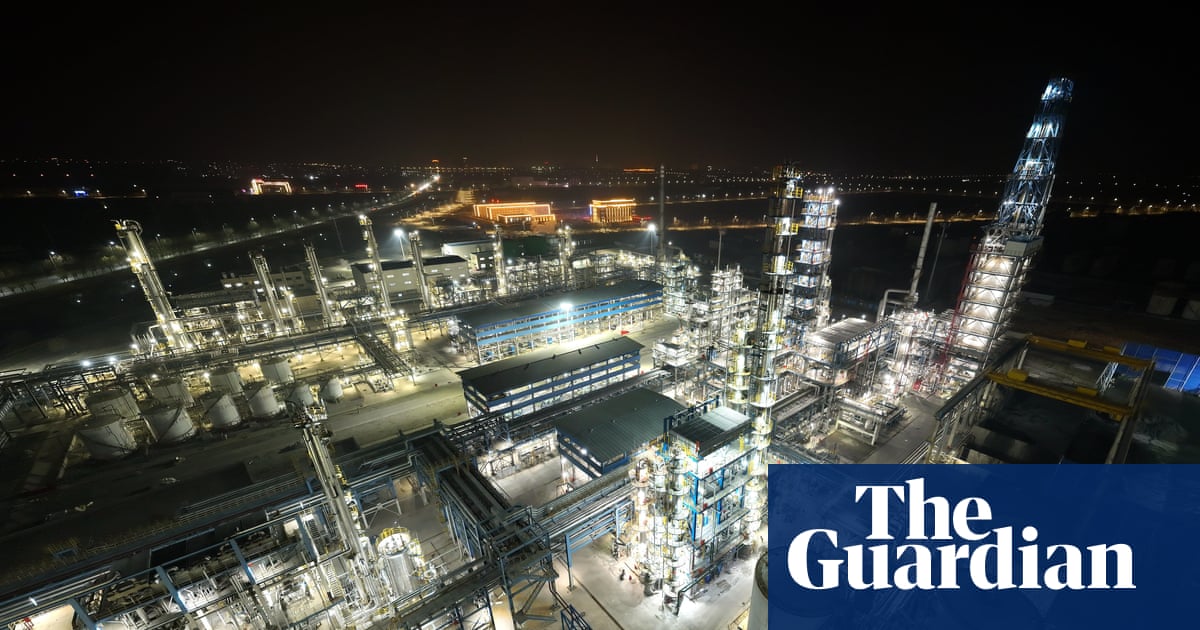
The focus of these sanctions remains heavily centered on Iran’s oil exports, with China identified as the primary buyer for several years. Although state-owned Chinese refiners have avoided Iranian crude since 2019 to maintain access to international financial markets, independent domestic refineries, often referred to as teapot refineries, continue to purchase the discounted barrels. These smaller entities operate primarily within the domestic market and are less concerned with US financial penalties, allowing them to sustain demand for Iranian oil despite Washington’s efforts.
Data from ship-tracking firm Kpler illustrates the impact of recent US actions on this trade flow. Following a renewed blockade of Iranian ports and ships in mid-July, imports into China dropped sharply. Shipments fell to 785,000 barrels per day in June, marking the lowest level since early 2023, before seeing a slight increase to 823,000 barrels in July. However, provisional data for August indicates a further decline to 534,000 barrels per day. This trend suggests that while the blockade has disrupted supply chains, it has not entirely halted the movement of Iranian crude.
The mechanisms used to facilitate this trade have become increasingly opaque over time. Iranian oil destined for China is frequently rebranded as Malaysian or Indonesian crude to obscure its origin. Transactions are often settled in Chinese currency rather than dollars, creating a closed loop involving numerous intermediaries that are difficult for regulators to track. This shadow network allows buyers to bypass traditional financial oversight, complicating enforcement efforts by US authorities.
Washington has intensified its crackdown on participants in this supply chain since the current administration took office. In April, sanctions were imposed on Hengli Petrochemical (Dalian) refinery and approximately 40 associated shipping firms and vessels. The Treasury Department accused Hengli of purchasing billions of dollars worth of Iranian oil, although the company has denied these allegations. Such targeted measures aim to disrupt the logistics of the trade without directly confronting major state-owned entities or financial institutions.
Despite these efforts, historical precedent suggests that sanctions alone may not significantly reduce overall flows of Iranian oil into China in the long term. Previous rounds of penalties have done little to stop the trade entirely, as buyers adapt to new restrictions by finding alternative routes and partners. The current strategy relies on sustained pressure and the threat of broader financial exclusion rather than immediate cessation of all transactions.
International reactions to the expanded sanctions have been mixed. The Chinese foreign ministry stated that pressure tactics are unhelpful and affirmed Beijing’s commitment to protecting its national interests through necessary measures. China continues to reject unilateral sanctions, advocating instead for diplomatic and political resolutions to regional conflicts. Meanwhile, Iranian officials have dismissed the US actions as economic terrorism, asserting that Tehran possesses tools to counter such measures and predicting resistance from other nations.
As diplomatic talks between the US and China loom, the outcome of these sanctions will likely hinge on how both powers navigate their competing interests. Washington seeks to curb Iran’s revenue without triggering a broader trade war, while Beijing aims to secure energy supplies without alienating its American counterpart. The coming months will reveal whether this delicate equilibrium can be maintained or if tensions will escalate further.
The situation remains fluid, with ongoing monitoring of shipping data and financial flows essential to understanding the true impact of these policies. While the immediate effect has been a reduction in Iranian oil imports to China, the resilience of independent refiners and the complexity of shadow trade networks suggest that complete isolation of Iran’s economy remains a significant challenge for US policymakers.
Sources behind this briefing
Go to the original reporting
- The Guardian US↗China is the biggest buyer of Iran’s oil. Could US sanctions threaten those ties?

