The short version
- The summit resulted in only a two-month extension of existing trade truce measures, falling short of Beijing's request for an extension through January 2029.
- Critics argue the visit emphasized ceremonial gestures and personal diplomacy rather than addressing critical issues such as artificial intelligence regulation or Taiwan security.
- China’s restriction on rare earth exports appears to have limited US leverage, contributing to a diplomatic outcome that favored Beijing’s preference for stability over confrontation.
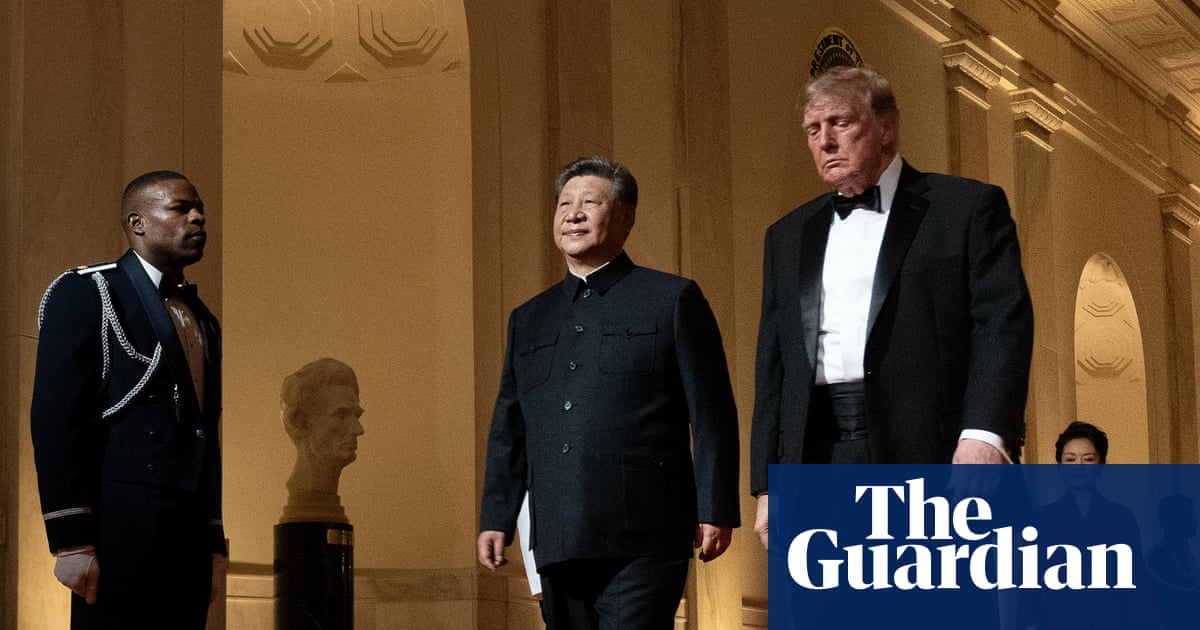
The recent state visit between United States President Donald Trump and Chinese President Xi Jinping concluded with minimal tangible outcomes, marking a significant departure from the high expectations often associated with such high-level diplomatic engagements. The three-day event in Washington was characterized by extensive ceremonial protocols, including a red carpet welcome at Joint Base Andrews, which broke with decades of precedent for foreign leaders. While the White House described the ninety-minute bilateral meeting as productive, independent observers and policy experts noted that the summit prioritized pageantry over substantive policy advancements.
The most concrete result of the negotiations was an agreement to extend the existing trade truce by only two months. This brief extension falls well short of what Chinese officials reportedly sought, which was a prolongation of the pause in tariff escalations until the end of Trump’s term in January 2029. The limited duration of the extension suggests deep-seated disagreements remain unresolved between the two nations regarding economic practices and market access. Analysts indicate that this outcome reflects a lack of preparatory groundwork aimed at achieving breakthroughs, resulting in a diplomatic exercise that achieved more in ritualism than in policy resolution.
Trade tensions have remained a central feature of US-China relations throughout Trump’s presidency, with the administration imposing successive rounds of tariffs on Chinese goods. These measures were intended to address unfair trade practices and reduce the substantial trade deficit, which stood at nearly $300 billion in 2024. While the deficit did decrease to approximately $200 billion in 2025, experts caution that this reduction may be partially illusory. Data indicates that Chinese goods are increasingly entering the US market through third-party countries, a trend that has contributed to China’s record-breaking trade surplus of over $1 trillion last year.
The economic interdependence of the two nations, which together account for 43 percent of global GDP, means that their trade policies have far-reaching implications for the world economy. The temporary truce agreed upon in Busan last year provided some relief to US consumers and businesses, but its imminent expiration creates uncertainty. The decision to extend it by only sixty days leaves both economies exposed to potential tariff escalations in the near future. This short-term fix underscores the difficulty of reconciling the divergent economic strategies and national interests of Washington and Beijing.
Beyond trade, the summit failed to produce meaningful progress on several other critical issues straining the bilateral relationship. Topics such as artificial intelligence regulation, human rights, and geopolitical conflicts in Ukraine and Iran were discussed but yielded no new agreements or frameworks for cooperation. On the issue of Taiwan, a persistent point of contention, Xi Jinping reportedly urged Trump to adopt language opposing Taiwanese independence. While the US currently maintains a position that it does not support independence, shifting to explicitly oppose it would represent a significant rhetorical concession favored by Beijing.
The United States has not yet clarified whether President Trump agreed to any such shift in stance regarding Taiwan. However, the administration has also made no progress toward approving a $14 billion arms sale package for the island, a move that Beijing has strongly opposed. The lack of movement on these security issues suggests that fundamental strategic differences remain unbridged. Critics within the US Senate have condemned the administration for focusing on ceremonial aspects rather than addressing the economic and security challenges that will define America’s future relationship with China.
A key factor influencing the dynamics of this summit was China’s strategic response to previous US tariffs: the restriction on exports of rare earth minerals. These critical materials are essential for US manufacturing and military supply chains, giving Beijing significant leverage in negotiations. Experts suggest that this retaliation has profoundly affected the Trump administration’s willingness to take aggressive risks against China. The deference shown by Trump during the visit, including detailed tours of presidential assets, was interpreted by some analysts as a sign of this shifted leverage.
For China, the absence of major concessions or dramatic announcements from the summit can be viewed as a diplomatic success. By avoiding further escalation and securing even a minimal extension of trade stability, Beijing achieved its immediate objectives without making significant compromises. The focus on 'diplotainment,' including cultural exchanges such as the planned transfer of giant pandas to the Atlanta Zoo, served to soften the image of the relationship while leaving hard policy issues unresolved. As the two-month extension expires, both nations will face renewed pressure to address the underlying structural conflicts that continue to define their complex and often adversarial partnership.
Sources behind this briefing
Go to the original reporting
- The Guardian World↗Pomp over progress as Trump rolls out red carpet for China’s president Xi Jinping

