The short version
- Zack Coughlan pleaded guilty to murder after initially denying the charge and claiming he acted out of fear for his life.
- Police described the killing as a pre-planned execution, noting inconsistencies in Coughlan's account and evidence of staged discovery.
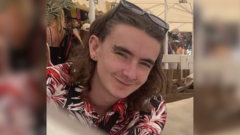
- The victim's family remembered Jamie Collins as gentle and kind, noting he was weeks away from completing his university degree.
A twenty-three-year-old university student has formally admitted to murdering his housemate in a violent ambush that left the victim stabbed more than thirty times. Zack Coughlan changed his plea to guilty at Bristol Crown Court, ending a trial that had begun with him denying the murder charge while admitting he caused the death of Jamie Collins. The court heard that Coughlan attacked Collins, twenty-one, in an alleyway near their shared home in Filton on April 8. After the assault, Coughlan left Collins’ body outside for eight hours before contacting emergency services.
During the proceedings, Coughlan initially argued that he stabbed his former friend because he feared Collins would kill him. He described himself as broken and claimed he was barely able to think when he lay in wait for Collins to return from classes at the University of the West of England. However, this defense of loss of control was ruled out by Justice Linden, who determined it could not be left to the jury for consideration. Consequently, Coughlan altered his plea, accepting full responsibility for the murder and setting the stage for sentencing later in the week.
Investigators from the major crime investigation team characterized the killing as a pre-planned, cold-blooded execution rather than a spontaneous act of self-defense. Detective Chief Inspector Lucy Edgeworth highlighted significant inconsistencies in Coughlan’s narrative. For instance, Coughlan claimed he injured his hands climbing a tree after the incident, a detail police found odd given other evidence. Furthermore, CCTV footage showed Coughlan changing his shoes after the attack, a fact he omitted from his initial account, leading authorities to conclude his story unraveled under scrutiny.
The entire sequence of events was captured on closed-circuit television cameras that Coughlan had installed himself. This footage not only recorded the ambush but also showed the moment Coughlan staged the discovery of Collins’ body. Jurors were informed that Coughlan later rewatched this video five times, claiming he needed to make sense of the situation and disconnect from the trauma. After leaving the scene, Coughlan cycled away on Collins’ bicycle to dispose of bloodstained evidence, dumping the bike at a nearby retail park. He then purchased new clothes and discarded his bloody garments in a pond, using carrier bags weighed down with bricks to ensure they sank.
Upon returning home, Coughlan ate pizza and played video games, stating he had to disconnect from the events that had transpired. He did not call emergency services for another eight hours. When he finally made the 999 call, he reported finding his housemate’s body cold. The delay in reporting the death and the methodical disposal of evidence contributed to the prosecution’s argument that the attack was calculated. The home where the two men lived was owned by Coughlan, who had installed the surveillance system that ultimately documented his actions.
The motive behind the killing remains unclear despite several potential points of contention between the roommates. Police noted there had been disputes regarding rent payments and that the two men held differing political views. Collins’ family stated that he had been looking forward to finishing his final year at university and returning home to Swansea in just a few weeks. They described Collins as gentle and kind, contrasting sharply with the brutality of the attack. Edgeworth emphasized that neither financial disputes nor political differences adequately explained why someone would carry out such a horrific crime.
Both men were final-year robotics students at the University of the West of England. Their friendship had apparently deteriorated prior to the incident, though the exact nature of their relationship breakdown was not fully detailed in court. Coughlan’s initial attempt to blame masked attackers for the murder was dismissed as the evidence pointed directly to his sole involvement. The judge thanked the jury for their service before dismissing them following the change of plea. Coughlan is now awaiting sentencing, with the court having accepted his admission of guilt for the murder charge.
The case has drawn attention due to the premeditated nature of the attack and the use of surveillance technology by the perpetrator. The installation of CCTV by Coughlan provided irrefutable evidence of his actions, undermining his initial claims of self-defense. The family of Jamie Collins continues to mourn their loss, emphasizing his character and academic aspirations. As the legal process moves toward sentencing, the focus remains on the severity of the crime and the lack of a clear, justifiable motive for the violence inflicted upon a young student nearing the completion of his education.
Sources behind this briefing
Go to the original reporting
- BBC News↗Student who stabbed housemate 30 times admits murder