The short version
- The independent after-action report identifies a lack of formal security assessments and written action plans as critical failures in the event planning process.
- Turning Point USA insisted on an outdoor courtyard location despite university concerns about surrounding high-rise structures creating sniper vantage points.
- Campus police staffing was below recommended levels, and standard protective measures such as drone surveillance and bag checks were not implemented for the crowd of approximately 3,000 attendees.
A newly released independent review of the security procedures surrounding the assassination of conservative activist Charlie Kirk at Utah Valley University has identified significant deficiencies in both institutional planning and external coordination. The after-action report, issued by the university on Friday, concludes that critical decisions made during the preparation phase for the September 2025 event left the speaker vulnerable to attack. Investigators examined communications between the university administration and Turning Point USA, Kirk’s organization, finding that the lack of a formal security assessment and a written event action plan contributed directly to the failure to mitigate known risks.
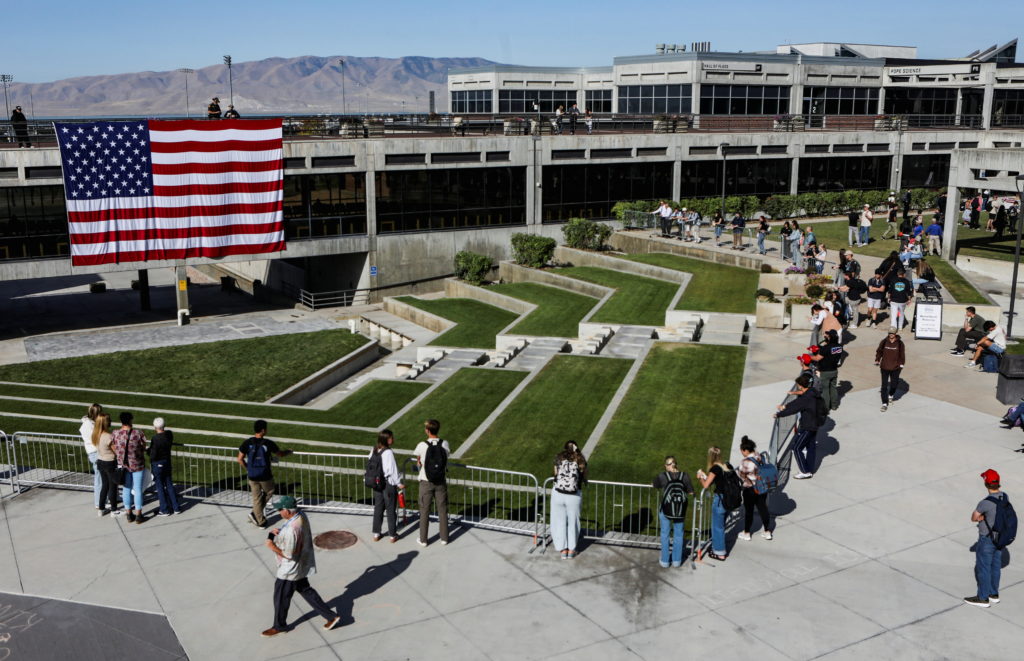
The report highlights a specific conflict regarding the choice of venue. During planning meetings in August 2025, representatives from Turning Point USA insisted that Kirk speak in an outdoor courtyard on campus. The organization cited previous familiarity with the location as justification for this preference. However, university officials expressed reservations about holding the event in an open space surrounded by tall buildings. These structures created potential lines of sight for a shooter, a risk that was not adequately addressed through documented safety protocols or pre-event walk-throughs with security stakeholders.
Despite these internal concerns, the university allowed the event to proceed without implementing standard protective measures. The review notes that the planning process failed to include coordination with Kirk’s private security team or external law enforcement partners. There was no clear strategy for managing the unique challenges posed by an outdoor setting with thousands of attendees. The report characterizes these omissions as consequential, suggesting that a more rigorous approach to risk assessment could have altered the outcome.
Charlie Kirk, who was 31 at the time of his death, was killed by a sniper positioned on a rooftop more than 400 feet away from the courtyard where he was debating students. The attack occurred during a gathering attended by approximately 3,000 people. An Associated Press analysis of public safety practices at the Orem campus revealed that several standard security measures were absent. Campus police staffing levels were significantly below recommendations for an institution of that size, and authorities did not deploy drones to monitor rooftops or coordinate with local law enforcement to secure the perimeter.
Additional lapses included the absence of bag checks and metal detectors at the event entrance. These measures have become standard practice at large public gatherings across the country to prevent weapons from entering venues. The failure to implement such basic screening procedures, combined with the lack of rooftop surveillance, created an environment where a determined attacker could operate with minimal interference. The report underscores that these decisions were not merely administrative oversights but fundamental failures in protective operations.
In the wake of the shooting, Kirk’s family has taken legal action against Utah officials. Earlier this month, they sent a wrongful death notice to the state, alleging that university administrators made reckless decisions that resulted in Kirk’s death. The notice serves as a precursor to a potential lawsuit and claims that leaving the speaker exposed to rooftop threats was a direct result of negligent planning. This legal move adds pressure on the university to address the systemic issues identified in the independent review.
Tyler Robinson, a Utah resident, turned himself in to authorities one day after the shooting. Prosecutors state that Robinson told his romantic partner he had reached a breaking point with Kirk’s rhetoric, citing an inability to tolerate what he described as hatred. Robinson has pleaded not guilty to aggravated murder, a charge that carries the possibility of the death penalty if convicted. A judge ordered the case to proceed toward trial in early September, though a specific date for the proceedings has not yet been set.
The findings from this report raise broader questions about campus security standards and the responsibilities of universities hosting high-profile political figures. As institutions across the country face increasing scrutiny over event safety, the details emerging from Utah Valley University offer a stark example of how inadequate planning can have fatal consequences. The review serves as a post-mortem analysis intended to inform future protocols, emphasizing the need for comprehensive risk assessments and clear lines of communication between organizers, security teams, and law enforcement.
Moving forward, the university must contend with both the legal implications of the wrongful death claim and the reputational damage associated with the security failures. The independent review provides a roadmap for necessary improvements, including enhanced staffing levels, mandatory line-of-sight assessments for outdoor events, and stricter coordination with external security partners. For the conservative movement and political organizers nationwide, the case underscores the urgent need to prioritize safety over logistical convenience when planning public appearances.
As the legal process against Robinson continues, the focus remains on accountability and prevention. The report does not assign criminal liability but clearly outlines where procedural breakdowns occurred. By documenting the absence of written plans and the deferral of critical decisions to an external organization, the review highlights a systemic vulnerability that extends beyond this single incident. The lessons drawn from this tragedy may influence how universities and event organizers approach security in an era of heightened political polarization.
Sources behind this briefing
Go to the original reporting
- PBS NewsHour↗Report finds many security deficiencies at Utah university where Charlie Kirk was killed

