The short version
- Unitree Robotics shares surged over 460 percent on their first day of trading in Shanghai, marking a significant milestone for China’s state-backed technology ambitions.
- The company reports strong profitability and high shipment volumes, positioning it as a major competitor to US firms despite lower price points and different software capabilities.
- Geopolitical tensions are rising, with the US Pentagon labeling Unitree a defense contributor and the FCC banning imports of certain foreign robots, complicating global market access.
Unitree Robotics, officially known as Yushu Technology Co Ltd, made a dramatic entrance onto China’s stock market this week, with its shares climbing more than 460 percent on the first day of trading. The listing on the Shanghai Star Market, often compared to the US Nasdaq for its focus on innovative technology firms, represents a pivotal moment for Beijing’s broader strategy to lead in advanced manufacturing and artificial intelligence. While the initial surge exceeded 600 percent at one point, gains settled significantly by the close, yet the valuation jump underscores intense investor appetite for companies operating at the intersection of robotics and AI.
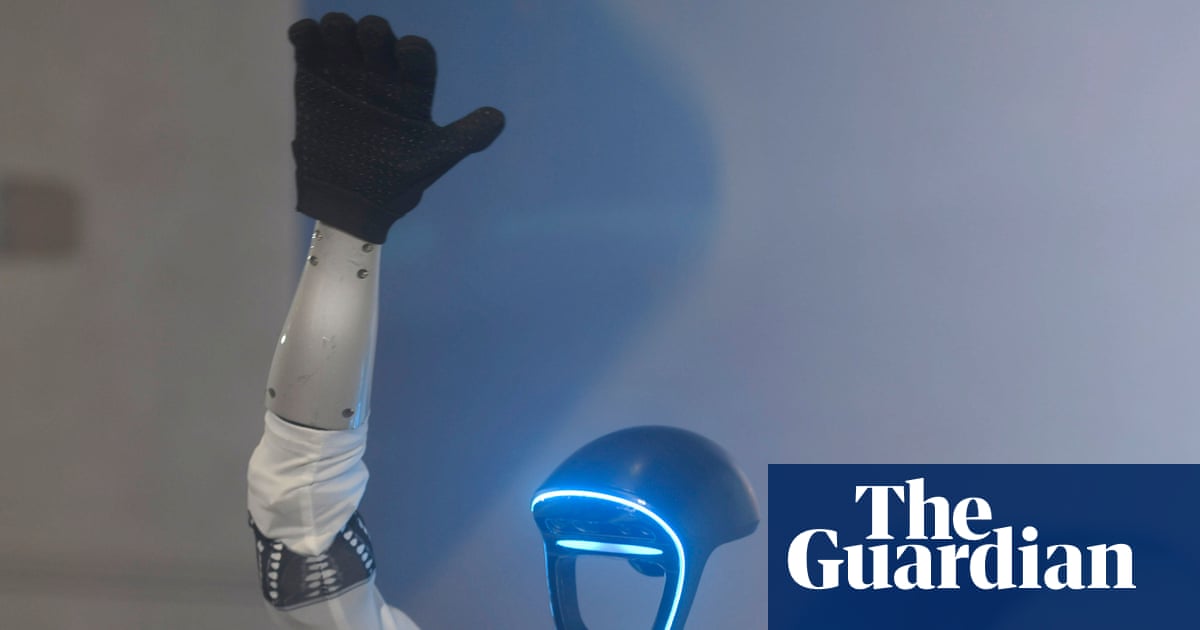
Founded in 2016 and based in Hangzhou, Unitree has established itself as the world’s largest maker of humanoid robots. The company reported shipping more than 5,500 humanoid units last year and achieved a net profit of 278 million yuan in 2025, a rare feat in an industry often characterized by heavy losses during development phases. This financial performance has attracted substantial backing from major Chinese tech conglomerates, including Tencent and Alibaba. The firm’s success is partly attributed to its ability to offer sophisticated hardware at prices significantly lower than those of Western competitors, allowing it to capture market share rapidly.
The company’s public profile has been bolstered by viral marketing campaigns featuring its machines performing complex physical tasks. Videos circulating online show Unitree robots executing martial arts routines, dancing alongside pop stars, and running at speeds comparable to Olympic athletes. These demonstrations were not merely for entertainment; they served as proof of technical capability ahead of the initial public offering. This week, the firm’s machines are participating in the World Humanoid Robot Games in Beijing, competing in events that range from sports like football to practical tasks such as sorting library books and opening boxes.
Industry analysts view Unitree’s listing as a benchmark for the broader humanoid robotics sector, which is projected to grow from approximately $2 billion in sales in 2025 to $300 billion by 2035. The market is becoming increasingly competitive, with major global players such as Tesla, Amazon, and BYD developing their own two-legged machines designed to perform human-like labor. However, while US rivals like Elon Musk’s Optimus project have generated significant hype, they have yet to begin widespread deliveries of commercial products. Unitree, by contrast, has been selling humanoid models since 2023, including the G1 model priced at $13,500.
Despite its commercial success, Unitree faces growing geopolitical headwinds. The United States government has moved to restrict the flow of Chinese robotics technology into American markets. Last month, the Federal Communications Commission banned imports of future models of foreign-made humanoid and quadruped robots, citing national security concerns. Additionally, the Pentagon added Unitree to a list of Chinese military companies in July, describing it as a contributor to the Chinese defense industrial base. The company has consistently maintained that its robots are intended for civilian use only.
The tension between technological advancement and regulatory restriction highlights the dual-use nature of robotics technology. Experts note that while US robots often feature more user-friendly software interfaces, Chinese manufacturers like Unitree have gained a competitive edge through aggressive pricing strategies. For instance, Unitree’s robot dogs start at $2,700, a fraction of the cost of Boston Dynamics’ Spot robot, which retails for roughly $70,000. Although direct comparisons are difficult due to differences in size and capability, the price disparity allows Chinese firms to penetrate markets that might otherwise be inaccessible.
Beijing views the robotics sector as a strategic priority, particularly in addressing domestic challenges such as an aging population and potential labor shortages. Government support has fueled a more than threefold increase in the number of Chinese robotics firms between 2020 and 2024. Unitree’s IPO coincides with the opening of the World Robot Conference in Beijing, where hundreds of companies are showcasing new products. This event underscores the scale of China’s industrial push, even as other competitors like AgiBot remain private and smaller rivals such as UBTech list on different exchanges.
Looking ahead, Unitree’s market performance will likely serve as a gauge for investor sentiment toward the humanoid robotics industry. Several other Chinese firms, including Deep Robotics and Leju Robotics, are preparing to go public, suggesting that Unitree’s debut may be just the beginning of a wave of listings. However, the regulatory environment remains uncertain. As the US continues to tighten restrictions on foreign technology imports, global supply chains for robotics components and finished products could face further fragmentation, complicating efforts by companies like Unitree to expand internationally.
Sources behind this briefing
Go to the original reporting
- The Guardian US↗Shares in humanoid robot firm Unitree surge 600% on Chinese stock market debut
- BBC Business↗Chinese robotics giant Unitree soars in stock market debut

