The short version
- Demand for second-hand school uniforms has reached record levels, affecting families in both low-income and affluent areas.
- Schools are circumventing government guidelines by requiring specific design features rather than logos, keeping costs high.
- Parents report significant financial stress from uniform expenses, diverting funds from other essential family activities.
The pressure on household budgets in the United Kingdom has intensified as the cost of school uniforms continues to rise, defying government efforts to curb expenses. Charities providing free clothing to families report that demand for their services is at an all-time high. This surge in need extends beyond traditionally low-income neighborhoods, reaching into more affluent communities where schools mandate expensive items. The situation highlights a growing disconnect between policy intentions and the practical realities faced by parents preparing for the new academic year.
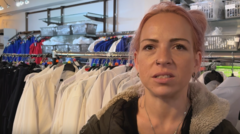
Wirral Free Uniforms for Schools, a charity operating twelve hubs across the Wirral region for fourteen years, has observed this trend closely. Project co-ordinator Petra Davies noted that despite official guidelines aimed at reducing costs, prices remain unaffordable for many. The organization assists families who struggle to purchase required attire, allowing them to redirect limited funds toward other necessities. One mother of four explained that accessing free uniforms enabled her to spend money on summer holiday activities and food rather than clothing, which would otherwise take a significant cut from her budget.
Government rules were recently changed to restrict the number of branded items schools can demand, theoretically allowing parents to buy cheaper generic alternatives. However, charity workers argue that schools have found ways to bypass these restrictions. Davies pointed out that while logos may be removed, specific design elements such as color combinations or stripes effectively brand the clothing. For example, a girls' school requires a navy jumper with a white stripe; although it lacks a logo, the specific design makes it difficult to find outside of the school shop, maintaining high prices.
The financial burden is particularly acute in areas considered more prestigious. Davies cited a school in Birkenhead that charges fifty-two pounds for a single rugby top. These costs accumulate quickly when considering other required items. Parents report spending around fifty pounds on shoes for primary school children, twenty pounds for a pack of shirts, and up to sixty pounds for a blazer. When these expenses are combined, they create significant stress from the beginning of the summer holidays until the start of term.
Research from the Children's Society supports these anecdotal accounts, finding that sixty-eight percent of parents in north-west England reported that this year's school holidays were costing more than the previous year. The charity had previously campaigned for the changes to government rules regarding branded items. While the policy shift was intended to help, the implementation has been uneven. Schools are technically abiding by the letter of the law by reducing logo counts, but the spirit of cost reduction is often lost due to alternative branding methods.
The impact is also felt by families new to the country. Viktoria, who moved from Kyiv, Ukraine, to England two months ago, described the uniform bank as a major help in adjusting to her new life. With only her husband working, the family relies on such support to manage expenses. The charity assists not only those in financial hardship but also those navigating complex school requirements in unfamiliar systems. This demographic highlights how uniform costs can be a barrier for refugees and immigrants settling into communities.
The broader implication is that cost-of-living pressures are reshaping how families allocate their resources. Money spent on mandatory clothing cannot be used for leisure, education, or basic sustenance. The stress associated with these purchases begins early in the summer and persists through the start of the school year. For many parents, the uncertainty of finding affordable, compliant items adds to the anxiety of managing a household budget that is already stretched thin by rising prices across other sectors.
As the new term approaches, the gap between policy and practice remains evident. While guidelines exist to protect families from excessive costs, schools retain significant discretion over what constitutes acceptable attire. This discretion allows for design specifications that function as de facto branding. Until these loopholes are addressed, charities like Wirral Free Uniforms for Schools will likely continue to see unprecedented demand. The situation underscores the need for more robust enforcement of cost-saving measures in education.
The response from local communities has been one of reliance on charitable support systems. These organizations fill a critical gap left by inadequate policy implementation. They provide not just clothing but also relief from the financial strain that affects family well-being. As long as uniform costs remain high and accessible alternatives are scarce, the burden will continue to fall on families and the charities that support them. The issue remains a prominent concern for parents across the region.
Looking ahead, the effectiveness of current regulations will be tested by continued monitoring of school practices and family expenditures. If schools persist in using design features to maintain exclusivity and cost, the intended benefits of government intervention will remain unrealized. Parents and advocacy groups may need to push for stricter definitions of what constitutes a branded item. Until then, the cycle of rising costs and increased charity demand is likely to continue.
Sources behind this briefing
Go to the original reporting
- BBC Business↗Demand for school uniform bank 'has never been higher'