The short version
- An estimated 2.4 million Afghan girls remain barred from secondary schooling five years after the Taliban takeover.
- UNESCO describes the exclusion as a grave violation of fundamental rights and a reversal of significant progress made since 2001.
- The agency continues to operate informal literacy and skills programs in community spaces despite official bans on female education.
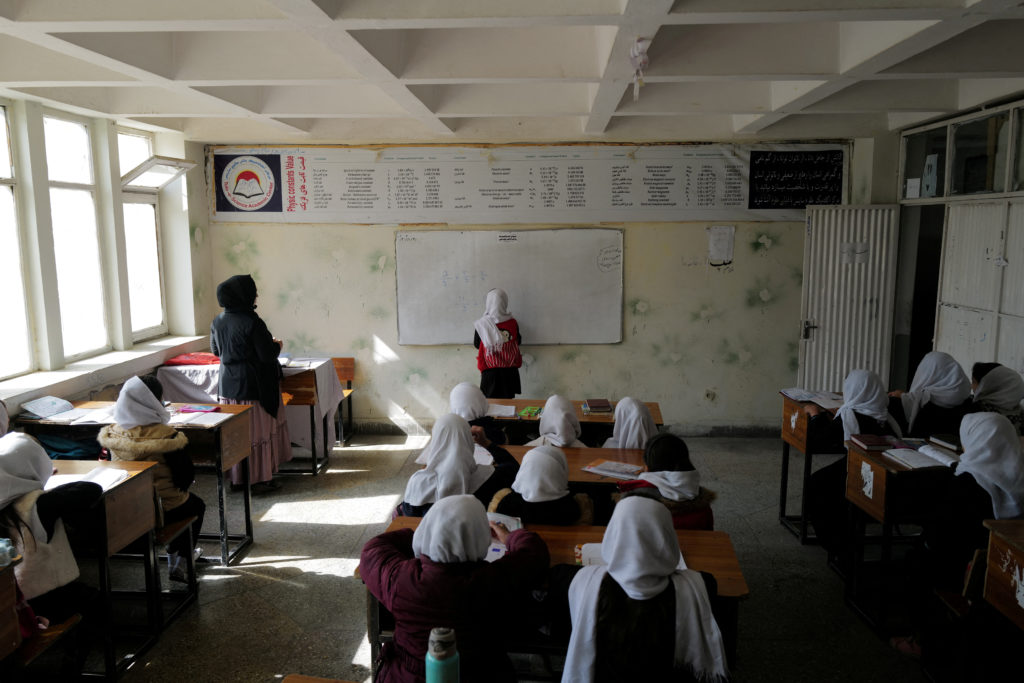
Five years after the Taliban seized control of Afghanistan, an estimated 2.4 million girls remain excluded from secondary education, according to a new assessment by the United Nations Educational, Scientific and Cultural Organization. The agency renewed its demand for the immediate restoration of educational rights for women and girls, characterizing the ongoing restrictions as a severe breach of fundamental human rights. This milestone marks nearly an entire cycle of secondary schooling lost for a generation of Afghan students.
Hoda Jaberian, UNESCO’s program coordinator for education in emergencies, emphasized that Afghanistan stands alone globally as the only nation where formal bans on secondary and higher education for females are enforced by the state. She noted that the duration of the exclusion is no longer a temporary disruption but a structural barrier affecting almost an entire cohort of school-aged girls. The agency maintains that access to education is non-negotiable and constitutes a basic human right without substitute.
The current situation represents a stark reversal of trends observed over the previous two decades. In 2001, access to schooling for girls in Afghanistan was severely limited. However, by the time the Taliban returned to power in August 2021, nearly one million girls were enrolled in secondary education. UNESCO officials indicated that much of this hard-won progress has been completely undone, erasing gains made during the period of international engagement and domestic reform efforts.
The restrictions began shortly after the Taliban took over following the withdrawal of U.S. and NATO forces. Initially barring girls from secondary schools, the de facto authorities later extended these prohibitions to higher education, employment, and other sectors. These measures have effectively removed women and girls from public life. Despite appeals from the United Nations, humanitarian organizations, human rights advocates, and several Islamic nations, the Taliban has maintained the ban, asserting that education policy is a domestic matter outside external jurisdiction.
In response to the formal bans, UNESCO has shifted its operational focus toward informal learning environments. The agency supports community-based education, literacy, and skills development programs designed to preserve educational pathways for Afghan learners. These initiatives often take place in private homes or community spaces under the tacit knowledge of local authorities. More than 1,000 literacy facilitators, most trained by UNESCO and its partners, are currently engaged in these efforts.
Jaberian stated that while the formal restrictions remain in place, abandoning Afghan learners is not an option for the agency. The work involves collaborating with communities to maintain every possible avenue for learning despite the hostile regulatory environment. This approach aims to mitigate the long-term cognitive and social impacts of educational deprivation while continuing to advocate for policy changes at the highest levels.
The persistence of these bans has drawn international criticism and highlights the challenges faced by humanitarian actors operating under restrictive regimes. The situation underscores the fragility of educational gains in conflict-affected regions and the difficulty of sustaining human rights standards when local authorities prioritize ideological compliance over universal access to schooling. The loss of nearly a full secondary education cycle raises concerns about future economic participation and social mobility for Afghan women.
Looking ahead, UNESCO continues to call for unconditional restoration of girls' and women's right to secondary and higher education. The agency’s stance remains firm that there is no alternative to formal schooling for ensuring long-term development and stability. As the five-year mark passes, the international community faces renewed pressure to address the systemic exclusion of half the population from educational opportunities, a situation with profound implications for Afghanistan’s future.
The report serves as both a documentation of rights violations and a strategic reminder of the stakes involved in education policy. By quantifying the number of excluded students and framing the issue within the context of lost progress, UNESCO aims to sustain global attention on the crisis. The continued operation of informal programs demonstrates a pragmatic approach to humanitarian aid, balancing immediate needs with long-term advocacy for systemic change.
As diplomatic efforts continue, the disparity between international norms and local enforcement in Afghanistan remains stark. The exclusion of 2.4 million girls from secondary education is not merely a statistical anomaly but a deliberate policy choice by the ruling authority. The international response will likely focus on sustaining informal educational support while seeking diplomatic channels to reverse the formal bans, though prospects for immediate change remain uncertain given the Taliban’s firm stance on domestic sovereignty.
Sources behind this briefing
Go to the original reporting
- PBS NewsHour↗2.4 million Afghan girls shut out of secondary school during 5 years of Taliban rule, UN says

