The short version
- The Montagu’s harrier, listed as critically at risk, successfully bred for the second year in a row after a five-year period with no confirmed nesting success.
- A single male fathered six chicks with two different females, benefiting from predator-exclusion fencing installed by conservationists and farmers.
- Researchers have fitted two juveniles with satellite tags to track migration patterns and assess survival rates amid shifting agricultural timelines.
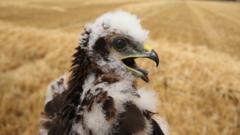
The Royal Society for the Protection of Birds has confirmed that the Montagu’s harrier, the United Kingdom’s rarest bird of prey, has successfully raised young for the second consecutive year. This development represents a significant shift for a species that had shown no evidence of successful breeding between 2020 and 2024. The population had previously peaked at nine successful nests in 2011 before entering a steep decline that led to its inclusion on the red list of birds most at risk in 2021.
The recent success centers on a single male harrier, identified by conservationists as "AU," who bred with two different females. Together, they produced six chicks across two separate nests located on English farmland. This output follows last year’s achievement, where four chicks hatched at the same undisclosed site. The consistency of nesting in this specific location suggests that the protective measures implemented there are yielding tangible results for the species’ recovery.
The survival of these ground-nesting birds relied heavily on collaboration between conservation groups and local landowners. Fences were erected around the nests to keep out terrestrial predators, particularly foxes, which pose a significant threat to eggs and young chicks. The male harrier played an intensive role in provisioning both broods, engaging in complex aerial feeding behaviors where he drops prey mid-air for females to catch while rolling upside down. This cooperative effort between humans and wildlife appears to have been crucial in overcoming the high mortality rates that typically affect this species.
Despite this progress, the long-term viability of the Montagu’s harrier remains precarious. These slender, long-winged raptors undertake an annual migration to Africa during the winter months before returning to Europe to nest in agricultural fields during the summer. However, little is known about the behavior and survival rates of juvenile harriers once they depart from their natal sites. To address this knowledge gap, conservationists have equipped two of this year’s chicks with satellite tags for the first time.
The data collected from these tagged birds will provide critical insights into migration routes, duration of stay in wintering grounds, and whether the juveniles return to the UK in their first or second year. Mark Thomas, head of investigations at the RSPB, described this information as the missing piece of the puzzle regarding the species’ life cycle. Understanding these patterns is essential for developing effective conservation strategies that extend beyond the nesting season.
Climate change continues to complicate conservation efforts by altering agricultural schedules. The harvest in the region occurred approximately a month earlier than in previous years, increasing the risk that farm machinery could inadvertently destroy nests hidden among crops. This timing mismatch highlights the vulnerability of ground-nesting birds to modern farming practices and environmental shifts. Protecting these sites requires not only physical barriers against predators but also careful coordination with farmers to avoid accidental destruction during harvest operations.
The successful breeding of six flying juveniles offers a glimmer of hope for a species teetering on the brink of extinction in the UK. However, conservationists emphasize that this achievement is fragile and dependent on continued protection and monitoring. The integration of satellite tracking technology marks a new phase in efforts to safeguard Montagu’s harriers, moving from static nest protection to dynamic management of their entire migratory range.
Public engagement remains a vital component of these conservation initiatives. Birdwatchers and the general public are encouraged to report any sightings of juvenile harriers to help researchers track their movements and survival. By submitting observations to the dedicated hotline, citizens can contribute valuable data that complements the satellite tracking efforts. This collaborative approach underscores the broader strategy needed to reverse the decline of one of Britain’s most iconic yet endangered raptors.
The next steps for conservationists involve analyzing the initial data from the satellite tags and assessing the return rates of the tagged juveniles. If the birds survive their first migration and return to the UK, it will provide strong evidence that current protective measures are effective. Conversely, if mortality rates remain high during migration or wintering periods, additional interventions may be required in Africa or along migratory corridors. The outcome of this year’s breeding season could set a precedent for future conservation planning.
Ultimately, the story of the Montagu’s harrier illustrates the complex interplay between wildlife biology, agricultural practices, and climate change. While the second consecutive breeding success is a notable achievement, it does not guarantee long-term stability for the species. Continued vigilance, adaptive management, and international cooperation will be necessary to ensure that these rare birds can thrive in an increasingly challenging environment.
Sources behind this briefing
Go to the original reporting
- BBC News↗UK's rarest bird of prey rears new chicks in secret location

