The short version
- Ukrainian drones have struck approximately twenty facilities belonging to Wildberries, Russia's largest online retailer, over a one-month period starting in mid-July.
- The attacks have destroyed an estimated twenty percent of the company's warehouse capacity, resulting in potential financial losses reaching six billion dollars.
- The strikes highlight the strategic shift toward targeting civilian economic infrastructure, creating repayment risks for major Russian banks that funded the retailer's expansion.
Ukraine has initiated a sustained aerial campaign against the logistical backbone of Russia’s largest e-commerce platform, marking a significant escalation in the targeting of civilian economic infrastructure. Beginning on a weekend in mid-July and continuing for approximately one month, Ukrainian drones have struck roughly twenty facilities belonging to Wildberries. These attacks span a vast geographic area, reaching from Moscow and St. Petersburg in the west to cities in the south and eastward toward the Ural Mountains, including Yekaterinburg, which lies more than two thousand kilometers from the Ukrainian border.
The strategic focus on Wildberries represents a departure from previous strikes that primarily targeted oil refineries, maritime hubs, and arms manufacturing plants. Instead, Kyiv has aimed at the giant depots that facilitate online shopping across Russia. This approach brings the consequences of the war directly to the broad public by disrupting the convenience and availability of consumer goods. The campaign underscores Ukraine’s growing capability to project power deep into Russian territory, posing a fresh challenge to President Vladimir Putin nearly four and a half years after the full-scale invasion began.
Wildberries, often compared to Amazon for its market dominance, accounts for approximately half of all online orders in Russia. The platform serves as a critical logistical network for businesses ranging from small individual sellers to large corporations, operating across the country’s eleven time zones. An estimated five hundred thousand to eight hundred thousand sellers rely on the company to store, ship, and deliver merchandise. Following the exodus of Western brands after the war began, Wildberries helped fill the void with products sourced from China, Turkey, the United Arab Emirates, and other regions.
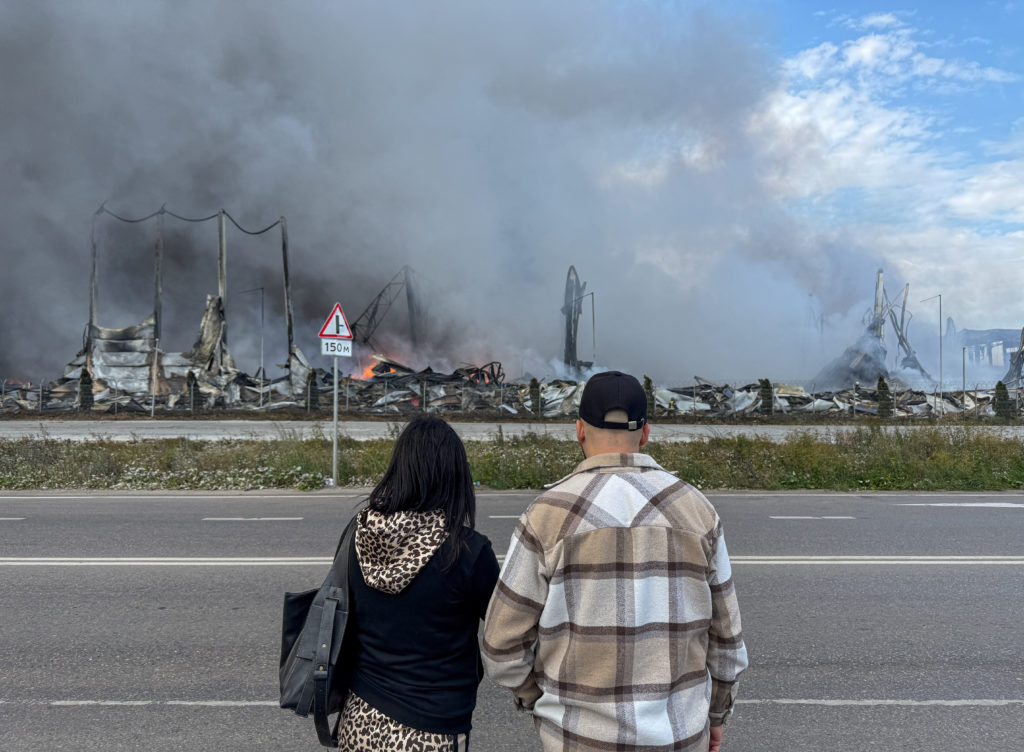
The physical impact of the strikes has been severe. Seven of the company’s ten largest logistics centers have been knocked out of operation, according to Ukraine’s Defense Ministry. Some of these depots are massive structures, covering up to three hundred thousand square meters. Because these facilities were not designed as military targets, they lacked robust defenses against drone attacks. Fires at several locations burned for days, with social media flooded by images of the destruction. Estimates suggest that up to twenty percent of the company’s total warehouse space has been destroyed, with financial losses potentially reaching six billion dollars.
The economic repercussions extend beyond the retailer itself. Wildberries has drawn massive loans from VTB and other major banks to support its expansion. The destruction of its assets raises serious concerns about the company’s ability to repay these debts, thereby increasing pressure on Russia’s broader financial system. Hundreds of thousands of individual sellers have lost their merchandise, sending shockwaves through the domestic economy. The disruption has forced Wildberries to attempt a rearrangement of its supply chains, including the creation of smaller partner hubs, though this process is complicated by the company’s historical reliance on large, centralized depots.
The attacks also carry significant personal and political weight for Tatyana Kim, the founder and Russia’s richest female entrepreneur. Born in Grozny to an ethnic Korean family, Kim launched Wildberries from her Moscow apartment in 2004. Her fortune has been estimated at eight point one billion dollars. The company’s vulnerability exposes the fragility of her business empire, which had previously expanded into banking, tourism, and even considered acquiring an airline. Unlike competitors such as Ozon and Yandex Market, Wildberries prided itself on a network of about two dozen mammoth warehouses, a strategy that has now become a liability.
The conflict surrounding Wildberries is not limited to external military pressure. In 2024, Kim divorced her husband, Vladislav Bakalchuk, leading to a bitter fight for control of the company. Bakalchuk sought support from Chechen leader Ramzan Kadyrov and his paramilitary forces, but ultimately lost the battle. The dispute peaked in a violent shootout at a business center near the Kremlin, leaving two people dead and several others wounded. This internal instability may have further weakened the company’s ability to respond effectively to the external drone campaign.
Despite claims from Kim that sites have been reinforced and strengthened defensively, the attacks have continued with little interruption. Some warehouses suffered only minor damage initially but were targeted again by Ukrainian forces. Experts note that these are not high-value political or military targets, meaning they lack the security measures necessary to withstand such strikes. As Ukraine continues to expand its long-range drone operations, the focus on soft economic targets like Wildberries illustrates a broader strategy aimed at eroding Russia’s economic resilience and public morale.
The full extent of the damage remains difficult to quantify due to scarce public data. However, the visible destruction and operational disruptions suggest a significant blow to one of Russia’s most prominent commercial enterprises. The campaign highlights the evolving nature of modern warfare, where economic infrastructure becomes a primary battlefield. For Russian consumers and sellers alike, the convenience of online shopping has been replaced by uncertainty and loss, marking a tangible shift in how the war impacts daily life across the country.
Sources behind this briefing
Go to the original reporting
- PBS NewsHour↗Ukraine takes aim at Russia's economy and morale by attacking online retailer Wildberries

