The short version
- Ukrainian drones targeted a major distribution warehouse near Moscow, marking one of the largest air raids on the Russian capital in two years.
- Russian authorities reported shooting down hundreds of drones and missiles, while also launching counter-strikes that killed civilians and damaged infrastructure in Ukraine.
- The conflict highlights a shift in capabilities, with Ukraine expanding its long-range strike options to target economic assets despite depleted air defense stocks.
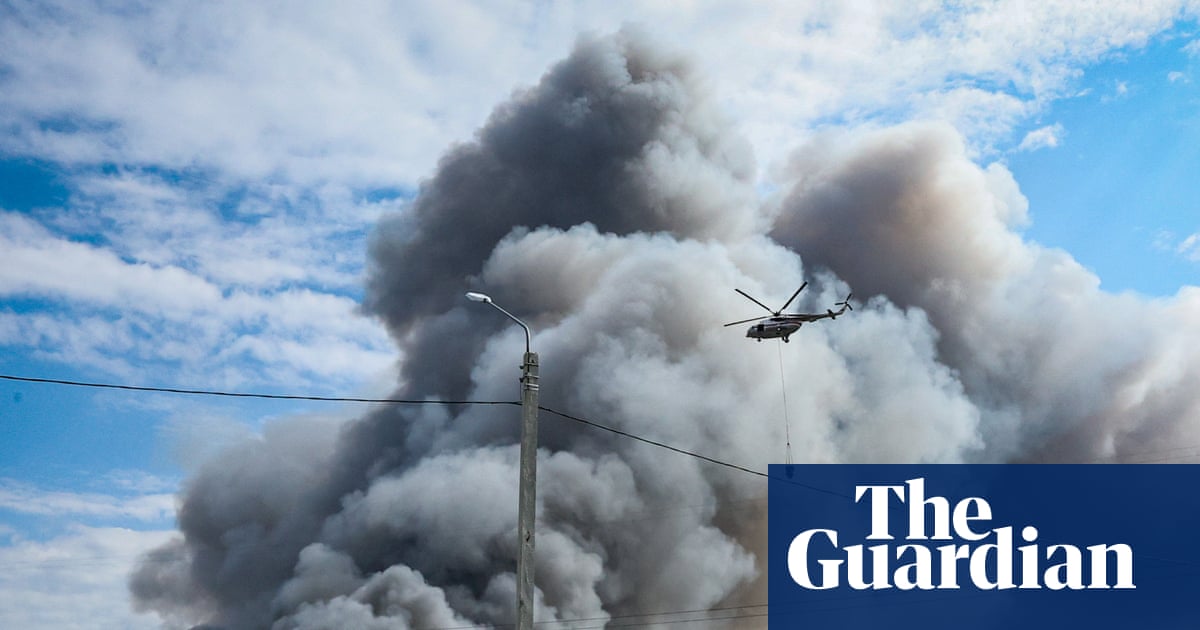
Ukraine has executed what officials describe as one of the most substantial drone operations of the ongoing war, directing hundreds of unmanned aircraft toward Moscow and surrounding regions. The assault resulted in a significant fire at a distribution facility belonging to Wildberries, a major Russian online retail company, located in Podolsk south of the capital. Visual evidence showed black smoke rising from the large warehouse complex, indicating severe damage to logistics infrastructure that supports commercial activity within Russia.
Russian authorities provided conflicting figures regarding the scale of the interception efforts. The defense ministry claimed to have destroyed 1,478 drones and nine cruise missiles over a twenty-four-hour period, a statistic that remains unverified by independent observers. Meanwhile, Moscow Mayor Sergei Sobyanin stated that six hundred drones approached the capital’s region, with two hundred and one being neutralized. He characterized the event as the largest air raid on the city in two years, though analysts note that Ukraine’s rapidly expanding drone capabilities may make this the most significant wave since the conflict began in 2022.
The attack appears to be part of a broader strategic shift by Kyiv over the past month. Ukrainian forces have increasingly targeted facilities associated with Wildberries, striking approximately twenty warehouses and buildings. This campaign aims to disrupt the Russian economy and impose financial pressure on ordinary citizens by interfering with supply chains for online retail. The ability to strike targets up to 1,500 miles from the border represents a significant evolution in Ukraine’s long-range offensive capabilities, allowing it to more closely match the deep-strike reach that Russia has maintained since the war’s onset.
Casualties were reported on both sides of the front lines. In Russia, at least six people died as a result of the drone attacks, with five fatalities occurring in the Rostov region near the Ukrainian border and one death recorded in the Moscow area. Governor Andrey Vorobyov described the assault on his region as one of the most massive drone attacks in recent memory. The Russian defense ministry also reported that fifteen hundred incoming drones were destroyed in the southern region, underscoring the intensity of the aerial exchange.
In response, Russian forces launched counter-strikes against Ukrainian territory. Ballistic missiles and guided aerial bombs targeted several cities, resulting in civilian deaths and infrastructure damage. In Kyiv, a missile attack shortly before 3:00 a.m. injured six people and ignited multiple fires. The blaze destroyed a significant portion of the Petrovka book market in the Obolonskyi district, with vendors reporting total losses of their inventory. Additional casualties were recorded in other regions, including two deaths in the Sumy border area and three others elsewhere in the country.
The conflict also spilled into NATO airspace briefly. A Spanish F-18 fighter jet, participating in a NATO patrol mission, intercepted and shot down an unmanned aerial system that had crossed into Romanian territory. The drone appeared to be of Russian origin, according to a military spokesperson for the alliance. This incident highlights the risks associated with cross-border drone operations and the potential for escalation involving allied nations.
Ukrainian President Volodymyr Zelenskyy condemned the Russian strikes on civilian infrastructure, accusing Moscow of targeting ordinary people wherever ballistic missiles could reach. He praised emergency services for their response to the attacks. Data provided by the Ukrainian government indicates that Russia has launched more than 1,550 attack drones, nearly 1,560 guided aerial bombs, and 62 missiles at Ukrainian communities in the past week alone. Most of these projectiles were ballistic missiles of various types.
The disparity in defensive capabilities remains a critical concern for Ukraine. While Kyiv has proven effective at intercepting slower-moving drones, it faces significant challenges against high-speed ballistic missiles. The stockpile of US-made Patriot interceptor missiles, which are among the few systems capable of neutralizing such threats, has been substantially depleted. This shortage leaves Ukrainian cities vulnerable to rapid strikes, even as Ukraine continues to expand its own offensive drone and missile programs to pressure Russian economic and military targets.
The recent exchanges underscore a war of attrition where both sides are stretching their air defense resources to the limit. Ukraine’s ability to conduct large-scale drone operations against deep targets in Russia signals a maturation of its asymmetric warfare tactics. However, the continued use of ballistic missiles by Russia against Ukrainian urban centers demonstrates the persistent threat to civilian safety. The situation remains volatile, with no immediate indication that either side will reduce the intensity of long-range strikes.
Future developments will likely depend on the availability of defensive systems for Ukraine and the resilience of Russian logistical networks under sustained drone pressure. International observers are monitoring the impact of these attacks on supply chains and civilian morale in both nations. The incident in Romania serves as a reminder that the conflict’s boundaries are increasingly porous, raising questions about regional security and the potential for broader involvement.
Sources behind this briefing
Go to the original reporting
- The Guardian World↗‘Massive’ Ukrainian drone attack on Russia kills at least six, says Moscow

