The short version
- Ukrainian forces deployed nearly 800 drones against Russian targets, marking one of the largest such operations since the invasion began.
- Russian missiles struck a village in the Kharkiv region, killing ten civilians and wounding seventeen others while destroying local infrastructure.
- The United Kingdom reaffirmed its commitment to supporting Ukraine despite Russian warnings regarding British-made technology used in attacks on Russian soil.
Ukrainian military forces executed a significant aerial operation against targets within Russia, launching approximately eight hundred drones in what officials described as one of the most substantial attacks since Moscow initiated its invasion more than four years ago. This surge in activity occurred just two days after a similar large-scale drone deployment, signaling an intensification of Kyiv’s strategy to strike deep inside Russian territory. The operation represents a continued escalation in the long-range aerial duel between the two nations, with Ukrainian forces increasingly relying on domestically produced technology to project power beyond their borders.
Russian defense authorities reported intercepting 791 drones across multiple regions, including Crimea and the Black and Azov seas. According to an Associated Press tally, this event ranks as the second-largest drone attack recorded since January 2025. The majority of the unmanned aircraft were directed toward the Moscow region, where local officials stated that 180 units were shot down. While no major damage or fatalities were reported in the capital area, three individuals sustained injuries in the surrounding region. Additional casualties occurred in the neighboring Ryazan region, where three private residences suffered damage and three people were wounded.
The drone swarm ignited a fire at a warehouse belonging to Wildberries, Russia’s largest online retailer, located in an industrial zone. Ukrainian authorities have previously targeted this company, alleging that it facilitates supply chains for the Russian military, a claim Moscow has consistently denied. Wildberries stated that the facility experienced only minor damage. The incident highlights Kyiv’s strategy of targeting commercial entities perceived as supporting the war effort, aiming to impose economic and logistical costs on the Russian state and its private sector partners.
Media coverage of the drone attack within Russia remained largely subdued, a pattern consistent with previous incidents involving strikes on Russian soil. Major state television channels, including Russia 1 and Channel One, omitted any mention of the event in their morning news broadcasts. However, other state-affiliated outlets provided more detailed reporting. The RIA Novosti news agency featured the attack prominently on its homepage, characterizing it as one of the most extensive assaults on Moscow since the summer began. Similarly, Rossiyskaya Gazeta and the pro-Kremlin tabloid MK highlighted the scale of the operation, with regional governor Andrei Vorobyov describing the event as massive.
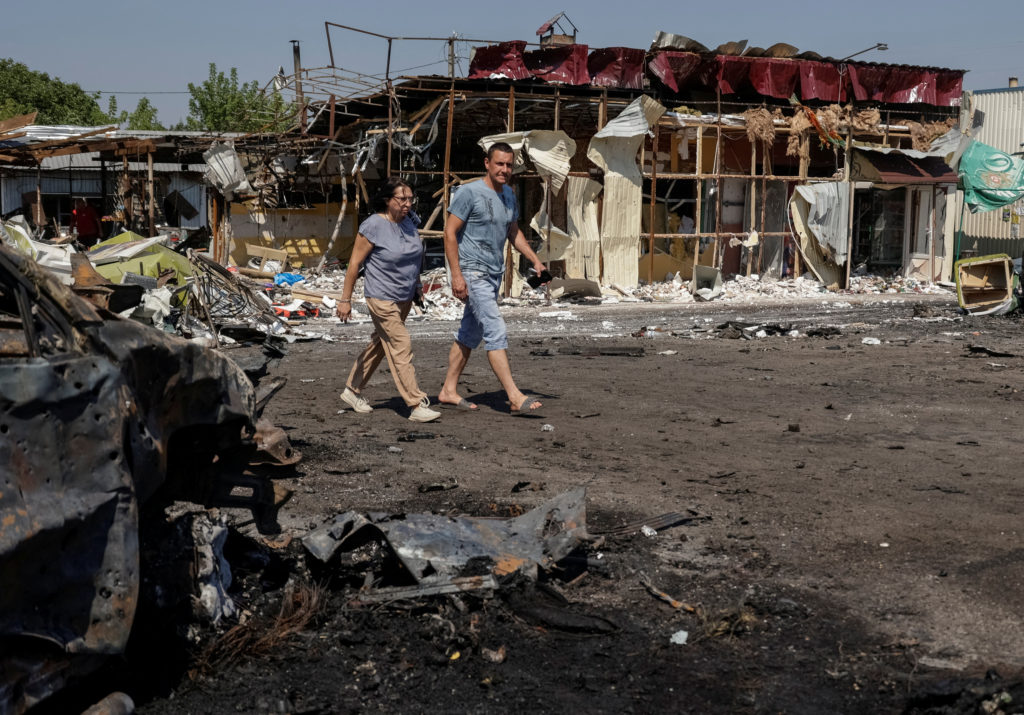
Simultaneously, Russian forces conducted missile strikes against civilian areas in northeastern Ukraine. A barrage hit the village of Pechenihy in the Kharkiv region, resulting in the deaths of at least ten people and injuries to seventeen others. The attack destroyed numerous homes, a cafe, a post office, a store, and several vehicles. Oleh Syniehubov, head of the Kharkiv regional military administration, provided preliminary figures on the casualties and damage. Ukrainian President Volodymyr Zelenskyy condemned the strike as brutal and vowed that Kyiv would respond to the aggression. Additional attacks in the Sumy region resulted in three deaths and three injuries over the past day.
The conflict has evolved into a stalemate along the roughly 1,250-kilometer front line in eastern and southern Ukraine, where progress on both sides remains limited. Analysts note that the widespread use of drones and ground robots has restricted troop movements and intensified the danger for combatants. In response to this dynamic, Ukraine has developed long-range drone capabilities that have garnered attention from governments and defense manufacturers globally. Kyiv’s leadership aims to make the Russian public feel the consequences of the war and pressure President Vladimir Putin into accepting peace negotiations, though Moscow has shown no indication of willingness to cease hostilities.
Ukrainian Foreign Minister Andrii Sybiha criticized Putin for prolonging the conflict rather than engaging with realistic ceasefire proposals. This diplomatic stance coincides with renewed international support for Ukraine. British Prime Minister Andy Burnham reaffirmed the United Kingdom’s commitment to aiding Kyiv, stating that providing defensive capabilities remains a consistent policy across previous administrations. This assurance comes after reports indicated that two U.K. companies manufactured drones used by Ukraine in strikes against Russian territory.
The revelation of British involvement has drawn sharp criticism from Moscow. The Russian Embassy in the United Kingdom warned that London’s actions would inevitably carry consequences, while Foreign Minister Sergey Lavrov asserted Russia’s right to view British participation as a direct factor in the conflict. As the war enters its fifth year, the interplay between military escalation, technological innovation, and diplomatic maneuvering continues to define the trajectory of the conflict, with both sides seeking leverage through aerial strikes and international alliances.
Sources behind this briefing
Go to the original reporting
- PBS NewsHour↗The Moscow region is hit by almost 800 drones as Russian missiles kill 10 in a Ukrainian village

