The short version
- Russian drone and missile strikes killed at least eight civilians in Ukraine overnight, including six agricultural workers in the Kharkiv region.
- President Zelenskyy urged stronger economic sanctions at the UN General Assembly, while Moscow insisted on a comprehensive peace deal rather than a temporary ceasefire.
- UN data indicates civilian casualties have risen sharply in early 2026, prompting fears of increased hardship as winter approaches.
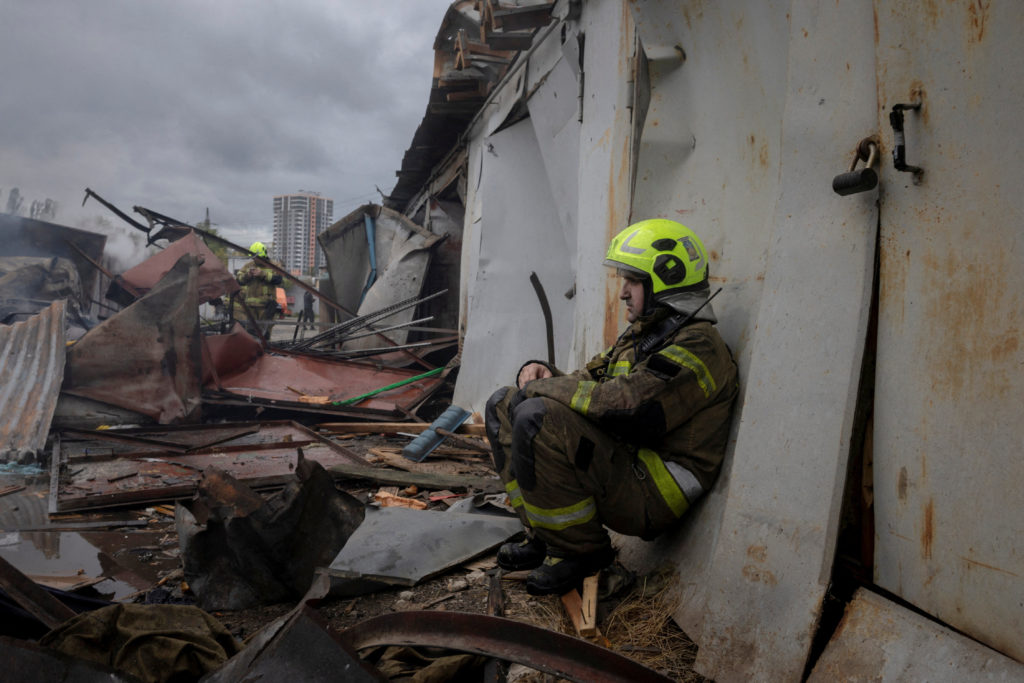
Russian military operations against Ukraine intensified overnight, resulting in the deaths of at least eight civilians and injuries to dozens more. Interior Minister Ihor Vyhivskyi confirmed that a strike in the northeastern Kharkiv region targeted agricultural workers, killing six and wounding twelve others. Additional attacks struck the capital, Kyiv, where one man and one woman were killed, while officials in the southern port city of Odesa reported significant bombardment. These incidents underscore the persistent threat to civilian infrastructure even as global leaders gather for diplomatic discussions.
The violence occurred against the backdrop of the United Nations General Assembly, where Ukrainian President Volodymyr Zelenskyy delivered a speech urging international partners to tighten economic pressure on Moscow. He called for comprehensive sanctions and trade bans designed to cut off revenue streams that fund Russia’s war effort. Despite these renewed appeals for settlement, there is no indication of a diplomatic breakthrough. The conflict, now in its fourth and a half year, continues to strain global food and energy supplies while deepening divisions between Russia and Western nations.
Diplomatic positions remain sharply divided. Kremlin spokesman Dmitry Peskov rejected Ukraine’s call for an immediate and unconditional ceasefire, arguing instead for a comprehensive peace agreement that addresses underlying issues. Moscow has demanded territorial concessions from Kyiv, terms that Ukrainian officials have consistently deemed unacceptable. This fundamental disagreement on the conditions for ending hostilities suggests that negotiations are unlikely to yield results in the near term, leaving the battlefield as the primary arena for resolution.
The aerial dimension of the war has grown more intense in recent months. Russian forces continue to deploy cruise missiles, ballistic missiles, glide bombs, and jet-powered drones against Ukrainian targets. In response, Ukraine has escalated its own long-range drone campaigns, targeting oil refineries and industrial facilities within Russia. Reports from western Russia indicated damage to an administrative building at an oil refinery in the Rostov region and a brief fire at an industrial site in Krasnodar. Although Ukrainian officials did not immediately comment on these specific incidents, the pattern of cross-border strikes highlights the expanding scope of the conflict.
Civilian life in Ukraine remains under severe strain. In Kyiv, more than fifty civilian sites were damaged, including residential apartment blocks, a maternity hospital, post offices, and a textile plant. Residents described a state of paralysis, with daily routines disrupted by frequent explosions and power outages. Valentyna Kolosenko, a resident who survived blasts near her home, noted the difficulty and fear associated with commuting to work. Liubov Paziuk, an elderly pensioner whose windows were shattered, expressed determination to remain in her home despite the ongoing danger, reflecting a broader sentiment of resilience among those staying in affected areas.
Data from the United Nations Human Rights Monitoring Mission reveals a troubling trend in civilian casualties. The number of Ukrainians killed and wounded in the first eight months of 2026 exceeded the total for all of the previous year. August alone saw at least 368 civilians killed and 2,314 wounded. Ukrainian Foreign Minister Andrii Sybiha characterized this escalation as terror tactics that necessitate both active diplomacy and sustained pressure on the Russian regime. The statistics suggest that despite diplomatic efforts, the physical toll on the population is accelerating rather than diminishing.
As winter approaches, concerns are mounting regarding the humanitarian impact of continued fighting. President Zelenskyy warned that the coming months could be particularly harsh for Ukrainians, citing potential disruptions to heating and power supplies. He emphasized that de-escalation measures are critical before the weather turns severe. Meanwhile, Russian forces have maintained pressure on logistical hubs, including trains and gas stations, aiming to keep civilian populations unsettled. The combination of military intensity and seasonal challenges poses a significant risk to stability in the region.
The conflict has also spilled over borders, raising regional security concerns. Romanian authorities reported that a drone violated their airspace for four minutes before crashing near a town in the north, close to the Ukrainian border. Fighter jets were scrambled in response to the incident. This breach highlights the increasing unpredictability of the aerial war and the potential for wider regional involvement. As diplomatic talks stall and military operations continue, the immediate future remains uncertain, with both sides preparing for a protracted struggle through the winter months.
Sources behind this briefing
Go to the original reporting
- PBS NewsHour↗Russian strikes kill 8 civilians in Ukraine as UN debates how to end the war

