The short version
- Russian forces have struck over two hundred Ukrainian filling stations since April, escalating the frequency of attacks using expensive Shahed drones.
- Local authorities and fuel retailers are enforcing strict safety protocols, including rapid refueling mandates and structural reinforcements, to protect civilians.
- Despite widespread destruction in specific regions, national fuel availability remains resilient as sales shift away from frontline areas.
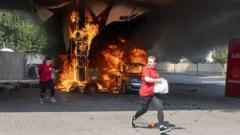
A sustained campaign by Russian forces targeting civilian fuel infrastructure has intensified across Ukraine, with more than two hundred petrol stations struck since April. This escalation represents a strategic shift aimed at disrupting daily life and pressuring the government through economic hardship and fear. The attacks have grown in frequency and severity, moving from smaller remote-controlled drones to larger, Iranian-made Shahed missiles that cause significant destruction. Analysts note that the cost of these weapons often exceeds the value of the individual stations they destroy, highlighting a strategy focused on terror rather than efficient resource allocation.
The geographic scope of the damage is expanding beyond immediate frontline zones. In Kharkiv, Ukraine’s second-largest city, recent drone strikes wounded two people at filling stations, while an attack outside Kryvyi Rih resulted in three fatalities last week. Entire corridors have been rendered devoid of functioning fuel outlets; for instance, the road connecting Kharkiv and Dnipro now lacks operational stations, and all facilities around the village of Opishnya in the Poltava region have been destroyed. In Trostyanets, a town near the northeastern border, every petrol station has reportedly been eliminated, forcing local authorities to distribute fuel directly from mobile tankers that change locations frequently to avoid detection.
In response to the heightened threat, police and municipal leaders have issued urgent guidance for motorists. Drivers are advised to fill up quickly and leave immediately when air raid sirens sound, with some officials explicitly stating that vehicles can be replaced but lives cannot. In the Dnipropetrovsk region, authorities have warned residents to abandon their cars if necessary during alerts. This advice has been largely heeded by the public. Customers at major chains like BRSM Nafta no longer browse convenience store aisles; instead, they prioritize speed and safety, exiting premises as soon as refueling is complete. There are no reports of panic buying or long queues, suggesting a disciplined adaptation to the new reality.
Fuel retailers are implementing physical and operational changes to mitigate risks. BRSM Nafta has constructed concrete shelters at forecourts and installed anti-drone nets over pumping areas. The company has also reduced staff presence and shortened operating hours in vulnerable locations. Despite losing eight stations and rebuilding two others, the chain continues operations by prioritizing customer safety over commercial activity. In Mykolaiv, residents report that stricter adherence to air alert protocols has become the norm, with drivers accepting delays as a necessary trade-off for security. The social fabric appears resilient, with communities adjusting routines rather than descending into chaos.
The strategic intent behind these strikes is viewed by Ukrainian officials and citizens as an attempt to coerce capitulation. Village chief Mykola Riznyk in Poltava region stated that the enemy aims to deprive locals of fuel to force unfavorable agreements. Deputy regional administration head Oleksandr Tolokonnikov noted that in Ukrainian-controlled parts of Kherson, nearly half of all petrol stations have ceased operations due to daily drone attacks. Local authorities in affected areas are stockpiling fuel in dispersed locations to maintain supply chains despite the destruction. The psychological impact is significant, with residents living under constant threat while performing essential tasks like refueling vehicles.
Despite the extensive damage to individual facilities, the overall impact on Ukraine’s national fuel supply remains limited. A report by the National Bank of Ukraine indicates that only four percent of the country’s filling stations have been damaged or destroyed. The market has absorbed these losses through increased sales in regions farther from the front lines and the Russian border. This resilience suggests that while the attacks cause severe local disruption and loss of life, they have not yet succeeded in creating a nationwide fuel crisis. The distribution network remains functional, albeit under strain, allowing for continued mobility for civilians and emergency services.
The situation contrasts sharply with conditions in Russia, where Ukrainian drone strikes on oil refineries have triggered widespread fuel shortages across almost every region. While Ukraine faces targeted destruction of retail infrastructure, Russia is grappling with upstream production issues that affect the entire country. This asymmetry highlights different vulnerabilities: Ukraine’s challenge is protecting dispersed civilian assets from precision strikes, while Russia struggles with maintaining output at centralized industrial sites. The conflict has thus evolved into a contest of endurance, with both sides attempting to degrade the other’s logistical capabilities.
Looking ahead, the frequency of attacks on fuel infrastructure is expected to continue as part of Russia’s broader strategy to undermine Ukrainian morale and economic stability. The use of expensive Shahed drones against relatively low-value targets suggests a willingness to absorb high costs for psychological impact. Ukrainian authorities will likely need to maintain adaptive measures, such as mobile fuel distribution and reinforced shelters, to protect citizens. The long-term effectiveness of this campaign depends on whether the cumulative damage can eventually overwhelm Ukraine’s ability to compensate through regional shifts in sales and supply chain adjustments.
International observers note that the targeting of civilian infrastructure raises serious humanitarian concerns. While military logistics are legitimate targets, the deliberate destruction of petrol stations frequented by civilians blurs the line between combatant and non-combatant risks. The high casualty rate at these sites underscores the danger posed to ordinary people going about their daily lives. As the conflict drags on, the ability of Ukrainian society to maintain normalcy under such conditions will be a critical factor in determining the broader outcome of the war.
Sources behind this briefing
Go to the original reporting
- BBC News↗As Ukraine hits Russia's refineries, Russia targets Ukraine's petrol pumps

