The short version
- The United Kingdom experienced its most substantial partial solar eclipse since 1999, with visibility lasting into the evening hours.
- Northern Spain served as the primary location for totality, attracting hundreds of thousands of international tourists and local residents.
- Weather conditions varied significantly across Europe, with clear skies in southern regions contrasting against cloud cover in northern areas.
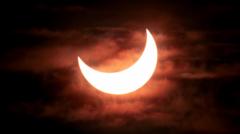
A significant astronomical event unfolded across Europe on Wednesday evening, offering the United Kingdom its most substantial solar eclipse in nearly three decades. The celestial alignment provided viewers in the British Isles with a partial eclipse that obscured up to 96 percent of the sun’s disc, depending on specific geographic location. This phenomenon represents the strongest such occurrence for the region since 1999 and is projected to be the best visible from the UK for the next fifty years. The peak of the event occurred between 18:58 and 19:15 British Summer Time, casting a dramatic shadow over the landscape during the early evening hours.
Visibility varied considerably across different parts of the country. Regions in Devon, Cornwall, and western Pembrokeshire in Wales were positioned to witness the maximum obscuration, with between 94 and 96 percent of the sun blocked by the moon. Other areas, including much of Wales, Northern Ireland, portions of the West Midlands, the South West, and the westernmost sections of Scotland, experienced slightly less coverage, ranging from 92 to 94 percent. Despite these high percentages, the eclipse remained partial for all UK observers, meaning the sun was never completely hidden from view.
In contrast to the partial views in the north, northern Spain lay directly within the path of totality. This narrow band allowed for a complete blocking of the sun, creating a rare opportunity to observe the solar corona and chromosphere. Major cities such as Bilbao, Valencia, and Palma de Mallorca enjoyed clear skies, while Barcelona and Madrid saw more than 99 percent coverage. The total eclipse in Spain peaked between 20:26 and 20:33 local time, offering approximately one minute and forty seconds of full darkness. This brief window allowed observers to witness the sun’s atmosphere, a vast halo of superheated plasma that is normally invisible due to the brightness of the solar surface.
The event drew massive crowds to Spain, with the finance ministry estimating that half a million visitors traveled to the region specifically for the spectacle. Enthusiasts from across Europe and beyond converged on cities like Burgos to experience the phenomenon in person. Many described the occasion as a profound natural wonder, emphasizing the rarity of witnessing totality over land rather than ocean. The influx of tourists highlighted the significant cultural and economic impact of such astronomical events, with many expressing excitement about seeing the grandeur of nature firsthand.
Preparation for the event led to high demand for safety equipment across the UK. Specialized eclipse glasses, required for safe viewing of the sun, sold out quickly in many locations. Retailers reported strong sales, with some shops moving hundreds of units in a single day. Experts consistently urged the public to avoid looking directly at the sun without proper protection, emphasizing the risks of eye damage. The scramble for viewing aids underscored the widespread public interest and the importance of safety protocols during such celestial occurrences.
Weather conditions played a crucial role in the viewing experience across Europe. While southern regions like Spain benefited from clear skies, northern areas faced more uncertain forecasts. Parts of north Wales, northern England, Scotland, and Northern Ireland experienced cloud cover that could obscure the view between 18:00 and 19:00. In some western Scottish and northern Irish locations, rain outbreaks further complicated visibility. These meteorological differences meant that while some observers had unobstructed views, others struggled to see the eclipse clearly despite being in optimal geographic positions.
The scientific significance of the event extends beyond immediate public interest. Solar eclipses provide valuable opportunities for studying the sun’s outer atmosphere and its effects on Earth’s ionosphere. The alignment of the earth, moon, and sun creates a unique natural laboratory for researchers. Although total solar eclipses occur somewhere on Earth roughly every eighteen months, they are rarely visible from populated land areas. This particular event offered a rare chance for both scientists and the general public to observe these phenomena in detail.
Looking ahead, residents of the UK will have to wait until 2081 to see another eclipse with similar levels of obscuration. The next total solar eclipse visible from the British Isles is not expected until 2090. This long gap underscores the rarity of such events and explains the heightened public engagement. As the moon continues its orbit, the alignment required for such dramatic celestial displays remains infrequent, making this Wednesday’s event a memorable milestone in recent astronomical history.
The experience varied widely depending on location and weather, but the overall impact was significant. From the partial views in the UK to the totality in Spain, the eclipse captured the attention of millions. It served as a reminder of the dynamic nature of our solar system and the continued fascination with celestial mechanics. Whether viewed through specialized glasses or experienced in person, the event highlighted the intersection of science, culture, and public curiosity.
As the sun returned to normal brightness, the immediate spectacle concluded, but the data collected and memories formed will likely endure. Astronomers and enthusiasts alike have documented the event, contributing to a broader understanding of solar phenomena. The next major eclipse will not arrive for decades, leaving this occurrence as a benchmark for future comparisons. The widespread interest and preparation demonstrated a growing public appreciation for astronomical events and their scientific importance.
Sources behind this briefing
Go to the original reporting
- BBC News↗UK to get best eclipse since 1999 as Moon blocks out Sun across Europe

