The short version
- Virgin Group has secured regulatory approval for up to twenty daily return services through the Channel Tunnel beginning in October 2030.
- The company must still acquire high-speed trains and obtain safety certifications from both UK and European authorities before operations can commence.
- Eurostar acknowledged the potential for market growth while maintaining its focus on expanding its own fleet and passenger capacity.
The regulatory landscape for international rail travel between Britain and continental Europe is shifting as the Office of Rail and Road has granted Virgin Group preliminary approval to operate services through the Channel Tunnel. This decision marks a significant development in efforts to introduce competition to a route that has been exclusively served by Eurostar since the tunnel opened nearly three decades ago. The regulator’s move signals a willingness to open the market to new operators, potentially altering the dynamics of cross-Channel passenger transport for the first time since 1994.
Under the terms of the agreement, Virgin is authorized to run up to twenty daily return services connecting London with major European cities including Paris, Brussels, and Amsterdam. The access rights are scheduled to begin on October 1, 2030, and will remain in effect until December 31, 2040. This long-term framework provides the company with a stable foundation to plan its entry into the market, although the approval currently covers only the track segment from London St Pancras International to the Channel Tunnel terminal at Dover.
Despite this progress, substantial operational hurdles remain before Virgin can launch its services. The regulator emphasized that the company must still secure appropriate rolling stock and obtain necessary safety approvals from both United Kingdom and European Union authorities. Additionally, Virgin needs to negotiate access to rail networks on the mainland side of the tunnel, a process that involves separate regulatory bodies in France and other European nations. These requirements highlight the complex international coordination required for cross-border rail operations.
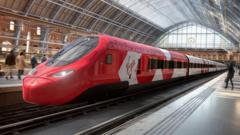
To address the need for suitable trains, Virgin has announced plans to purchase twelve high-speed units from Alstom, a major European rail manufacturer. These vehicles will be essential for meeting the technical standards required for Channel Tunnel operations and ensuring compatibility with existing infrastructure. The acquisition represents a significant capital investment and underscores the company’s commitment to establishing a viable presence in the international rail market.
Infrastructure constraints have also played a role in shaping Virgin’s strategy. Last year, the regulator approved an arrangement allowing Virgin to share a key maintenance depot with Eurostar at Temple Mills in east London. This facility is unique in the United Kingdom for its ability to accommodate the larger trains used on continental routes and its direct connection to the cross-Channel line. Access to this depot removes a potential bottleneck that could have delayed or prevented Virgin’s entry into the market.
The regulatory body has framed this development as a positive step toward enhancing competition and driving growth in international rail services. Officials noted that increased market participation could yield significant benefits for passengers, potentially leading to improved service quality, greater choice, and competitive pricing. The deputy director of access and international at the Office of Rail and Road described the approval as an important milestone in supporting industry expansion and fostering a more dynamic transport sector.
Eurostar, which has held a monopoly on passenger services through the tunnel for thirty years, responded to the news by acknowledging the broader potential for growth in international rail travel. The company stated that it remains focused on its own ambitious plans, including fleet investments and a target of carrying thirty million passengers annually. Rather than viewing Virgin’s entry as a direct threat, Eurostar positioned itself as a participant in an expanding market that could attract more travelers to Europe by train.
Virgin is not the only company exploring opportunities in this space. Italy’s FS Italiane Group has also expressed interest in operating services through the Channel Tunnel using its subsidiary Trenitalia France. This indicates a broader industry trend toward diversifying operators on key European routes, driven by both commercial ambition and regulatory encouragement to break up monopolies. The presence of multiple potential competitors suggests that the Channel Tunnel corridor may become increasingly contested in the coming years.
A spokesperson for Virgin Group welcomed the regulator’s pre-approval, describing it as evidence that their plans are advancing rapidly. The company highlighted its intention to bring its established customer service standards to the international market, leveraging its reputation from domestic rail operations. While the path to launch remains long and fraught with technical and regulatory challenges, the initial green light from UK authorities provides a crucial foundation for future development.
As Virgin works through the remaining requirements, including safety certifications and mainland access agreements, the industry will be watching closely to see how competition evolves on this historic route. The outcome could set a precedent for other monopolized transport corridors in Europe, demonstrating whether regulatory intervention can successfully stimulate market entry without compromising safety or service reliability. For now, the focus remains on executing the complex logistical and bureaucratic tasks necessary to turn approval into actual train services.
Sources behind this briefing
Go to the original reporting
- BBC News↗Virgin takes step towards running Channel Tunnel rail services

