The short version
- The UK will allow declassification of Storm Shadow missile components to help Ukraine establish domestic production capabilities.
- Prime Minister Andy Burnham’s visit coincides with heightened Russian aggression and a diplomatic downgrade by Moscow in London.
- Ukrainian leadership faces mounting pressure from both external military threats and internal political calls for elections.
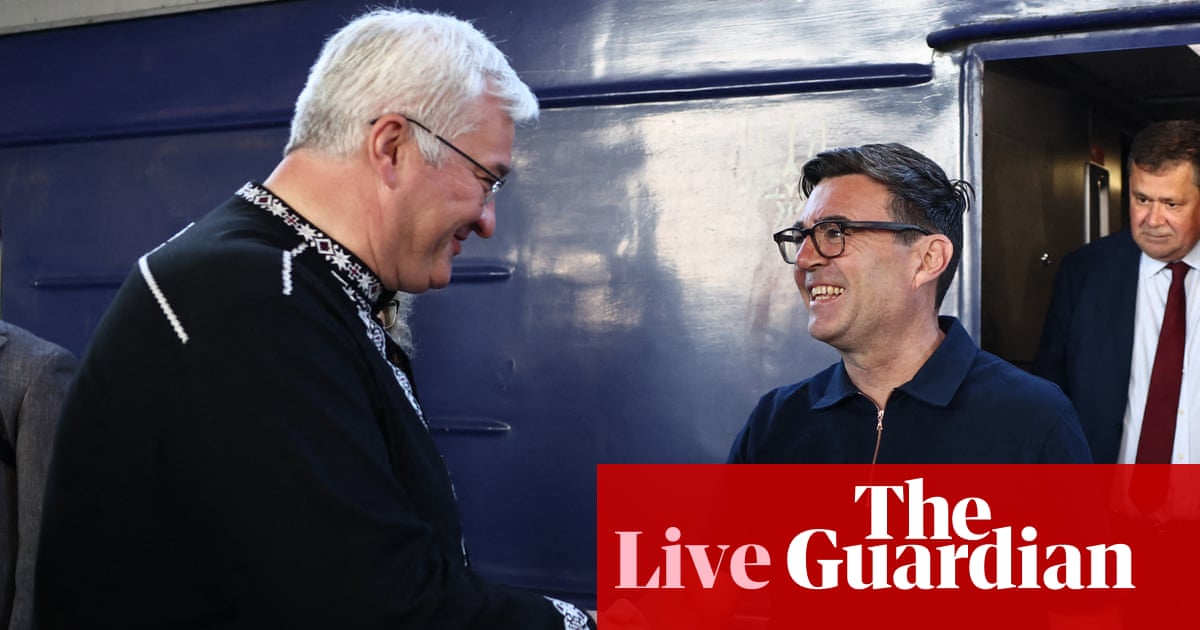
British Prime Minister Andy Burnham arrived in Kyiv on Monday to mark Ukraine’s 35th Independence Day, bringing with him a significant announcement regarding military technology transfer. This marks his first foreign visit since taking office and serves as a direct signal of continued British commitment to Kyiv during a critical phase of the ongoing conflict with Russia. The timing of the trip is deliberate, occurring as Ukrainian forces brace for intensified Russian missile barrages and as President Volodymyr Zelenskyy confronts growing domestic political opposition.
The centerpiece of Burnham’s diplomatic mission involves facilitating the production of long-range missiles within Ukraine. The UK government will permit MBDA, the European defense contractor responsible for the Anglo-French Storm Shadow/Scalp missile system, to declassify information regarding British-made components. This move is designed to assist France in setting up assembly lines in Ukraine, a project previously promised by French President Emmanuel Macron. While this initiative represents a substantial step toward Ukrainian self-sufficiency in defense manufacturing, officials acknowledge that it will likely take several years before these production capabilities materially impact the battlefield.
Despite the long timeline for implementation, the announcement carries immediate geopolitical weight. It is expected to provoke strong criticism from Moscow, which has already accused the United Kingdom of deliberately escalating the conflict by permitting Ukraine to use British-made drones. Russian officials have warned that deeper British involvement will result in a higher price for London. In response to rising tensions, Russia recently withdrew its ambassador from London without naming a successor, leading to speculation that Moscow is downgrading its diplomatic presence in the UK.
Burnham emphasized the enduring nature of the alliance between the two nations during his address. He stated that Ukrainian security is intrinsically linked to British security and that support would not waver regardless of the duration of the war. The Prime Minister also highlighted the friendship between the countries, asserting that it would outlast the current illegal invasion. His remarks were aimed at reassuring the Ukrainian public and signaling resolve to Russian leadership, who have reportedly underestimated the willingness of Ukrainians to continue fighting.
The visit coincides with a broader European effort to bolster Ukraine’s air defense capabilities. Macron joined Burnham remotely for a meeting of a coalition comprising 34 countries committed to securing Ukraine in the event of a future peace deal. German Chancellor Friedrich Merz also participated in the discussions, which focused on strategies to repel recent waves of long-distance Russian attacks. Macron had recently spoken with Zelenskyy to promise separate interceptor missiles, aiming to counter the high-speed threats that have targeted Kyiv and other cities.
Ukraine’s air defense situation remains precarious. The Ukrainian military has exhausted its supply of US-made Patriot interceptors, creating a urgent need for alternative systems. President Zelenskyy indicated over the weekend that he intends to purchase additional Patriot missiles rather than receive them as aid, specifying a request for 360 units from the air force, though he initially mentioned securing 300 for the winter package. He also noted agreements with France for at least one air-defense system this year and with Germany for approximately 600 interceptors in 2027-28.
Domestic political pressures are mounting alongside the military challenges. Zelenskyy is facing his most significant internal challenge since taking office, sparked by calls for early elections from former Defense Minister Mykhailo Fedorov. This internal dissent adds complexity to the government’s ability to maintain a unified front against external threats. Despite these difficulties, Zelenskyy addressed the nation on Independence Day, acknowledging the severe hardships faced by all Ukrainians but emphasizing that national unity remains their strongest asset.
Zelenskyy criticized Russian President Vladimir Putin for miscalculating the resilience of the Ukrainian people. He argued that Putin’s strategy relied on the assumption that Ukraine would become exhausted, a premise Zelenskyy rejected. The Ukrainian president pointed to significant losses incurred by Russia, including oil refineries, naval assets, and human capital, as evidence that the invasion has failed to achieve its objectives. He maintained that as long as the circle of unity holds, Ukraine will not fall and will eventually achieve peace.
The recent drone attack on a shopping center in Kryvyi Rih, Zelenskyy’s hometown, which killed 16 people, underscored the persistent threat facing civilian populations. European leaders condemned the strike, highlighting the humanitarian cost of the continued aggression. As Burnham prepares to receive an award recognizing UK support for Ukraine, security details remain tight due to fears of major Russian attacks during the public events. The Prime Minister’s presence aims to reinforce the message that Western allies remain steadfast in their support despite diplomatic and military headwinds.
Looking ahead, the focus will shift to how effectively these new defense partnerships can be operationalized. The declassification of missile technology is a symbolic and strategic victory for Kyiv, but the practical benefits will unfold over years rather than months. Meanwhile, the coalition of willing nations must coordinate closely to ensure that aid flows efficiently and that diplomatic pressure on Russia remains consistent. The coming weeks will test the durability of this alliance as both military and political pressures intensify.
Sources behind this briefing
Go to the original reporting
- The Guardian US↗Andy Burnham arrives in Ukraine with plans to share UK blueprints for long-range missiles - Europe live
- The Guardian World↗Burnham to visit Ukraine with promise of boost for Kyiv’s long-range missiles

