The short version
- Tabloids and broadsheets report intense criticism of the government's plan to release prisoners early to alleviate overcrowding, with specific focus on violent offenders.
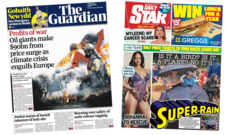
- The Guardian highlights billions in profits for major oil companies linked to price increases during the Iran conflict, drawing accusations of exploiting humanitarian crises.
- Other front-page stories include severe rainfall following a dry summer, a new government borrowing strategy, and disputes over aerodynamic advantages in professional cycling.
British newspapers on Wednesday presented a mix of domestic political controversy, economic analysis, and environmental reporting. The most prominent theme across multiple publications was the government's decision to implement an early release scheme for prisoners, a policy designed to address severe overcrowding in the correctional system. This initiative has sparked significant debate among media outlets, law enforcement groups, and political opponents, who argue that releasing individuals convicted of serious crimes poses unacceptable risks to public safety.
The controversy centers on specific cases that have drawn public attention, including the impending release of individuals responsible for the murder of Police Constable Andrew Harper. Several tabloids reported that police unions and the victim's family are considering legal action against Prime Minister Andy Burnham. The Daily Sun noted that officers are furious about the decision, while the Daily Telegraph quoted a police federation chair describing the outcome as a failure of justice. Senior members of parliament have also called for exemptions to the scheme, particularly for those who have killed emergency service workers.
Critics have highlighted statistics regarding the types of offenders affected by the policy. The Daily Mail cited data suggesting that thousands of domestic abusers are among those set to be released. While the Ministry of Justice dismissed these figures as speculative, opposition parties and charity leaders accused the government of endangering vulnerable populations. Justice Secretary Alex Norris defended the measures, stating that without such changes, the prison system would run out of capacity within months. The Metro newspaper focused on individual stories, including a mother whose son's killer is scheduled for early freedom.
In contrast to the political turmoil surrounding criminal justice, other sections of the press covered economic developments and corporate behavior. The Guardian led with an investigation into the financial performance of major oil companies during the ongoing conflict in Iran. The report indicated that eight energy giants had generated substantial profits from price surges linked to the war. Environmental groups criticized these earnings as exploitative, arguing that corporations were benefiting from human suffering while a climate crisis worsens across Europe.
BP's chief executive, Meg O'Neill, responded to the criticism by defending the company's actions. She stated that the firm was focused on addressing supply shortages and producing necessary oil products during a period of market instability. This defense highlights the tension between corporate responsibility and profit maximization in times of geopolitical crisis. The Financial Times also covered significant business news, noting Google's massive infrastructure financing program aimed at supplying microchips for artificial intelligence development.
Weather patterns provided another focal point for morning editions. Following what the Met Office described as the driest July on record for England and Wales, heavy rainfall began to impact the region. The Daily Star used dramatic language to describe the sudden shift in conditions, while images showed residents using umbrellas to cope with the downpour. This meteorological event stands in stark contrast to the prolonged dry spell that had characterized the earlier part of the summer.
Additional stories included reports on government fiscal policy and social initiatives. The Times noted that ministers are planning to increase borrowing to fund infrastructure, housing, and business support, a move described as an attempt to stimulate economic growth. Meanwhile, the Daily Mirror highlighted the success of knife amnesty programs, reporting that dozens of weapons are being removed from streets daily. Parents who have lost children to violence expressed relief at these efforts, viewing each surrendered blade as a potential life saved.
Finally, sports coverage included allegations of aerodynamic cheating in the Women's Tour de France. Reports suggested that some cyclists were using specialized equipment to alter airflow around their bodies, potentially gaining an unfair advantage. The controversy drew attention to the fine line between innovation and rule-breaking in professional cycling. Together, these diverse stories reflect a media landscape grappling with complex issues ranging from justice and economics to environment and sport.
Sources behind this briefing
Go to the original reporting
- BBC News↗UK papers: 'Profits of war' and 'Super-rain'

