The short version
- Lawmakers argue that reliance on China for refined critical minerals poses a severe risk to national security and economic stability.
- The committee proposes a new financial facility and centralized policy to diversify supply sources and support domestic mining efforts.
- Government officials defend their current strategy, citing significant funding commitments and specific targets for domestic production and recycling by 2035.
A recent investigation by the UK business select committee has concluded that the nation faces a dangerous level of dependency on China for critical raw materials. These resources are fundamental to the development of military capabilities, artificial intelligence infrastructure, and renewable energy systems. The report characterizes this reliance as a strategic vulnerability that could undermine both national security and economic objectives if supply lines were disrupted.
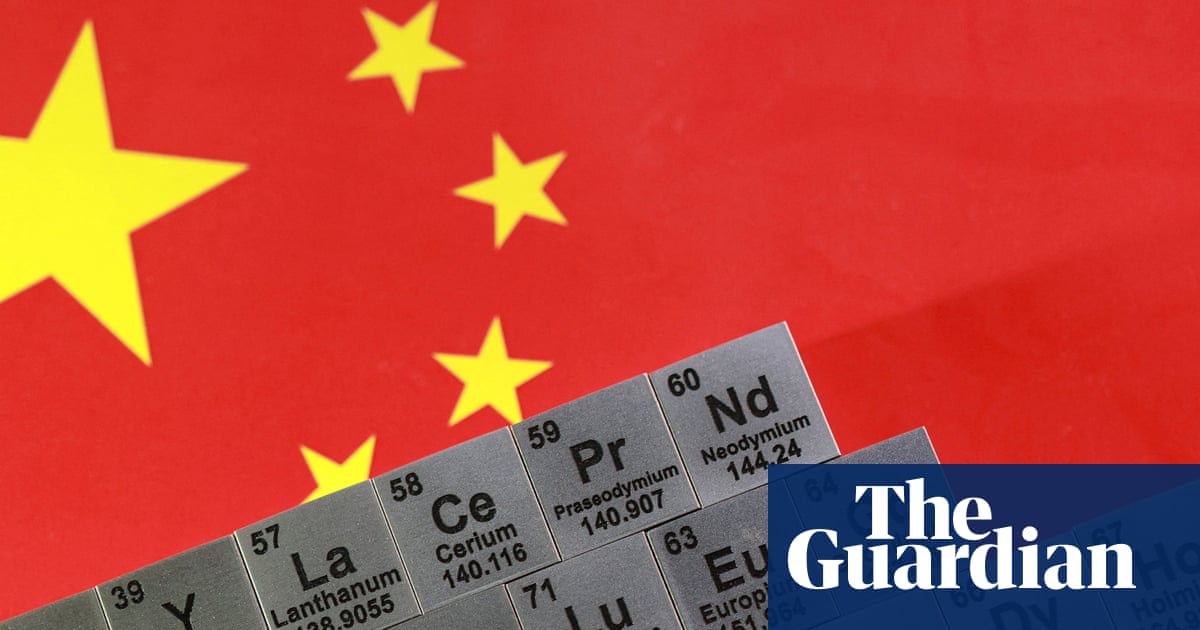
The committee’s findings emphasize that the bottleneck in global supply chains is not necessarily extraction but rather processing. China dominates the refining stages for seven categories of minerals, including lithium required for electric vehicles and rare earth elements used in military aircraft components to withstand extreme temperatures. This control over intermediate production steps gives Beijing significant leverage over downstream industries in the UK and other Western nations.
Projections indicate a dramatic surge in demand for these materials in the coming years. The need for lithium is expected to increase forty-five times between now and 2030, while demand for rare earths used in permanent magnets for defense applications could rise sixteen-fold. This trajectory coincides with Britain’s efforts to rebuild its military capabilities and transition toward net-zero emissions, creating a high-risk scenario where supply constraints could stall major policy goals.
Historical precedents underscore the potential severity of this exposure. China has previously demonstrated the ability to restrict exports, notably cutting off rare earth supplies in 2025. Additionally, restrictions on legacy semiconductor chips following disputes involving Dutch interventions have brought the European automotive industry close to production stoppages. These incidents illustrate how geopolitical tensions can rapidly translate into industrial paralysis for dependent economies.
The committee criticized the current government approach as insufficiently proactive. Lawmakers expressed frustration over a lack of transparency regarding the specific vulnerabilities identified by officials and the projects being supported to mitigate risk. The report notes that parliament has limited visibility into the capabilities the government aims to protect or the strategies employed to reduce exposure to single-source dependencies.
In response to these concerns, the select committee has outlined a ten-point plan designed to strengthen supply chain resilience. Key recommendations include establishing a critical minerals finance facility to provide grants, equity, and debt for domestic mining and recycling initiatives. The proposal also calls for a centralized policy framework to aggregate demand with G7 partners, European allies, and Indo-Pacific nations, thereby encouraging new suppliers to enter the market.
The report highlights that the UK’s current position leaves it vulnerable to shifts in US-China relations. A temporary reprieve on global export restrictions, initially secured by Donald Trump and later extended to January 2027, offers only short-term stability. The committee argues that relying on diplomatic negotiations rather than structural diversification is an inadequate long-term strategy for securing essential industrial inputs.
Government representatives have pushed back against the characterization of policy failure. A spokesperson stated that the administration is already delivering £400 million to boost domestic production and recycling efforts while forging new international partnerships. Official targets include meeting ten percent of demand through domestic sources and twenty percent through recycling by 2035, with a cap ensuring no single country supplies more than sixty percent of any critical mineral.
Despite these assurances, the committee remains skeptical about the government’s ability to meet its own benchmarks without more robust institutional support. The investigation concluded that the UK requires new financial and organizational mechanisms to effectively compete in the global market for critical resources. Without decisive action, the nation may continue to face significant risks as geopolitical tensions evolve and demand for green technology accelerates.
The debate underscores a broader challenge facing Western economies: balancing immediate industrial needs with long-term strategic autonomy. As the transition to clean energy and advanced digital infrastructure continues, securing stable and diversified supply chains has become a central component of national security policy. The coming months will likely see increased pressure on lawmakers to implement concrete measures that reduce reliance on adversarial states.
Sources behind this briefing
Go to the original reporting
- The Guardian World↗UK found to be ‘dangerously’ reliant on China for critical minerals needed for defence and AI


